Arthur Conan Doyle: Biography, Facts and Career
Who is Arthur Conan Doyle? An evergreen, sourced profile: biography, key facts and career.
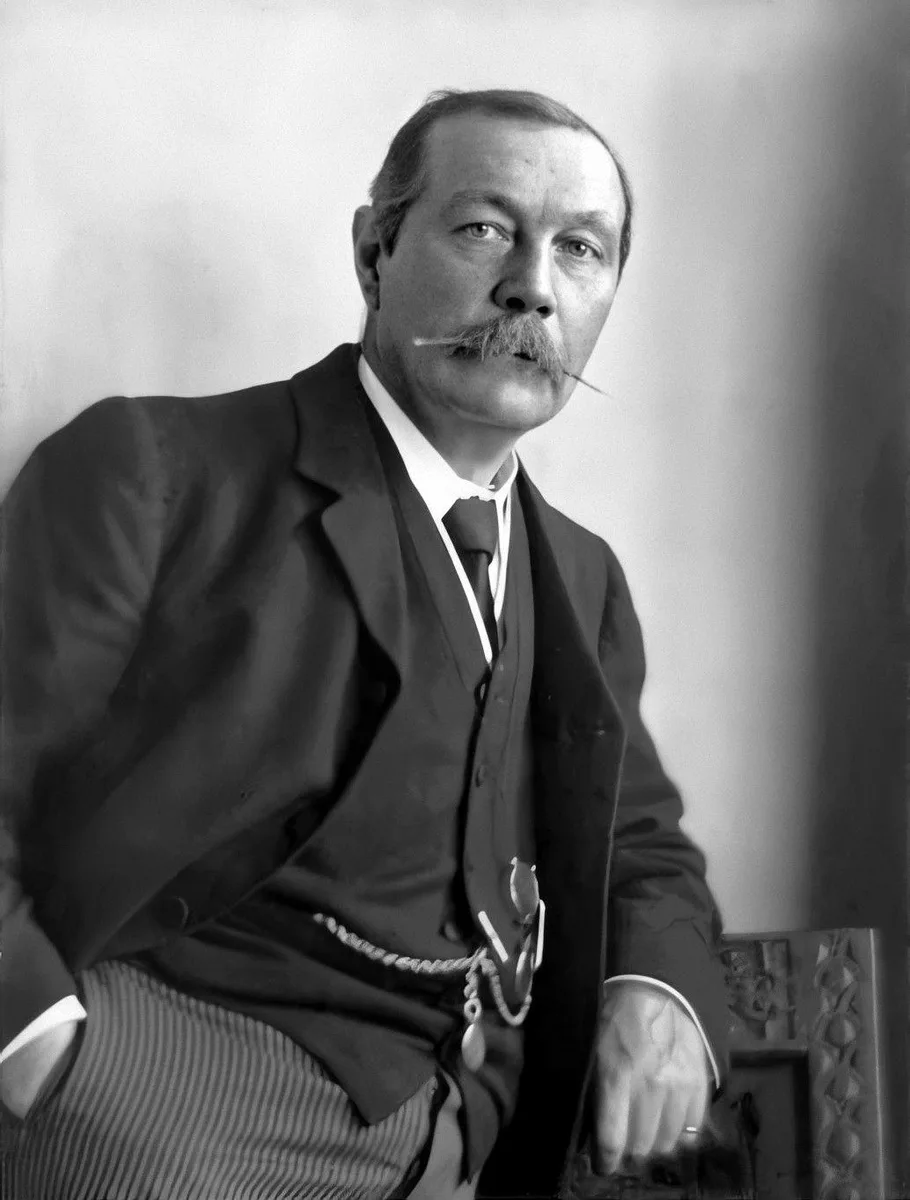
Sir Arthur Ignatius Conan Doyle (22 May 1859 – 7 July 1930) was a British writer and physician. He is best known for his four novels and fifty-six short stories about the fictional consulting detective Sherlock Holmes and his assistant Dr. Watson, which are milestones in crime fiction, and for his first work featuring Professor Challenger, The Lost World (1912), which gave its name to a subgenre of speculative fiction. He was a prolific writer who produced over 200 stories and articles, four volumes of poetry, and a number of works for the stage. He was knighted by King Edward VII in the 1902 Coronation Honours. Born in Edinburgh, Doyle published his earliest stories whilst studying medicine at the University of Edinburgh Medical School, and he served as a doctor and surgeon on two sea voyages before establishing an unsuccessful medical practice in Portsmouth. His time at sea inspired the short story "J. Habakuk Jephson's Statement" (1884), which popularised the mystery of the Mary Celeste. His first Sherlock Holmes work, the novel A Study in Scarlet, was published in 1887, and the short story "A Scandal in Bohemia" (1891) was the first of twenty-four monthly Holmes stories published in The Strand Magazine, for which Doyle became one of the most famous and well-paid authors of his time. His ambivalence towards the character led to Holmes's being killed off in "The Final Problem" (1893); but public outcry resulted in his return in The Hound of the Baskervilles (1901), and Doyle continued to write stories featuring him up to 1927. He was also known for his humorous stories about the Napoleonic soldier Brigadier Gerard. Doyle was involved in political activism throughout his life and twice stood unsuccessfully for Parliament. He wrote in support of compulsory vaccination, the British causes in the Second Boer War and First World War and the reform of the Congo Free State. He was a fervent advocate of justice who personally investigated two closed cases, both resulting in the exoneration of the accused men and setting precedent which partially led to the establishment of the Court of Criminal Appeal in 1907. He was noted for his skill as an architect and was involved in several sports as a player and judge. Doyle was raised a Catholic but was agnostic as a young adult, later becoming a spiritualist mystic as a result of family tragedies, and was a Freemason for two separate periods. He embraced supernatural phenomena, including psychics, telepathy, mentalism and spirit photography, and publicly supported the Cottingley Fairies, later confirmed to be a hoax, which led to a public falling-out with his friend, the American magician Harry Houdini. Doyle's works are still widely read and adapted in the 21st century, with Sherlock Holmes being recognised as the single most portrayed literary character in film and television history, and a number of fictional works have depicted or been inspired by his life.
Quick facts about Arthur Conan Doyle
- Full name: Arthur Conan Doyle
- Born: 1859-05-22
- Nationality: United Kingdom
- Known as: Author
- Wikidata ID: Q35610
Profile compiled from public Wikipedia and Wikidata data. Details can change over time.
Frequently asked questions
Who is Arthur Conan Doyle?
Sir Arthur Ignatius Conan Doyle (22 May 1859 – 7 July 1930) was a British writer and physician.
What nationality is Arthur Conan Doyle?
Arthur Conan Doyle is United Kingdom.
When was Arthur Conan Doyle born?
Arthur Conan Doyle was born on 1859-05-22.
Sources
More in Books & Authors
Keep reading