Carl Sagan Reading Order and Series Facts
A sourced evergreen guide to Carl Sagan, with fast facts, context and reference links.
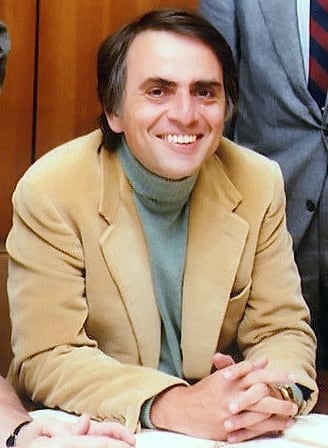
A guide to reading Carl Sagan's books, with the essential facts about the author and where to start.
Carl Edward Sagan (; SAY-gən; November 9, 1934 – December 20, 1996) was an American astronomer, planetary scientist and science communicator. Initially an assistant professor at Harvard, Sagan later moved to Cornell, where he was the David Duncan Professor of Astronomy and Space Sciences and directed the Laboratory for Planetary Studies. He played an active role in the Mariner, Viking and Voyager programs. He published more than 600 scientific papers and articles and several popular science books, starting with The Cosmic Connection. He won the Pulitzer Prize for General Nonfiction for The Dragons of Eden. He co-wrote and narrated the 1980 documentary series Cosmos: A Personal Voyage, which has been seen by at least 500 million people in 60 countries and won two Emmy Awards and a Peabody Award. Cosmos, the companion volume, was the bestselling science book to date. A lifelong science fiction fan, Sagan entered the genre with Contact, which was adapted as the film of the same name. He was a founding member and first president of the Planetary Society. He proposed the Pale Blue Dot photograph of Earth taken by Voyager 1. He had a lifelong interest in the possibility of extraterrestrial...
Quick facts about Carl Sagan
- Name: Carl Sagan
- Known for: Carl Edward Sagan was an American astronomer, planetary scientist and science…
- Category: reading order
- Wikidata ID: Q410
More Reading Order
Profile compiled from public Wikipedia and Wikidata data. Details can change over time.
Frequently asked questions
What is Carl Sagan known for?
Carl Sagan is covered here for books, authorship, reading order and adaptation history.
Is this Carl Sagan article evergreen?
Yes. It is built around stable public reference facts rather than breaking news or rumor.
Where are the facts about Carl Sagan sourced from?
The article uses free reference sources such as Wikipedia and Wikidata-linked data, with image metadata from Wikimedia Commons.
Sources
More in Books & Authors
Keep reading