Jizi: Biography, Facts and Career
Who is Jizi? An evergreen, sourced profile: biography, key facts and career.
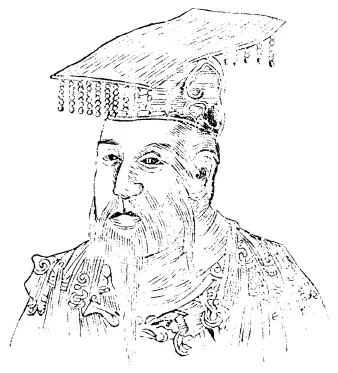
Jizi, Qizi, or Kizi (Chinese: 箕子; Wade–Giles: Chi-tzu), called in Korean Kija (Korean: 기자; RR: Gija), was a semi-legendary Chinese sage who is said to have ruled Kija Chosŏn in the 11th century BCE. Early Chinese documents like the Book of Documents and the Bamboo Annals described him as a virtuous relative of the last king of the Shang dynasty who was punished for remonstrating with the king. After Shang was overthrown by Zhou in the 1040s BCE, he allegedly gave political advice to King Wu, the first Zhou king. Chinese texts from the Han dynasty (206 BCE – 220 CE) onwards claimed that King Wu enfeoffed Jizi as ruler of Chaoxian (朝鮮, pronounced "Chosŏn" in Korean). According to the Book of Han (1st century CE), Jizi brought agriculture, sericulture, and many other facets of Chinese civilization to Chosŏn. His family name was Zi/Ja (子) and given name was Xuyu/Suyu (胥餘; xūyú/ 胥餘, 서여 seoyeo, or 須臾; xūyú/須臾, 수유 suyu). Kija (the Korean pronunciation of "Jizi") may have been the object of a state cult in sixth-century Goguryeo, and a mausoleum to him was established in Goryeo in 1102, but the first extant Korean text to mention Kija was the Samguk sagi (1145). Starting in the late thirteenth century, Kija was fully integrated into Korean history, being described as a successor to the descendants of Tan'gun in the state of Old Chosŏn. Following the spread of Neo-Confucianism in Korea in the fourteenth century, scholars of the Chosŏn period (est. 1392) promoted Kija as a culture hero alongside Tan'gun, with Kwŏn Kŭn's preface of Sambong chip writing,
爰自箕子八條之敎。俗尙廉恥。文物之懿。人材之作。侔擬中夏。 [Ever since the teaching of Kija's Eight Prohibitions, our customs have esteemed integrity and a sense of shame; the excellence of our culture and institutions and the emergence of talented people have been comparable to those of the Central States (China).]
However, with the development of radiocarbon dating and newly found excavations, modern Korean historians started to question the legitimacy of his enfeoffment as ruler of Old Chosŏn. Sin Ch'aeho (1880–1936) was the first to question the extent of Kija's cultural contributions and many followed as Kija's historical claims did not align with archeological evidence found during the time of his supposed rule. Additionally, post-war Korean scholars in both North and South Korea have strongly criticized the story of Kija's migration to Korea in the eleventh century BCE, claiming that his involvement in the history of Korea was widely exaggerated. In recent times, both North and South Korea, and their respective historians do not officially recognize Jizi and his supposed accomplishments.
Quick facts about Jizi
- Full name: Jizi
- Born: -1200-01-0
- Nationality: Gojoseon
- Known as: Royal
- Wikidata ID: Q496787
Profile compiled from public Wikipedia and Wikidata data. Details can change over time.
Frequently asked questions
Who is Jizi?
Jizi, Qizi, or Kizi (Chinese: 箕子; Wade–Giles: Chi-tzu), called in Korean Kija (Korean: 기자; RR: Gija), was a semi-legendary Chinese sage who is said to have ruled Kija Chosŏn in the 11th century BCE.
What nationality is Jizi?
Jizi is Gojoseon.
When was Jizi born?
Jizi was born on -1200-01-0.
Sources
More in Royals
Keep reading