Guitar: Chord Progressions: An Open Learning Guide
A knowledge of chord progressions will help you communicate and play with other musicians. Knowing the most commonly used chord progressions allows for greater enjoyment and unity when playi
Oldest entries first, in a fixed order. Newly added articles appear at the end. Explore a shuffled selection →

A knowledge of chord progressions will help you communicate and play with other musicians. Knowing the most commonly used chord progressions allows for greater enjoyment and unity when playi

Open chords tend to sound "richer" than corresponding barre chords due to the fact that open strings resonate freely without any hindrance. Open chords typically sustain longer than their ba

A chord is two or more different notes played simultaneously. Most chords have three notes though. Chords derive their names from the root note; so a C chord has C for its root note and a G7
The classical guitar was preceded by the lute, vihuela and five-string baroque guitar. This legacy is reflected in the repertoire of the Classical guitar which ranges from the Estampie, a th
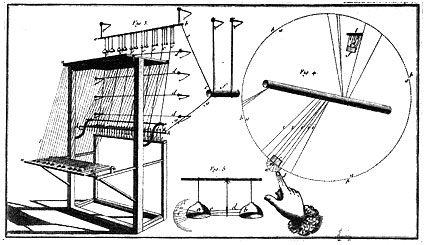
The clavecin électrique (or clavessin électrique) was a musical instrument invented in 1759 by Jean-Baptiste Thillaie Delaborde, a French Jesuit priest.
The Composer-Tron was developed by Osmond Kendal for the Canadian Marconi Company in 1953.
The cloud harp, also known as the Keplerian harp, is an open form sound installation which converts the forms of clouds into audio and musical sequences in real time.
The Croix Sonore is an early electronic musical instrument with continuous pitch, similar to the theremin.
Controllerism is the art and practice of using musical software controllers, e.g.
A digital piano is a class of electronic keyboard or synthesizer (rompler) designed to serve primarily as an alternative to the traditional acoustic piano, both in how it feels to play and in the
Country music is an American genre of music that can trace its roots back to earlier European folk songs that the arriving immigrants brought with them. It developed in the Appalachians and
Playing different guitars in a music shop is a great way of familiarising yourself with each model's unique qualities but don't forget to take off any objects that could scratch the guitar.
The E-bow is a device that causes your string to vibrate without it being plucked, almost like a violin bow makes a violin string vibrate. It requires a dramatically different technique to p
Effects pedals are electronic or digital devices that modify the tone, pitch, or sound of an electric guitar. Effects can be housed in effects pedals, guitar amplifiers, guitar amplifier sim
You may not believe it at this stage, but with just the four chords G - Em - C - D you now have hundreds of songs open to you, so you can slowly start to build up a repertoire of songs for e
Flamenco is one of the folk music genres of Spain. In Spain the word flamenco is not just associated with the guitar but also the people, songs and dances of Spain. The history of flamenco f
Folk music is considered to be music that originates from the people. It is not the preserve of professional composers because its themes and melodies are derived from the experiences and li
There is more than one way to form the chords, set the fingerings and determine the tones. Here I will introduce you to a method that is particularly suitable for simple chords in song accom
By the way, memorize that E minor (written "Em" for short) is the minor parallel of G major. In many songs you don't necessarily have to change to the minor parallel, you can simply continue
This article is only intended for guitar players who have already learned a little guitar and have perhaps learned a chord (especially G major) with a different fingering. Unfortunately, peo
The fingerings that are taught here for the individual chords did not come about by chance. They are based on the classical guitar schools and are intended to prepare you now if you want to
Picks are probably the most frequently bought guitar accessory. There are several reasons, but mostly it is because there are so many types of picks, and picks are so easily lost. When you g
A drum kit, acoustic drum kit or drum set (also known as a trap set or simply drums in popular music and jazz contexts) is a musical instrument consisting of a collection of percussion instrument
The DrumIt Five is an electronic drum line produced by 2box, a Swedish company started by former employees of ddrum.
The Electro-Theremin is an electronic musical instrument developed by trombonist Paul Tanner and amateur inventor Bob Whitsell in the late 1950s to produce a sound to mimic that of the theremin.I
E-MU Proteus X is a Virtual Sound Module produced by E-MU Systems that is a software-based audio sample-based synthesis product that includes the complete library soundest of the popular and lega
Electronic drums are an electronic musical instrument that replicates the sound and appearance of a drum kit or other percussion instruments.

The electronic bagpipes is an electronic musical instrument emulating the tone and/or playing style of the bagpipes.
An electronic drum module is an electronic or digital music device in an electronic drum kit that serves as the central processing unit and sound module.
The electronic sackbut is an electronic musical instrument designed and first built by Hugh Le Caine in 1945.
The Elektron Monomachine is a synthesizer and music sequencer by Elektron.
Properly maintaining a valuable guitar keeps it valuable. Guitars can take a lot of abuse, especially if you play live shows and tour, and even if it pretty much "sounds the same," lack of m
Almost as soon as you start playing guitar, you will learn a handful of songs or riffs. But often after a while, you can't think anything new or interesting to play. Learning songs can be to
Hammer-ons and pull-offs are two closely related techniques. They are used to play legato, that is, in a smooth manner, and are also used to help the guitarist to play faster. They are most
The harmonica is an instrument that has found favour with many guitarist. The idea evolved from the blues and country and western musicians of the early part of the 20th century. The role th
Harmonics are fun sounds to produce. They can be quiet and bell-like on an Acoustic or they can be loud and squeally on an overdriven Electric. When you strike a note on the guitar, the soun
Learn a new genre or style of guitar. If you have reached a high level in rock guitar, for example, you could try learning blues, jazz or country guitar, as all of these styles will add new
Intervals are named with reference to scales. For example, the interval from the root of the major scale to the second note of the major scale is called a "major second"; the interval from t
Early jazz bands used the banjo as an accompaniment instrument because its loud volume gave it the ability to be heard, unamplified, against brass and percussion. As an acoustic instrument,
Up to now, larger chord leaps have been avoided. There is always a risk that you will use up valuable time sorting your fingers. The change between G and Am, as well as the change between Em