Jiajing Emperor of Ming: Biography, Facts and Career
Who is Jiajing Emperor of Ming? An evergreen, sourced profile: biography, key facts and career.
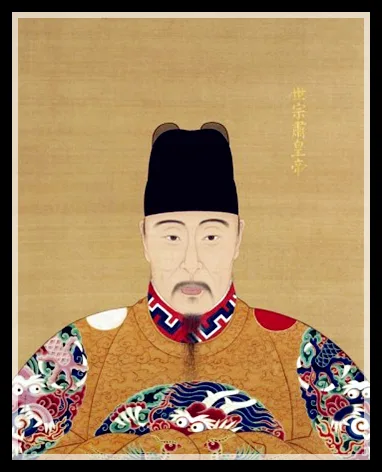
The Jiajing Emperor (16 September 1507 – 23 January 1567), personal name Zhu Houcong, was the 12th emperor of the Ming dynasty, reigning from 1521 to 1567. He succeeded his cousin, the Zhengde Emperor. The Jiajing Emperor was born as a cousin of the reigning Zhengde Emperor, so his accession to the throne was unexpected, but the government chose him as the new ruler after the Zhengde Emperor died without an heir. After his enthronement, the Jiajing Emperor came into conflict with his officials regarding the method of legalizing his accession. This conflict, known as the Great Rites Controversy, was a significant political issue at the beginning of his reign. After three years, the Emperor emerged victorious, with his main opponents either banished from court or executed. The Jiajing Emperor, like the Zhengde Emperor, made the decision to reside outside of Beijing's Forbidden City. In 1542, he relocated to the West Park, located in the middle of Beijing and west of the Forbidden City. He constructed a complex of palaces and Taoist temples in the West Park, drawing inspiration from the Taoist belief in the Land of Immortals. Within the West Park, he surrounded himself with a group of loyal court eunuchs, Taoist monks, and trusted advisers (including grand secretaries and ministers of rites) who assisted him in managing the state bureaucracy. Zhang Cong, Xia Yan, Yan Song, and Xu Jie each held senior roles in his government. In his later years, the Emperor's pursuit of immortality led to questionable actions, such as his interest in young girls and alchemy. He even sent Taoist priests across the land to collect rare minerals for life-extending potions. These elixirs contained harmful substances like arsenic, lead, and mercury, which ultimately caused health problems and may have shortened the Emperor's life. At the start of the Jiajing era, the borders were relatively peaceful. In the north, the Mongols were initially embroiled in internal conflicts, but after being united by Altan Khan in the 1540s, they began to demand the restoration of free trade. The Emperor, however, refused and attempted to close the borders with fortifications, including the Great Wall of China. In response, Altan Khan launched raids and even attacked the outskirts of Beijing in 1550, forcing the Ming troops to focus on defense. Wokou pirates in the Jiajing era posed a significant threat in southeastern China. The Ming authorities attempted to address this issue by implementing stricter laws against private overseas trade in the 1520s, but piracy and related violence continued to escalate throughout the 1540s and reached its peak in the 1550s. Despite the trade restrictions imposed by the Jiajing government and the incidence of the deadly 1556 Shaanxi earthquake in northern China, the economy continued to develop, with growth in agriculture, industry, and trade. As the economy flourished, so did society, with the traditional Confucian interpretation of Zhuism giving way to Wang Yangming's more individualistic beliefs.
Quick facts about Jiajing Emperor of Ming
- Full name: Jiajing Emperor of Ming
- Born: 1507-09-26
- Nationality: Ming dynasty
- Known as: Royal
- Wikidata ID: Q10011
Profile compiled from public Wikipedia and Wikidata data. Details can change over time.
Frequently asked questions
Who is Jiajing Emperor of Ming?
The Jiajing Emperor (16 September 1507 – 23 January 1567), personal name Zhu Houcong, was the 12th emperor of the Ming dynasty, reigning from 1521 to 1567.
What nationality is Jiajing Emperor of Ming?
Jiajing Emperor of Ming is Ming dynasty.
When was Jiajing Emperor of Ming born?
Jiajing Emperor of Ming was born on 1507-09-26.
Sources
More in Royals
Keep reading