Fontaine H. Pettis: The True Crime Story and Key Facts
Fontaine H. Pettis: American slave catcher, fraudster (d. 1858). The documented story, timeline and key facts of the case.
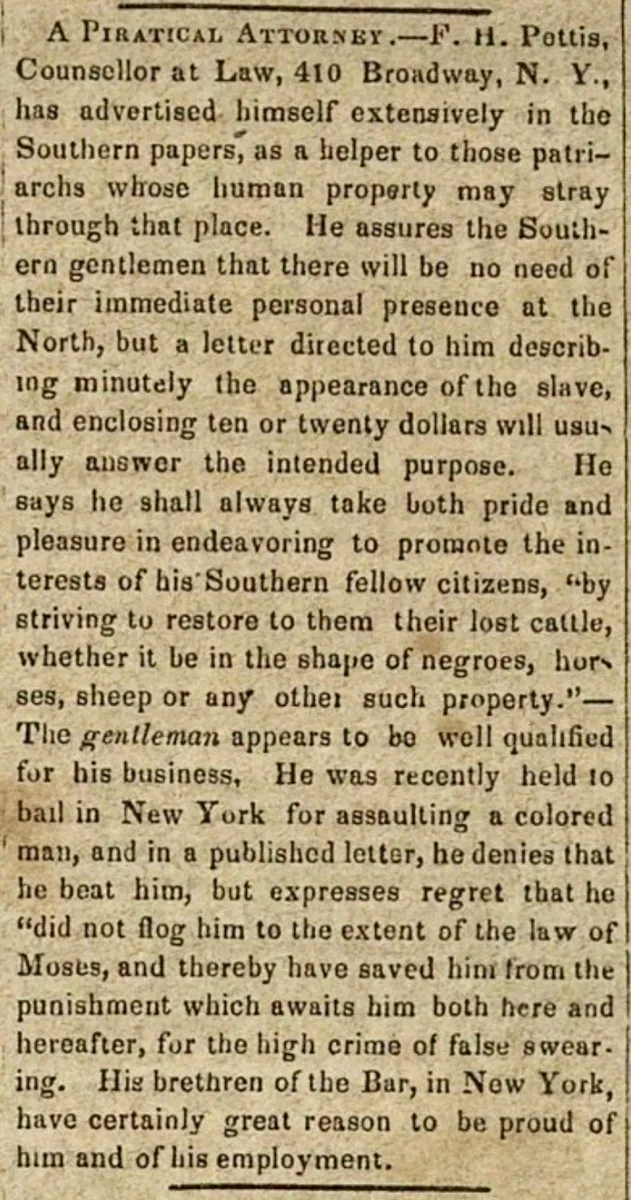
Fontaine H. Pettis, often doing business as F. H. Pettis, was a 19th-century American fraudster and/or attorney who specialized in recovering fugitive slaves for enslavers prior to the American Civil War. Based in Philadelphia, and later New York City, he advertised his services in southern newspapers. He is classed by most historians of slavery as a Northern slave catcher or "slave taker" even though he boasted of being a native of Virginia. He was also likely something of a charlatan, accused of fraud in more than one circumstance, and convicted of perjury in Washington, D.C in 1831. President Andrew Jackson pardoned Pettis on the perjury charges, possibly due to political influence. Several surviving records suggest he periodically could not or would not pay his bills, and so he attempted to borrow money from wealthier acquaintances or, more often, simply defaulted on the obligation. Pettis also worked as a small-time salesman, advertising corn plasters for feet, and trying to sell a waterproofing process.
Why the case is remembered
The Fontaine H. Pettis story remains one of the most discussed entries in true-crime history, covered in documentaries, podcasts and books. The summary above follows the publicly documented record.
Text adapted from Wikipedia (CC BY-SA 4.0). Facts reflect the documented public record.
Frequently asked questions
Who is Fontaine H. Pettis?
Fontaine H. Pettis, often doing business as F.
Why is the Fontaine H. Pettis case famous?
It is one of the most documented fraudster cases, widely covered by true-crime media.
Sources
More in True Crime
Keep reading

![Extracted from a police bulletin distributed by the Los Angeles Police Department, accessed on the official website for the U.S. Federal Bureau of Investigation ([1]). Dated from 15 January 1947, the day Ms. Short's body was discovered in Los Angeles County.](https://thumb.wikimedia.org/wikipedia/commons/thumb/b/b6/Elizabeth_Short_photo_from_police_bulletin.jpg/1280px-Elizabeth_Short_photo_from_police_bulletin.jpg)