Olympic medal: History and Background
An Olympic medal is an honorary medal that is awarded to successful competitors at one of the Olympic Games.
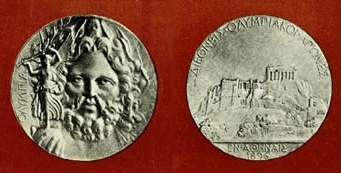
An Olympic medal is an honorary medal that is awarded to successful competitors at one of the Olympic Games. There are three classes of medal to be won: gold, silver, and bronze, awarded to first, second, and third place, respectively. The granting of awards is laid out in detail in the Olympic protocols.
Medal designs have varied considerably since the Games in 1896, particularly in the size of the medals for the Summer Olympic Games. The design selected for the 1928 Games remained until its replacement at the 2004 Games in Athens, where the use of the Roman Colosseum was replaced by the Greek Panathenaic Stadium, appropriate to represent Olympic values. In honour of that heritage, the Panathenaic Stadium continues to be featured on the reverse of every Summer Olympics Games medal issued since, overlayed by a rendition of Nike, the ancient Greek goddess of victory. The medals of the Winter Olympic Games, however, never have had a common design, though regularly feature snowflakes and a design representing the event in which the medal was won.
In addition to generally supporting their Olympic athletes, some countries provide sums of money and gifts to medal winners, depending on the classes and number of medals won. In the 2024 Paris Games, 33 countries confirmed that they would award prizes to medallists, with 15 awarding cash prizes over $100,000.
Source and attribution
Text excerpted from Olympic medal by Wikipedia contributors, available under Creative Commons Attribution-ShareAlike 4.0. The extract is abridged and formatting has been adjusted; the adapted text on this page is shared under the same licence. Revision history.
Sources
More in Sports & Athletes
Keep reading
![Poster of the 1920 olympic games. Printed in 90 000 copies in 17 languages plus French/Dutch bilingual versions.[1]](https://upload.wikimedia.org/wikipedia/commons/7/73/1920_olympics_poster.jpg)