Wu Sangui: Biography, Facts and Career
Who is Wu Sangui? An evergreen, sourced profile: biography, key facts and career.
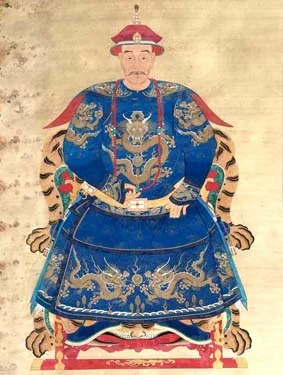
Wu Sangui (Chinese: 吳三桂; pinyin: Wú Sānguì; Wade–Giles: Wu San-kuei; 8 June 1612 – 2 October 1678), courtesy name Changbai (長白) or Changbo (長伯), was a Chinese military leader who played a key role in the fall of the Ming dynasty and the founding of the Qing dynasty. In Chinese folklore, Wu Sangui is regarded as a disreputable Han Chinese traitor for his defection over to the Manchu invaders, suppression of the Southern Ming resistance and execution of the Yongli Emperor. Wu eventually double-crossed both of his masters, the Ming and the Qing dynasties. In 1644, Wu was a Ming general in charge of garrisoning Shanhai Pass, the strategic choke point between Manchuria and Beijing. After learning that Li Zicheng's rebel army had conquered Beijing and captured his family, including his father Wu Xiang and concubine Chen Yuanyuan, Wu allowed the Manchu to enter China proper through Shanhai Pass to drive Li from Beijing, where the Manchu then set up the Qing dynasty. For his aid, the Qing rulers awarded him a fiefdom consisting of Yunnan and Guizhou provinces, along with the title "Prince Who Pacifies the West" (平西王). In 1674, Wu decided to rebel against the Qing. In 1678, Wu declared himself the new Emperor of China and the ruler of Zhou, only to die within months. For a time, his grandson Wu Shifan succeeded him. The revolt was quelled in 1681.
Quick facts about Wu Sangui
- Full name: Wu Sangui
- Born: 1612-01-01
- Known as: Royal
- Wikidata ID: Q468701
Profile compiled from public Wikipedia and Wikidata data. Details can change over time.
Frequently asked questions
Who is Wu Sangui?
Wu Sangui (Chinese: 吳三桂; pinyin: Wú Sānguì; Wade–Giles: Wu San-kuei; 8 June 1612 – 2 October 1678), courtesy name Changbai (長白) or Changbo (長伯), was a Chinese military leader who played a key role in the fall of the Ming dynasty and the founding of the Qing dynasty.
What is Wu Sangui known for?
Wu Sangui (Chinese: 吳三桂; pinyin: Wú Sānguì; Wade–Giles: Wu San-kuei; 8 June 1612 – 2 October 1678), courtesy name Changbai (長白) or Changbo (長伯), was a Chinese military leader who played a key role in the fall of the Ming dynasty and the founding of the Qing dynasty.
When was Wu Sangui born?
Wu Sangui was born on 1612-01-01.
Sources
More in Royals
Keep reading