Net Worth →
Video Games

Donkey Kong: Game Guide, Developer and Facts

Donkey Kong — video game guide with key facts, developer and background.

By the Pop Culture Files editorial team3 min read✓ Fact-checked
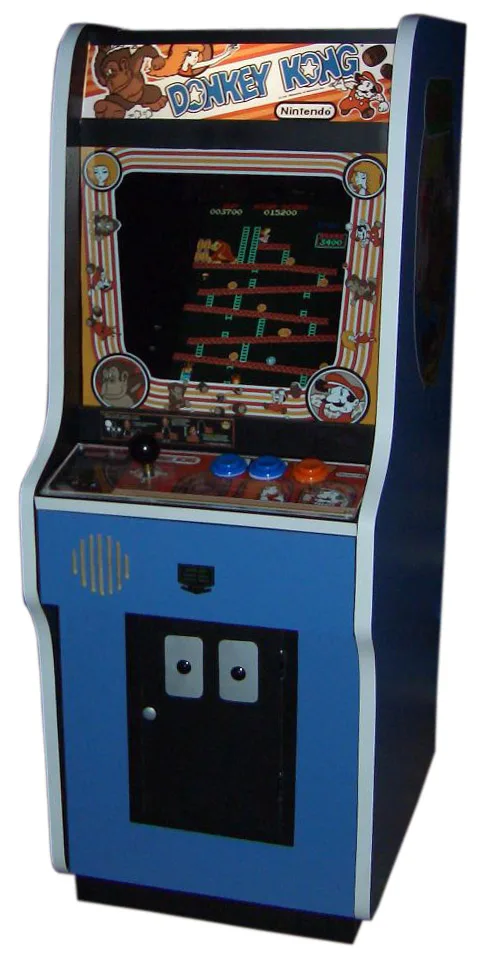
Donkey Kong
Joshua Driggs (ZapWizard) (take photo), bayo (remove the background) via Wikimedia Commons · CC BY-SA 2.0

Donkey Kong is a 1981 platform game developed and published by Nintendo for arcades. As Mario (occasionally referred to as "Jumpman" at the time), the player runs and jumps on platforms and climbs ladders to ascend a construction site in New York City and rescue Pauline (occasionally referred to as "The Lady" at the time) from the giant gorilla Donkey Kong. It is the first game in the Donkey Kong series and Mario's first appearance in a video game. Donkey Kong was created to salvage unsold arcade cabinets following the failure of Nintendo's Radar Scope (1980), and was designed for Nintendo of America's audience. Hiroshi Yamauchi, Nintendo's president at the time, assigned the project to first-time video game designer Shigeru Miyamoto. Drawing inspiration from "Beauty and the Beast" and American media such as Popeye and King Kong, Miyamoto developed the characters and scenario and designed the game alongside chief engineer Gunpei Yokoi. Donkey Kong was the most complex arcade game released at that point, using graphics for characterization, including cutscenes to illustrate a plot, and integrating multiple unique stages into the gameplay. The game pioneered the platform genre before the term existed, is the first to feature jumping, and is one of the first video games with a damsel in distress narrative, after Sheriff. It had a limited release in Japan on July 9, 1981, before receiving a wide release in the region some weeks later. Although Nintendo of America's staff was initially apprehensive, Donkey Kong was a critical and commercial success, becoming the highest-grossing game of 1981 in Japan and the highest-grossing game of 1982 in the United States. It was ported to the Game & Watch, selling eight million units, while Nintendo licensed the game to Coleco, a developer of arcade conversions for home consoles, selling six million cartridges. It was later ported to the Famicom/Nintendo Entertainment System (NES), which was designed to replicate the arcade unit's technological capabilities; both the game and NES were integral in introducing Japanese video games to Western audiences. Donkey Kong's various ports sold more than 15 million units worldwide. Other companies cloned the game and avoided royalties altogether. Universal City Studios unsuccessfully sued Nintendo, alleging that Donkey Kong violated its trademark of the King Kong franchise. Donkey Kong is regarded as one of the most important games of the golden age of arcade video games and one of the greatest video games of all time. Its success positioned Nintendo for market dominance during the 1980s and 1990s. The game debuted Mario, who became Nintendo's mascot and one of the world's most recognizable characters. It was mass-marketed through a wide range of products, including breakfast cereal, toys, and television cartoons. The game has been frequently referenced in popular culture and subsequent video games, and maintains an active high score competition.

Quick facts about Donkey Kong

  • Title: Donkey Kong
  • Developer: Nintendo
  • Released: 1981
  • Type: Video game
  • Wikidata ID: Q12384

Compiled from public Wikipedia and Wikidata data. Details can change over time.

Frequently asked questions

What is Donkey Kong?

Donkey Kong is a 1981 platform game developed and published by Nintendo for arcades.

Who made Donkey Kong?

Donkey Kong is by Nintendo.

When was Donkey Kong released?

Donkey Kong was released in 1981.

Sources

More in Gaming & Internet