Rostrum camera: History and Key Facts
A rostrum camera is a specially designed camera used in television production and filmmaking to animate a still picture or object.
Oldest entries first, in a fixed order. Newly added articles appear at the end. Explore a shuffled selection →
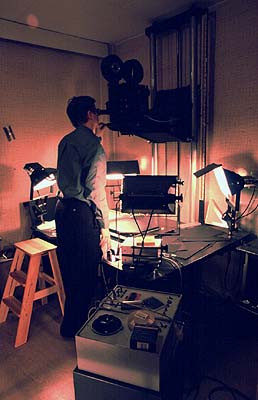
A rostrum camera is a specially designed camera used in television production and filmmaking to animate a still picture or object.

Scanimate is an analog computer animation (video synthesizer) system created by Lee Harrison III of Denver, Colorado.
Sand animation is a form of stop motion that manipulates images formed with sand under a camera to create animation.
Skeletal animation or rigging is a technique in computer animation in which a character (or other articulated object) is represented in two parts: a polygonal or parametric mesh representation of
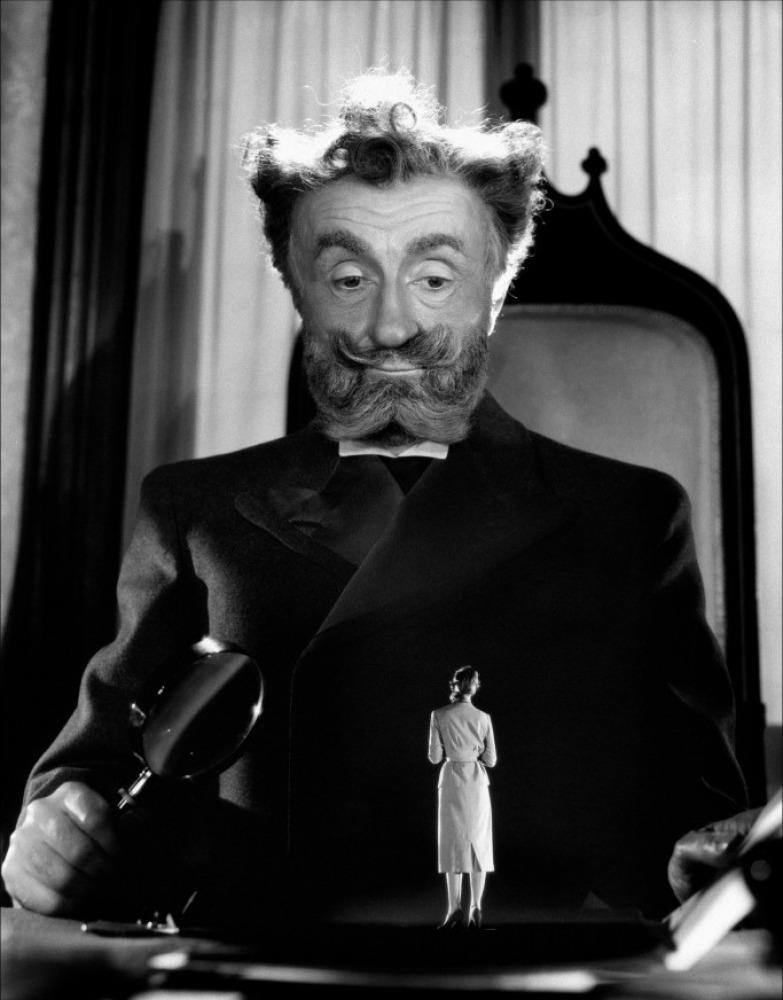
Special effects (often abbreviated as F/X or simply FX) are illusions or visual tricks used in the theater, film, television, video game, amusement park, and simulator industries to simulate the

Squigglevision is a method of computer animation in which the outlines of shapes are made to wiggle and undulate, emulating the effect of sketchily hand-drawn animation.
A stick figure (also known as a stick man, stick woman, or stick person) is a very simple drawing of a human or other animal, in which the limbs (arms and legs) and torso are represented using st
Syncro-Vox (sometimes spelled Synchro-Vox) is a filming method that combines static images with moving images, the most common use of which is to superimpose talking lips on a photograph of a cel

Animation of Scalable Vector Graphics, an open XML-based standard vector graphics format is possible through various means: Scripting: ECMAScript is a primary means of creating animations and in
Time-lapse photography is a technique that causes the time of videos to appear to be moving faster than normal and thus lapsing.
Disney's twelve basic principles of animation were introduced by the Disney animators Ollie Johnston and Frank Thomas in their 1981 book The Illusion of Life: Disney Animation.[a] The principles

Whiteboard animation is the process in which an author physically draws and records an illustrated story using a whiteboard, or whiteboard-like surface, and marker pens.