The Darfsteller: History and Key Facts
"The Darfsteller" is a 1955 science fiction novelette by American writer Walter M.
Oldest entries first, in a fixed order. Newly added articles appear at the end. Explore a shuffled selection →

"The Darfsteller" is a 1955 science fiction novelette by American writer Walter M.

Jean-Charles Deburau (French pronunciation: [ʒɑ̃ ʃaʁl dəbyʁo]; 15 February 1829 – 19 December 1873) was an important French mime, the son and successor of the legendary Jean-Gaspard Deburau, who

Development of musical theatre refers to the historical development of theatrical performance combined with music that culminated in the integrated form of modern musical theatre that combines so

Printing plate of Mildred Smith and Alfred Drake in Beggar's Holiday: Date: 1947. Photograph by: Unidentified. Subject of: Mildred Smith.

Photograph of Etta Moten Barnett at Africa exhibit at The Field Museum: Date: April 1974. Photograph by: Unidentified. Subject of: Etta Moten Barnett, American, 1901 - 2004.
Cloche hat belonging to Etta Moten Barnett: Date: 1950-1980. Designed by: Frank M. Benson, American. Owned by: Etta Moten Barnett, American, 1901 - 2004.
Who Do You Love I Hope; There's No Business Like Show Business: recording date: 1946. recording artist: Merman, Ethel. manufacturer: Decca.

A droll is a short comical sketch of a type that originated during the Puritan Interregnum in England.
In 16th- and 17th-century Spanish drama, an entremés (plural entremeses) was a short, comic theatrical performance of one act, usually played during the interlude of a performance of a long drama
A fabula togata is a Latin comedy in a Roman setting, in existence since at least the second century BC.
Gilles (French: [ʒil])—sometimes Gille—is a stock character of French farce and commedia dell'arte.
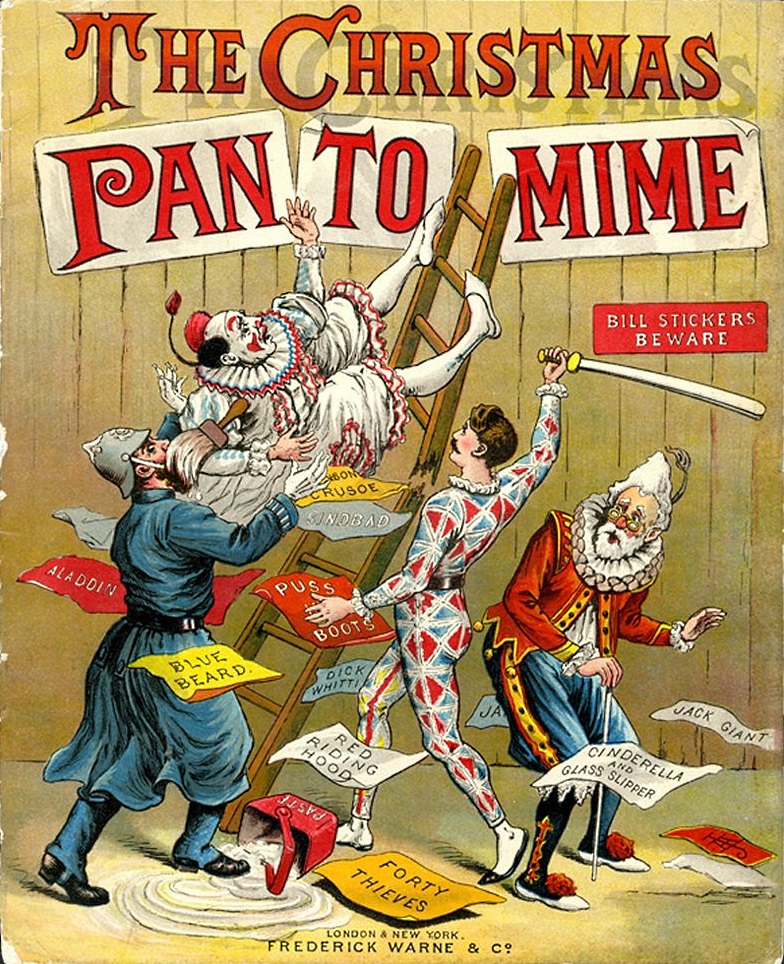
Harlequinade is an English comic theatrical genre, defined by the Oxford English Dictionary as "that part of a pantomime in which the harlequin and clown play the principal parts".

A hellmouth is a depiction of the entrance to Hell as the gaping mouth of a huge monster.
Costume design drawing by Judy Dearing for Porgy and Bess: Date: 1995. Created by: Judy Dearing, American, 1940 - 1995. Type: design drawings.
Suit pants for Ain't Misbehavin' costume worn by André De Shields: Date: 1982. Created by: Brooks-Van Horn Costume Company, Inc., American, 1962 - 1981. Worn by: André De Shields, American, born 1946.
BLK Vol. 4 No. 3: Date: September 1992. Published by: Alan Bell, American. Edited by: Alan Bell, American.
The Bill Poster's Dream: Date made: 1877. copyright holder: Novelty Publishing Co.. maker: Mayer, Ferdinand.
Wig from Rum Tum Tugger costume used in the musical Cats: Date made: 1982 - 2000. designer: Napier, John. Object Name: wig.
Immersive theater reduces the separation between audience and performance by immersing audiences within the performance itself.
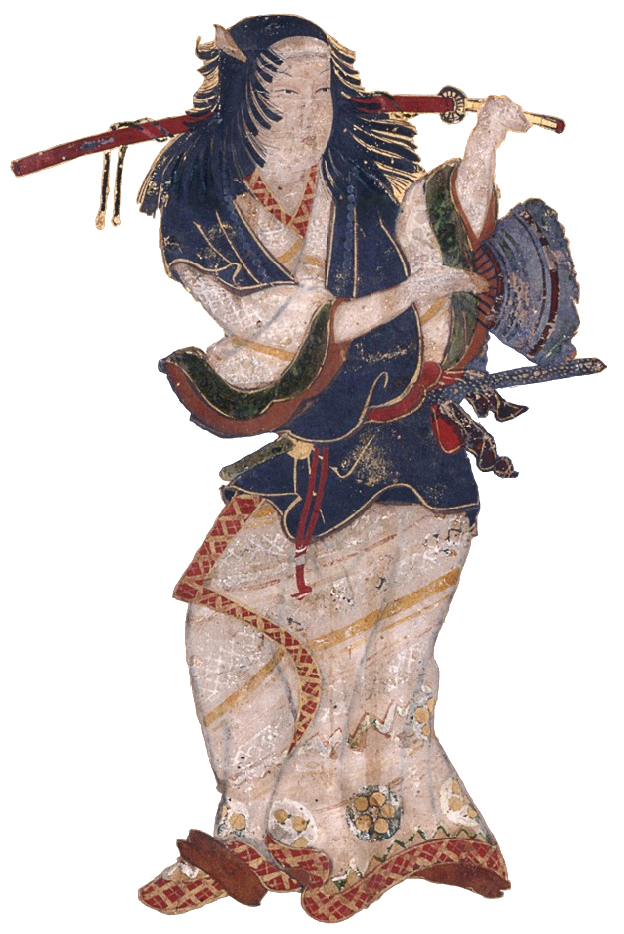
Izumo no Okuni (出雲 阿国) was a Japanese entertainer and miko (shrine maiden) who is believed to have invented the theatrical art form of kabuki.

Medieval theatre encompasses theatre in the period between the fall of the Western Roman Empire in the 5th century and the beginning of the Renaissance in approximately the 15th century.
A mansion stage is a small wooden platform with supports and a roof, commonly used in medieval theatre to represent specific locations (such as Heaven or Hell).

Memorial reconstruction is the hypothesis that the scripts of some 17th century plays were written down from memory by actors who had played parts in them, and that those transcriptions were publ
Suede wingtip shoes for Ain't Misbehavin' costume worn by André De Shields: Date: 1988. Created by: Unidentified. Worn by: André De Shields, American, born 1946.
Photograph of Etta Moten Barnett: Date: 1934-1972. Photograph by: Anthony J. Bruno, American, 1893 - 1976. Owned by: Etta Moten Barnett, American, 1901 - 2004.
Bowtie worn by Joel Grey as the Emcee in Cabaret: date made: around 1987. date made: ca 1987. wearer: Grey, Joel.
L'œil du prince (French: [l‿œj dy pʁɛ̃s]; English: "the prince's eye") is a French expression popularized by Nicola Sabbatini (1574–1654), an Italian stage designer and architect of the Renaissan

The word parterre comes from the French par and terre and literally translated means "on the ground".

Pedrolino is a primo ('first') Zanni, or comic servant, of the commedia dell'arte; the name is a hypocorism of Pedro ('Peter'), via the suffix -lino.

Phantasmagoria (), alternatively fantasmagorie and/or fantasmagoria, was a form of horror theatre that (among other techniques) used one or more magic lanterns to project frightening images – suc
A periaktos (plural form periaktoi, from a Greek word meaning revolving) is a device used for displaying and rapidly changing theatre scenes.
In Renaissance-era London, playing company was the usual term for a company of actors.
Polidor the Clown: date made: 1938. Object Name: geltin silver print. Physical Description: paper (overall material).
The Great Kentucky Rifle Team, Champions of the World: Date made: n.d.. maker: Metropolitan Printing Company. maker: Rothengatter.
Vest worn by Colman Domingo as Mr. Bones in The Scottsboro Boys: Associated Name: Stroman, Susan. Associated Name: Domingo, Colman. maker: Russell, Neno.
Records of Early English Drama (REED) is a performance history research project, based at the University of Toronto in Ontario, Canada.
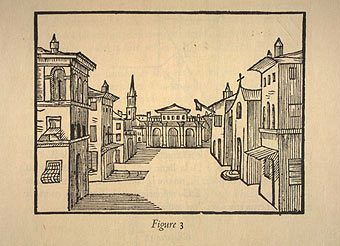
Nicola Sabbatini (1574 – 25 December 1654), also known as Niccolò Sabbatini or Nicola Sabbattini, was an Italian architect of the Baroque.

Russian Theatre or Complete Collection of All Russian Theatrical Works («Российский Ѳеатръ» или «Полное собраніе всѣхъ Россійскихъ Ѳеатральныхъ сочиненій») was a publication of the Imperial Acade
The Theatre of Van Campen (Dutch: Schouwburg van Van Campen, pronounced [ˈsxʌubʏr(ə)x fɑɱ vɑŋ ˈkɑmpə(n)]) was a theatre located at Keizersgracht 384 in Amsterdam.
In the theatre of ancient Greece, the skene was the structure at the back of a stage.