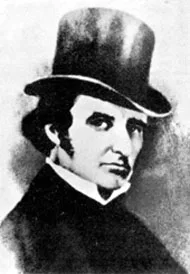
Anaximenes of Miletus: Biography, Facts and Career
Who is Anaximenes of Miletus? An evergreen, sourced profile: biography, key facts and career.
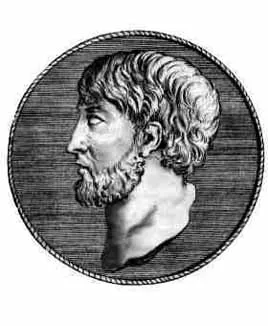
Anaximenes of Miletus (; Ancient Greek: Ἀναξιμένης ὁ Μιλήσιος, romanized: Anaximenēs ho Milēsios; c. 586/585 – c. 526/525 BC) was an Ancient Greek, pre-Socratic philosopher from Miletus in Anatolia (modern-day Turkey). He was the last of the three philosophers of the Milesian School, after Thales and Anaximander. These three are regarded by historians as the first philosophers of the Western world. Little is known of Anaximenes's life and work, as all of his original texts are lost. Historians and philosophers have reconstructed information about Anaximenes by interpreting texts about him by later writers. Anaximenes is known for his belief that air is the arche, or the basic element of the universe from which all things are created. All three Milesian philosophers were monists who believed in a single foundational source of everything: Anaximenes believed it to be air, while Thales believed it to be water and Anaximander believed it to be apeiron, an undefined infinity. It is generally accepted that Anaximenes was instructed by Anaximander, and many of their philosophical ideas are similar. While Anaximenes was the preeminent Milesian philosopher in Ancient Greece, he is often given lower importance than the others in the modern day. Anaximenes held that air could change into other forms through either rarefaction or condensation. Condensation would make the air denser, turning it into wind, clouds, water, earth, and finally stone. Rarefaction would make the air less dense as it eventually becomes fire. Anaximenes also developed a model of the Earth, describing it as a flat disc floating atop the air while the Sun and stars are also flat and float alongside it. He described the Sun as revolving around the Earth, causing it to be obscured by higher lands during the night. As one of the Milesian philosophers, Anaximenes was one of the earliest figures to develop science. He influenced many of the Pre-Socratic philosophers that succeeded him, such as Heraclitus, Anaxagoras, Diogenes of Apollonia, and Xenophanes. He also provided early examples of concepts such as natural science, physical change, and scientific writing.
Quick facts about Anaximenes of Miletus
- Full name: Anaximenes of Miletus
- Born: -0584-01-0
- Known as: Author
- Wikidata ID: Q80612
Profile compiled from public Wikipedia and Wikidata data. Details can change over time.
Frequently asked questions
Who is Anaximenes of Miletus?
Anaximenes of Miletus (; Ancient Greek: Ἀναξιμένης ὁ Μιλήσιος, romanized: Anaximenēs ho Milēsios; c. 586/585 – c. 526/525 BC) was an Ancient Greek, pre-Socratic philosopher from Miletus in Anatolia (modern-day Turkey).
What is Anaximenes of Miletus known for?
Anaximenes of Miletus (; Ancient Greek: Ἀναξιμένης ὁ Μιλήσιος, romanized: Anaximenēs ho Milēsios; c. 586/585 – c. 526/525 BC) was an Ancient Greek, pre-Socratic philosopher from Miletus in Anatolia (modern-day Turkey).
When was Anaximenes of Miletus born?
Anaximenes of Miletus was born on -0584-01-0.
Sources
More in Books & Authors
Keep reading