Publishing: History and Key Facts
Publishing is the process of making information, literature, music, software, and other content, whether in physical or digital form, available to the public for sale or free of charge.
Sourced publishing history reference: history, people and documented cultural context.
Selections rotate about every minute. Loading more keeps this order.

Publishing is the process of making information, literature, music, software, and other content, whether in physical or digital form, available to the public for sale or free of charge.

Sophistication of books is the practice of making a book complete by replacing missing leaves with leaves from another copy.

Book burning is the deliberate destruction by fire of books or other written materials, usually carried out in a public context.

In the United States, a little magazine is a magazine genre consisting of "artistic work which for reasons of commercial expediency is not acceptable to the money-minded periodicals or presses",

Bookbinding is the process of building a book, usually in codex format, from an ordered stack of paper sheets with one's hands and tools, or in modern publishing, by a series of automated process
Print culture embodies all forms of printed text and other printed forms of visual communication.
The African Books Collective (ABC) is a nonprofit distribution and marketing collective owned by African publishers.
Book packaging, or book producing, is a publishing activity in which an individual or outside company independently develops and produces a book, performing the creative and production work that

The history of the Quran, the holy book of Islam, is the timeline ranging from the inception of the Quran during the lifetime of Muhammad (believed to have received the Quran through revelation b
Book History is the official publication of the Society for the History of Authorship, Reading and Publishing.
Sola scriptura (Church Latin for 'by scripture alone') is a Christian theological doctrine held by most Protestant Christian denominations, in particular the Lutheran and Reformed traditions, tha
Penguin Books Limited is a British publishing house that was co-founded in 1935 by Allen Lane with his brothers Richard and John.
The Society for the History of Authorship, Reading and Publishing (SHARP) formed in 1991 in the United States on the initiative of scholars Jonathan Rose, Simon Eliot, and others.
A presentation copy is a copy of a book that has been presented, usually by the author or someone associated with the book's production, to another individual.
Pulp magazines, also called "the pulps", were inexpensive fiction magazines that were published from 1896 until around 1955.
Jeannette Hopkins (1923–2011) was an American editor known for her career at a time when few women worked in the field.
The popularity of genealogy, encouraged by the increasing use of the Internet is encouraging a number of people to mass-market what authorities regard as "scam genealogical books" which are somet

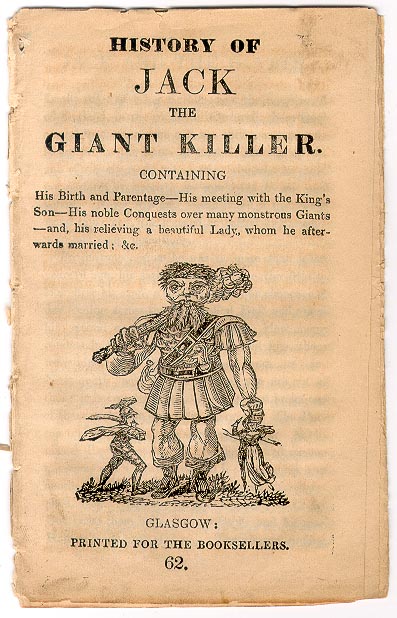
A chapbook is a type of small printed booklet that was a popular medium for street literature throughout early modern Europe.

The term "folio" (from Latin folium 'leaf') has three interconnected but distinct meanings in the world of books and printing: first, it is a term for a common method of arranging sheets of paper

A small press is a publisher with annual sales below a certain level or below a certain number of titles published.
A paperback (softcover, softback) book is one with a thick paper or paperboard cover, also known as wrappers, and often held together with glue rather than stitches or staples.

Book design is the graphic art of determining the visual and physical characteristics of a book.
A printing press is a machine that applies pressure to transfer ink onto a surface made of paper, cloth, or a similar material.

A Term Catalogue (German: Messkatalog) is a serial publication compiled to inform customers—most importantly book traders from other cities—of the book production as available on the book fairs.
The endpapers or end-papers of a book (also known as the endsheets) are the pages that consist of a double-size sheet folded, with one half pasted against an inside cover (the pastedown), and the
Saddle stitch staplers or simply saddle staplers are bookbinding tools designed to insert staples into the spine (saddle) of folded printed matter such as booklets, catalogues, brochures, and man

Block books or blockbooks, also called xylographica, are short books of up to 50 leaves, block printed in Europe in the second half of the 15th century as woodcuts with blocks carved to include b
The Regional Center for the Promotion of Books in Latin America and Caribbean (CERLALC) (Spanish: Centro Regional para el Fomento del Libro en América Latina y el Caribe, Portuguese: Centro Regio
Project Panama is a destructive book scanning operation started in early 2024 by the American artificial intelligence corporation Anthropic.
The Lyell Readership in Bibliography is an endowed annual lecture series given at the University of Oxford.
Founded in 1892, The Bibliographical Society is the senior learned society in the UK dealing with the study of the book and its history.
A manuscript culture is a culture that depends on hand-written manuscripts to store and disseminate information.
Fixed book price (FBP) is a form of resale price maintenance applied to books.
The history of books begins with the invention of writing, as well as other inventions such as paper and printing; this history continues all the way to the modern-day business of book printing.
A History of the Book in America is a five-volume series of scholarly books of essays published 2000–2010 by the University of North Carolina Press, and edited by David D.
The Espresso Book Machine (EBM) was a print on demand (POD) machine created by On Demand Books.
A text publication society is a learned society which publishes (either as its sole function, or as a principal function) scholarly editions of old works of historical or literary interest, or ar
The Copim community is an international group of researchers, universities, librarians, open access book publishers and infrastructure providers.

A scriptorium ( ) was a writing room in medieval European monasteries for the copying and illuminating of manuscripts by scribes.