History of the Quran: History and Key Facts
The history of the Quran, the holy book of Islam, is the timeline ranging from the inception of the Quran during the lifetime of Muhammad (believed to have received the Quran through revelation b
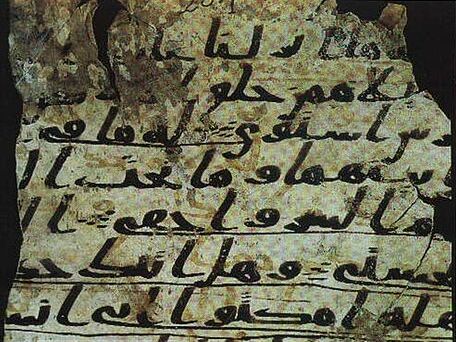
The history of the Quran, the holy book of Islam, is the timeline ranging from the inception of the Quran during the lifetime of Muhammad (believed to have received the Quran through revelation between 610 and 632 CE), to the emergence, transmission, and canonization of its written copies. The history of the Quran is a major focus in the field of Quranic studies.
In Sunni tradition, it is believed that the first caliph Abu Bakr ordered Zayd ibn Thabit to compile the written Quran, relying upon both textual fragments and the memories of those who had memorized it during Muhammad's lifetime, with the rasm (undotted Arabic text) being officially canonized under the third caliph Uthman ibn Affan (r. 644–656 CE), leading the Quran as it exists today to be known as the Uthmanic codex. Some Shia Muslims believe that the fourth caliph Ali ibn Abi Talib was the first to compile the Quran shortly after Muhammad died. The canonization process is believed to have been highly conservative, although some amount of textual evolution is also indicated by the existence of codices like the Sanaa manuscript. Beyond this, a group of researchers explores the irregularities and repetitions in the Quranic text in a way that refutes the traditional claim that it was preserved by memorization alongside writing. According to them, an oral period shaped the Quran as a text and order, and mentioned repetitions and irregularities were remnants of this period.
Some Western scholars, question the accuracy of the traditional accounts on whether the holy book existed in any form before the last decade of the seventh century (Patricia Crone and Michael Cook); and/or argue it is a "cocktail of texts", some of which may have been existent a hundred years before Muhammad, that evolved (Gerd R. Puin), or was redacted (J. Wansbrough), to form the Quran.
Michael Cook said that, in the Sanaa texts, there was no distinction between "say" and "he said." Later texts, however, standardized the "ql" (which can be read as "he said" or "say") in these texts to be read as "say" in many places.
Source and attribution
Text excerpted from History of the Quran by Wikipedia contributors, available under Creative Commons Attribution-ShareAlike 4.0. The extract is abridged and formatting has been adjusted; the adapted text on this page is shared under the same licence. Revision history.
Sources
More in Books & Authors
Keep reading
