Heinz Guderian: Biography, Facts and Career
Who is Heinz Guderian? An evergreen, sourced profile: biography, key facts and career.
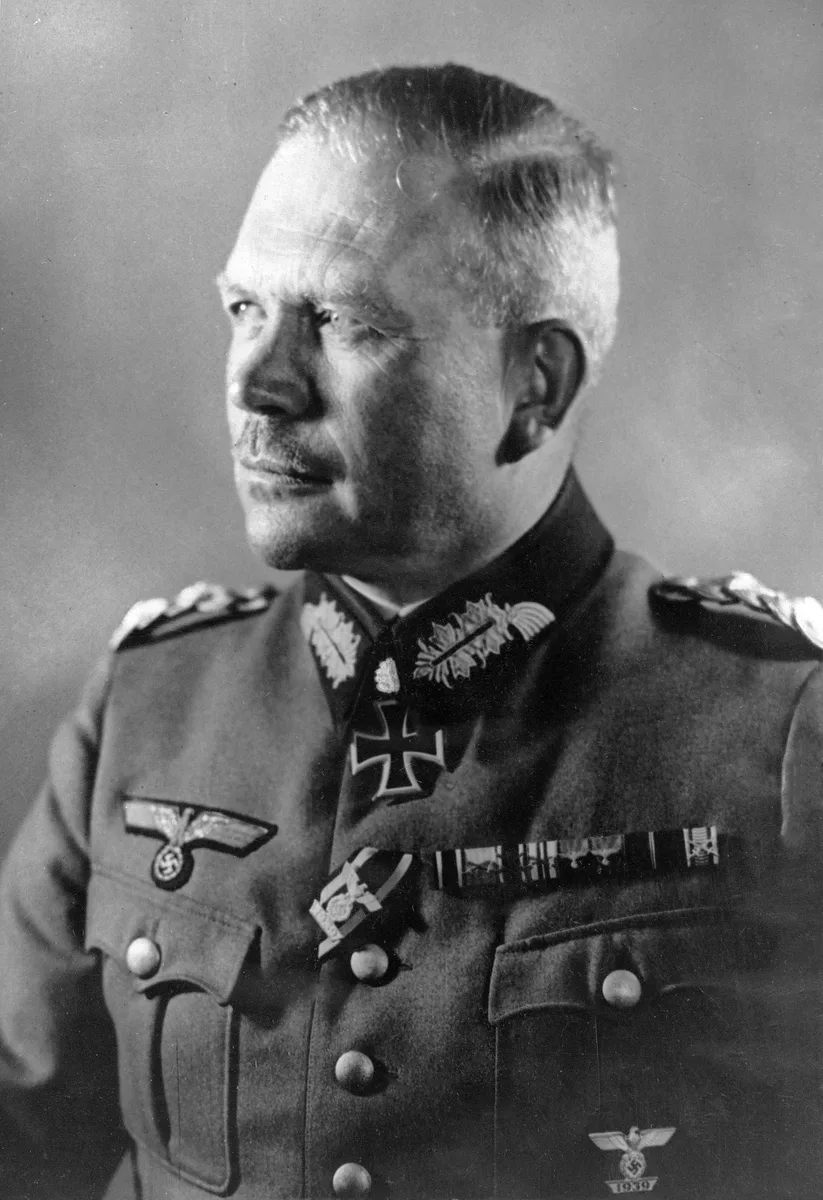
Heinz Wilhelm Guderian (German: [haɪnts ˈvɪlhɛlm ɡuˈdeːʁi.an]; 17 June 1888 – 14 May 1954) was a German army general and military theorist. A pioneer and advocate of the "blitzkrieg" approach, he played a central role in the development of the panzer division concept and tank warfare more broadly. After serving in the military since leaving school, including in World War I, in 1936, he was promoted to Heer Generalmajor (Major General) and became the Inspector of Motorized Troops. At the beginning of World War II, Guderian led an armoured corps in the Invasion of Poland with the rank of General der Panzertruppe. During the Invasion of France, he commanded the armoured units that attacked through the Ardennes forest and overwhelmed the Allied defenses at the Battle of Sedan. He led the 2nd Panzer Army with the rank of Generaloberst (Colonel General) during Operation Barbarossa, the invasion of the Soviet Union. The campaign ended in failure after the German offensive Operation Typhoon failed to capture Moscow, and after a disagreement with Hitler, Guderian was dismissed. In early 1943, Adolf Hitler appointed Guderian to the newly created position of Inspector General of Armoured Troops. In this role, he had broad responsibility to rebuild and train new panzer forces but saw limited success due to Germany's worsening war economy. Guderian was appointed Acting Chief of the General Staff of the Army High Command, immediately following the 20 July Plot to assassinate Hitler. Guderian was appointed as a member of the "Court of Honour" by Hitler, which in the aftermath of the plot was used to dismiss people from the military so they could be tried in the "People's Court" and executed. He was Hitler's personal advisor on the Eastern Front and became closely associated with the Nazis. Guderian's troops carried out the criminal Commissar Order during Barbarossa, and he was implicated in the commission of reprisals after the Warsaw Uprising of 1944. Guderian surrendered to US forces on 10 May 1945 and was interned until 1948. He was released without being charged and retired to write his memoirs. Entitled "Memoirs of a Soldier", the autobiography was published in 1950 and became a bestseller. Guderian's writings received backlash in the decades since their release, with historians finding the original works to contain post-war myths, including that of the "clean Wehrmacht". Guderian portrayed himself as the sole originator of the panzer force and refused the stipulation that units under his command committed crimes of war. These criticisms were partially addressed in his 1952 re-release edition of the book, newly entitled Panzer Leader, which mended some historic inaccuracies and introduced a foreword from B. H. Liddell Hart. Guderian died in 1954 and was buried in Goslar.
Quick facts about Heinz Guderian
- Full name: Heinz Guderian
- Born: 1888-06-17
- Nationality: Germany
- Known as: Author
- Wikidata ID: Q70560
Profile compiled from public Wikipedia and Wikidata data. Details can change over time.
Frequently asked questions
Who is Heinz Guderian?
Heinz Wilhelm Guderian (German: [haɪnts ˈvɪlhɛlm ɡuˈdeːʁi.an]; 17 June 1888 – 14 May 1954) was a German army general and military theorist.
What nationality is Heinz Guderian?
Heinz Guderian is Germany.
When was Heinz Guderian born?
Heinz Guderian was born on 1888-06-17.
Sources
More in Books & Authors
Keep reading