Jean-Paul Sartre: Biography, Facts and Career
Who is Jean-Paul Sartre? An evergreen, sourced profile: biography, key facts and career.
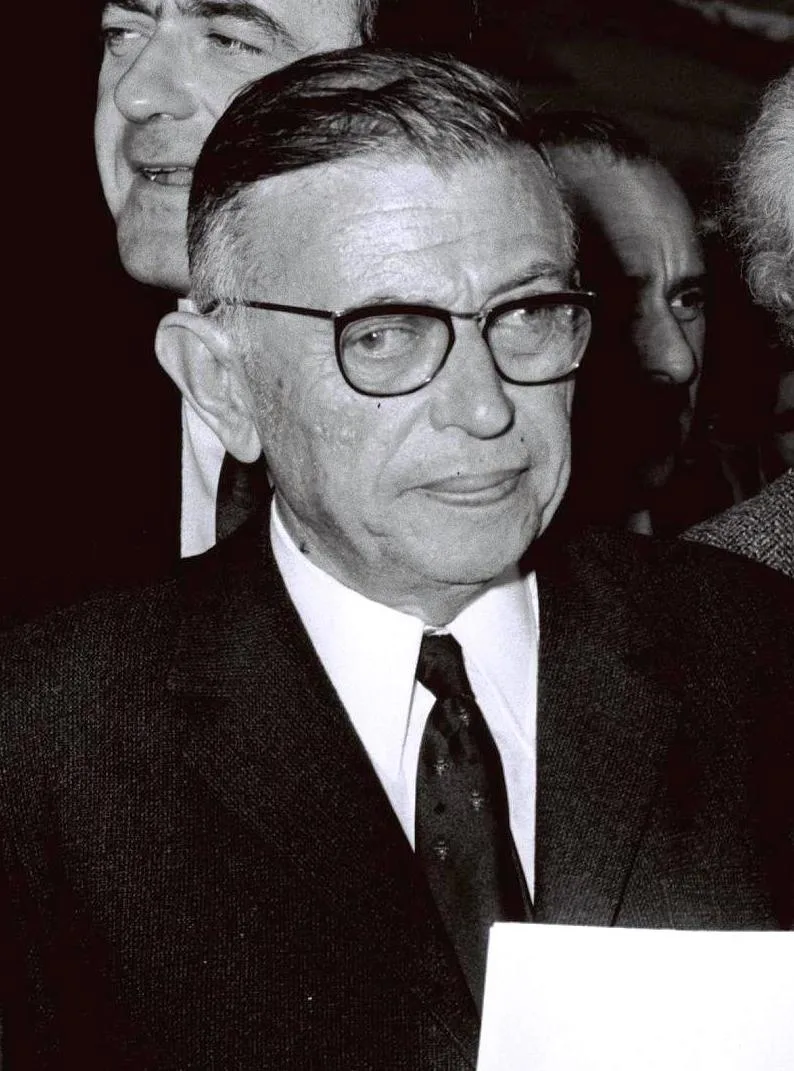
Jean-Paul Charles Aymard Sartre (, US also ; French: [saʁtʁ]; 21 June 1905 – 15 April 1980) was a French philosopher, playwright, novelist, screenwriter, political activist, biographer, and literary critic, considered a leading figure in 20th-century French philosophy and Marxism. Sartre was one of the key figures in the philosophy of existentialism (and phenomenology). His work has influenced sociology, critical theory, post-colonial theory, and literary studies. He was awarded the 1964 Nobel Prize in Literature despite attempting to refuse it, saying that he always declined official honors and that "a writer should not allow himself to be turned into an institution." Sartre had an open relationship with prominent feminist and fellow existentialist philosopher Simone de Beauvoir. Together, Sartre and de Beauvoir challenged the cultural and social assumptions and expectations of their upbringings, which they considered bourgeois, in both lifestyles and thought. The conflict between oppressive, spiritually destructive conformity (mauvaise foi, literally, 'bad faith') and an "authentic" way of "being" became the dominant theme of Sartre's early work, a theme embodied in his principal philosophical work Being and Nothingness (L'Être et le Néant, 1943). Sartre provided an introduction to his philosophy in his work Existentialism Is a Humanism (L'existentialisme est un humanisme, 1946), originally presented as a lecture. Born in Paris, Sartre lost his father at age two and was raised primarily by his mother and grandfather, who introduced him to literature. He studied at the prestigious École Normale Supérieure, where he developed a deep interest in philosophy, influenced by thinkers like Henri Bergson, Edmund Husserl, and Martin Heidegger. Sartre's early academic career included teaching in several French lycées and engaging in provocative pranks and debates. Sartre's life was marked by strong political engagement. During World War II, he was drafted, captured, and later released, after which he co-founded the resistance group Socialisme et Liberté. Though the group dissolved, Sartre became an influential voice in occupied France, contributing to underground literature and writing plays like No Exit. After the war, he co-founded the journal Les Temps modernes and increasingly used his platform to advocate for political and social causes. He supported anti-colonial movements, condemned French policies in Algeria, opposed U.S. intervention in Vietnam, and aligned himself at various times with Marxism and Maoism. Despite declining health in his later years, Sartre remained committed to activism and intellectual debate until his death in 1980. His funeral drew 50,000 mourners.
Quick facts about Jean-Paul Sartre
- Full name: Jean-Paul Sartre
- Born: 1905-06-21
- Nationality: France
- Known as: Author
- Wikidata ID: Q9364
Profile compiled from public Wikipedia and Wikidata data. Details can change over time.
Frequently asked questions
Who is Jean-Paul Sartre?
Jean-Paul Charles Aymard Sartre (, US also ; French: [saʁtʁ]; 21 June 1905 – 15 April 1980) was a French philosopher, playwright, novelist, screenwriter, political activist, biographer, and literary critic, considered a leading figure in 20th-century French philosophy and Marxism.
What nationality is Jean-Paul Sartre?
Jean-Paul Sartre is France.
When was Jean-Paul Sartre born?
Jean-Paul Sartre was born on 1905-06-21.
Sources
More in Books & Authors
Keep reading