Simonides of Ceos: Biography, Facts and Career
Who is Simonides of Ceos? An evergreen, sourced profile: biography, key facts and career.
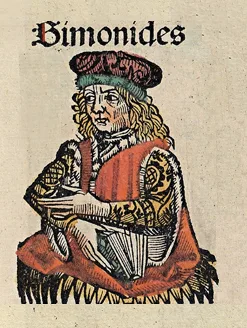
Simonides of Ceos (; Ancient Greek: Σιμωνίδης ὁ Κεῖος; c. 556 – 468 BC) was a Greek lyric poet, born in Ioulis on Ceos. The scholars of Hellenistic Alexandria included him in the canonical list of the nine lyric poets esteemed by them as worthy of critical study. Included on this list were Bacchylides, his nephew, and Pindar, reputedly a bitter rival, both of whom benefited from his innovative approach to lyric poetry. Simonides, however, was more involved than either in the major events and with the personalities of their times. Lessing, writing in the Enlightenment era, referred to him as "the Greek Voltaire". His general renown owes much to traditional accounts of his colourful life, as one of the wisest of men; as a greedy miser; as an inventor of a system of mnemonics; and the inventor of some letters of the Greek alphabet (ω, η, ξ, ψ). Such accounts include fanciful elements, yet he had a real influence on the sophistic enlightenment of the Classical era. His fame as a poet rests largely on his ability to present basic human situations with affecting simplicity. In the words of the Roman rhetorician Quintilian (35–100 AD):
Simonides has a simple style, but he can be commended for the aptness of his language and for a certain charm; his chief merit, however, lies in the power to excite pity, so much so that some prefer him in this respect to all other writers of the genre. He is popularly associated with epitaphs commemorating fallen warriors, as for example the Lacedaemonians at the Battle of Thermopylae:
Today only glimpses of his poetry remain, either in the form of papyrus fragments or quotations by ancient literary figures, yet new fragments continue to be unearthed by archaeologists at Oxyrhynchus, a city and archaeological site in Egypt that has yielded papyrus fragments from over a century of excavations. He is included in narratives as diverse as Mary Renault's modern historical novel The Praise Singer (where he is the narrator and main character), Plato's Protagoras (where he is a topic of conversation), and some verses in Callimachus' Aetia (where he is portrayed as a ghost complaining about the desecration of his own tomb in Acragas).
Quick facts about Simonides of Ceos
- Full name: Simonides of Ceos
- Born: -0555-01-0
- Known as: Author
- Wikidata ID: Q273003
Profile compiled from public Wikipedia and Wikidata data. Details can change over time.
Frequently asked questions
Who is Simonides of Ceos?
Simonides of Ceos (; Ancient Greek: Σιμωνίδης ὁ Κεῖος; c.
What is Simonides of Ceos known for?
Simonides of Ceos (; Ancient Greek: Σιμωνίδης ὁ Κεῖος; c.
When was Simonides of Ceos born?
Simonides of Ceos was born on -0555-01-0.
Sources
More in Books & Authors
Keep reading