Tycho Brahe: Biography, Facts and Career
Who is Tycho Brahe? An evergreen, sourced profile: biography, key facts and career.
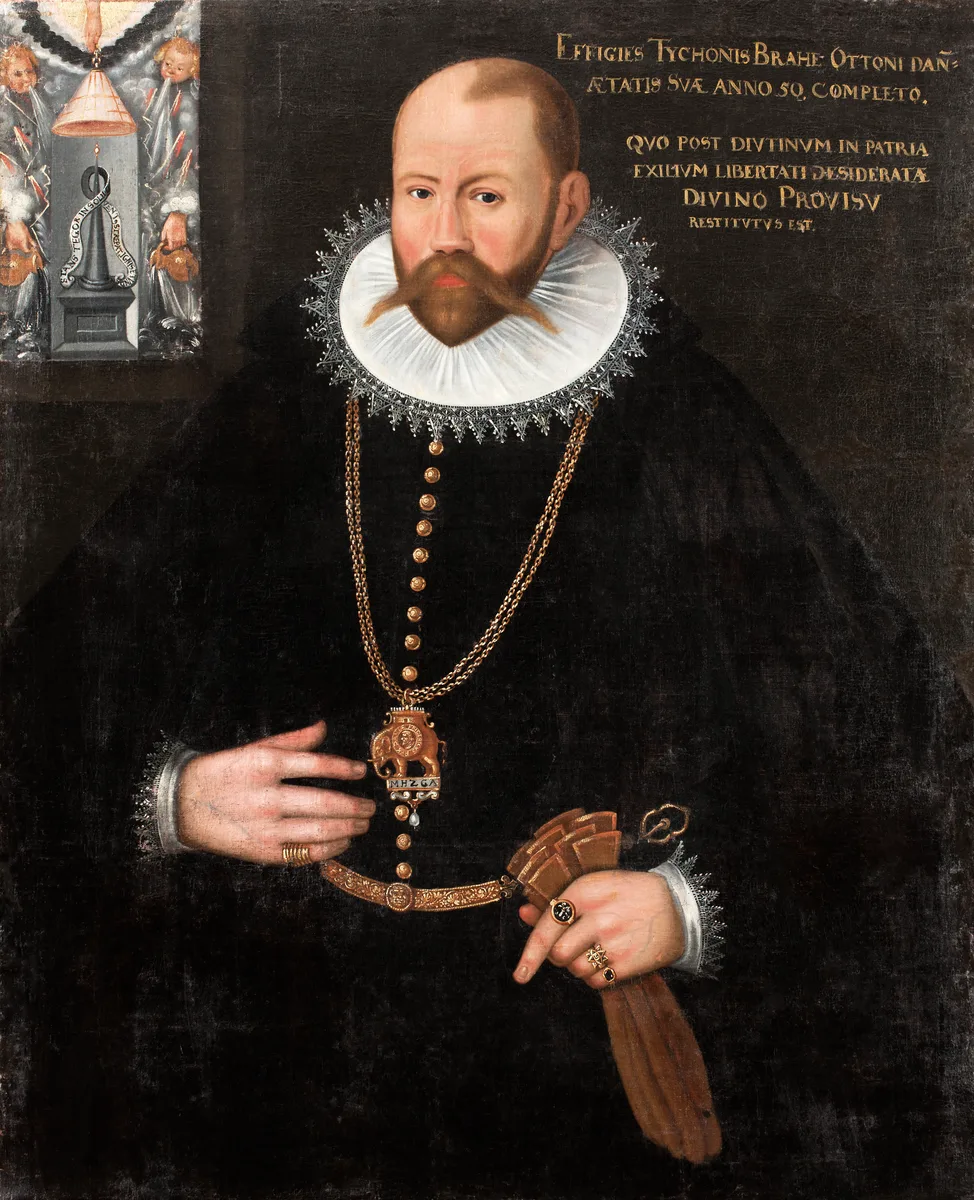
Tycho Brahe ( TY-koh BRAH-(h)ee, - BRAH(-hə); Danish: [ˈtsʰykʰo ˈpʁɑːə] ; born Tyge Ottesen Brahe, Danish: [ˈtsʰyːjə ˈʌtəsn̩ ˈpʁɑːə]; 14 December 1546 – 24 October 1601), generally called Tycho for short, was a Danish astronomer known for his comprehensive and unprecedentedly accurate astronomical observations which helped to turn astronomy into the first modern science and launch the Scientific Revolution. He was known during his lifetime as an astronomer, astrologer, and alchemist. He was the last major astronomer before the invention of the telescope and has been described as the greatest pre-telescopic astronomer. In 1572, Tycho noticed a completely new star that was brighter than any star or planet. Astonished by the existence of a star that ought not to have been there, he devoted himself to the creation of ever more accurate instruments of measurement over the next fifteen years (1576–1591). King Frederick II granted Tycho an estate on the island of Hven and the money to build Uraniborg, the first large observatory in Christian Europe. He later worked underground at Stjerneborg, where he realised that his instruments in Uraniborg were not sufficiently steady. An heir to several noble families, Tycho was well educated. He worked to combine what he saw as the geometrical benefits of Copernican heliocentrism with the philosophical benefits of the Ptolemaic system, and devised the Tychonic system, his own version of a model of the Universe, with the Sun orbiting the Earth, and the planets as orbiting the Sun. In De nova stella (1573), he refuted the Aristotelian belief in an unchanging celestial realm. His measurements indicated that "new stars", stellae novae, now called supernovae, moved beyond the Moon, and he was able to show that comets were not atmospheric phenomena, as was previously thought. In 1597, Tycho was forced by the new king, Christian IV, to leave Denmark. He was invited to Prague, where he became the official imperial astronomer, and built an observatory at Benátky nad Jizerou. Before his death in 1601, he was assisted for a year by Johannes Kepler, who went on to use Tycho's data to develop his own three laws of planetary motion.
Quick facts about Tycho Brahe
- Full name: Tycho Brahe
- Born: 1546-12-24
- Nationality: Kingdom of Denmark
- Known as: Author
- Wikidata ID: Q36620
Profile compiled from public Wikipedia and Wikidata data. Details can change over time.
Frequently asked questions
Who is Tycho Brahe?
Tycho Brahe ( TY-koh BRAH-(h)ee, - BRAH(-hə); Danish: [ˈtsʰykʰo ˈpʁɑːə] ; born Tyge Ottesen Brahe, Danish: [ˈtsʰyːjə ˈʌtəsn̩ ˈpʁɑːə]; 14 December 1546 – 24 October 1601), generally called Tycho for short, was a Danish astronomer known for his comprehensive and unprecedentedly accurate astronomical observations which helped to turn astronomy into the first modern science and launch the Scientific Revolution.
What nationality is Tycho Brahe?
Tycho Brahe is Kingdom of Denmark.
When was Tycho Brahe born?
Tycho Brahe was born on 1546-12-24.
Sources
More in Books & Authors
Keep reading