Who Is Ernest Hemingway? Origin, Powers and Key Facts
Ernest Hemingway (Non-Fictional): A famous writer and journalist.
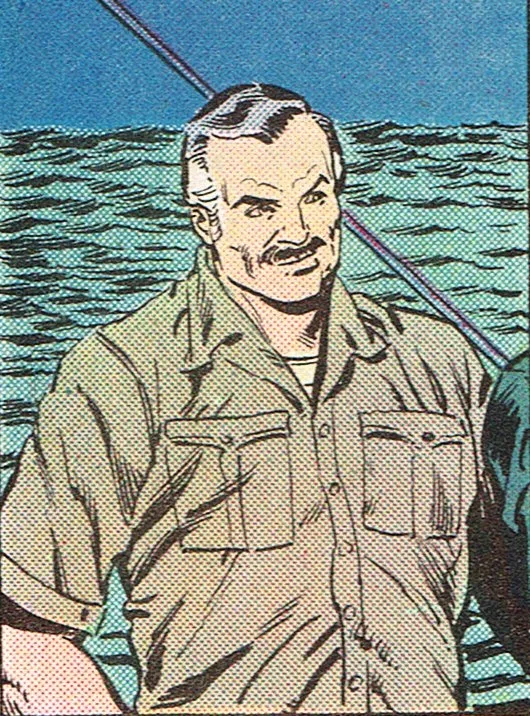
Ernest Hemingway is a Non-Fictional comic book character, the alter ego of Ernest Miller Hemingway, with over 70 comic issue appearances. A famous writer and journalist.
Who is Ernest Hemingway?
Ernest Hemingway is synonymous with masculinity. He was a war correspondent during World War II , where he gained the nickname "Papa" from the soldiers; was a well-documented fan of both bull-fighting and boxing, and a rugged outdoorsman. Hemingway was also consumed a lot of alcohol. Profile viewers will note to the right "invulnerability." During Hemingway's lifetime, his legs took shrapnel from a mortar in Italy, impaled through the throat, struck in the forehead by a falling skylight in his own bathroom, bound his own broken arm after a car accident, concussed after another accident, drove himself from Paris to Luxembourg while experiencing pneumonia, survived two plan crashes, frostbite, and a gas-heater explosion, and punctured his liver. These, and other tests of his stamina, did not slow down his fiction output or his larger-than-life lifestyle. Hemingway's published work includes the short story, "The Killers," which was influential on noir fiction, as well as the novels For Whom the Bell Tolls , The Old Man and the Sea , and The Garden of Eden among any others. The Dangerous Summer chronicles the summer of 1957 when he was sent to Spain as a journalist to write about bull-.
Key facts
Ernest Hemingway is of human origin and first appeared in "The American Century Ch. 1: The Great Half-Century Fair". The character is published by Non-Fictional. With 70 recorded issue appearances, Ernest Hemingway ranks among the most featured characters in comics.
Frequently asked questions
Who is Ernest Hemingway?
A famous writer and journalist.
What is Ernest Hemingway's real name?
Ernest Hemingway's real identity is Ernest Miller Hemingway.
When did Ernest Hemingway first appear?
Ernest Hemingway first appeared in "The American Century Ch. 1: The Great Half-Century Fair".
Sources
More in Books & Authors
Keep reading