Bridal Robe (Hwarot) (1850–1910): Art, History and Details
Bridal Robe (Hwarot) at the Cleveland Museum of Art: 1850–1910, Satin weave silk; silk embroidery; paper edging on neck and sleeves. Explore the work's context, creator attribution and collection history.
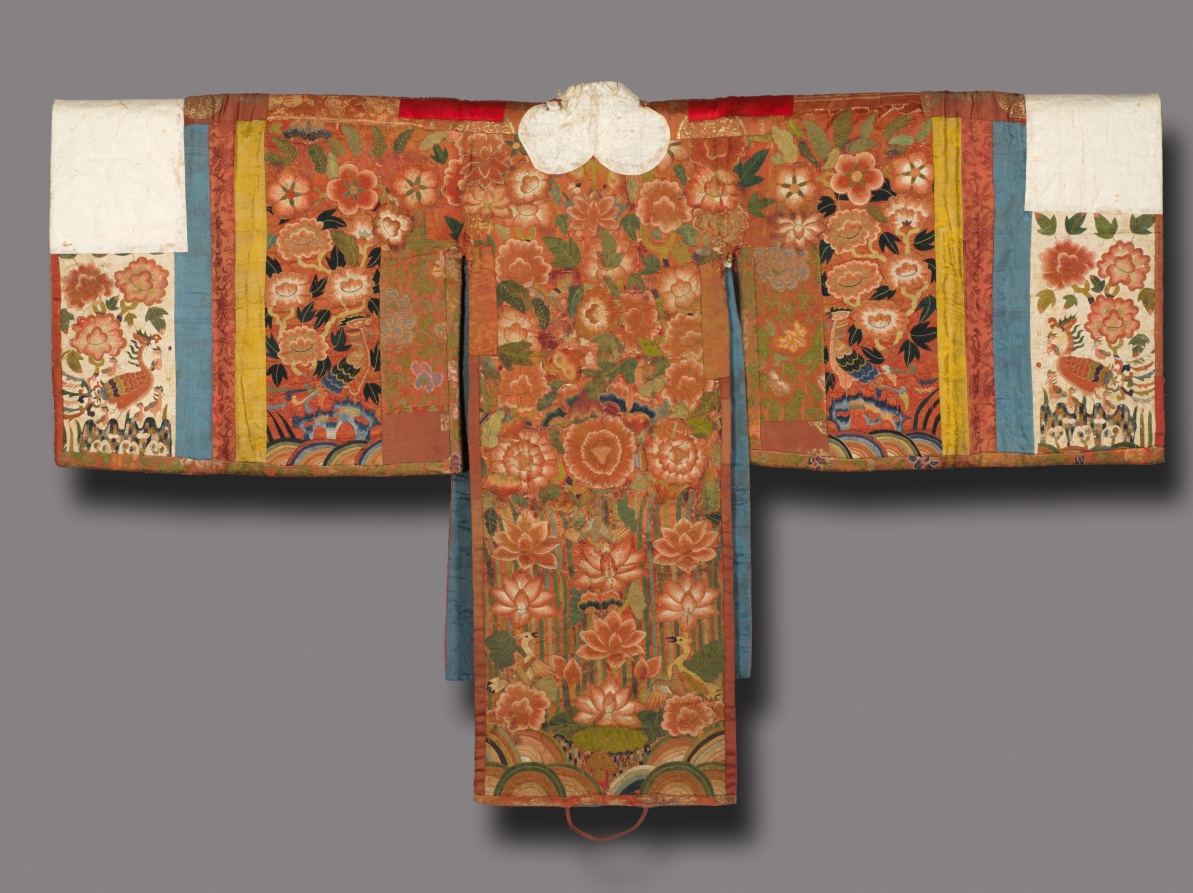
Bridal Robe (Hwarot) (1850–1910) is in the Cleveland Museum of Art collection.
The work and its context
The museum's open-access catalogue describes the work:
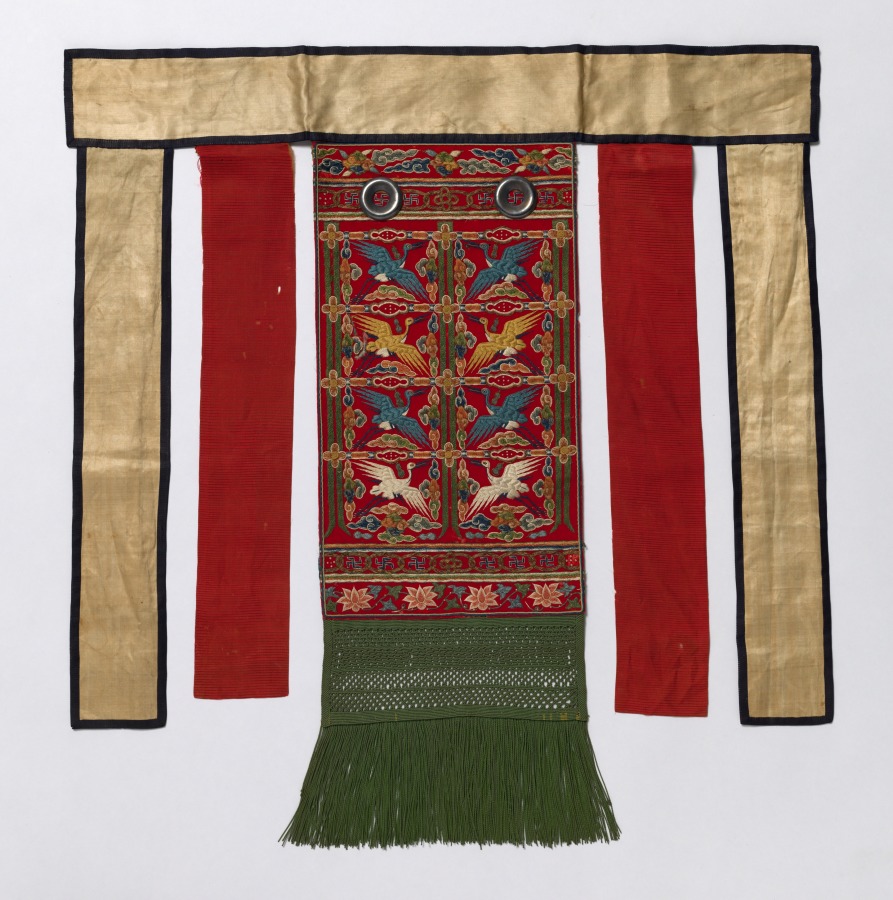
This bride's robe is exquisitely embroidered with various symbols of happiness in colorful silk threads. Butterflies stand for marital happiness; the phoenix, numerous offspring; and lotus flowers and white cranes, longevity. Yet, the bridal robe does not attest to the life of luxury. To the contrary, many traces of repairs, trimmings, and patchwork reflect Joseon period women’s commitment to value neo-Confucian aesthetics of frugality and modesty. Substantial repairs and patching reveal that this robe served as an important communal resource to be shared and passed down through several generations. Its collar and sleeves are covered in thick white paper; this paper is replaced with new paper for each bride, while the robe itself was reused for decades.
Object facts
- Title: Bridal Robe (Hwarot)
- Date: 1850–1910
- Culture: Korea, Joseon dynasty (1392–1910)
- Type: Garment
- Technique: Satin weave silk; silk embroidery; paper edging on neck and sleeves
- Dimensions: Overall: 121.9 x 186.7 cm (48 x 73 1/2 in.)
- Collection: Textiles
- Department: Textiles
- Accession number: 1918.549
A detail from the museum
This bride's robe was not made for one specific bride, but rather was shared and passed down to many brides.
Collection credit
The Worcester R. Warner Collection
Further reading listed by the museum
- Artistic Court Embroidery [아름다운 궁중자수]. Seoul: National Palace Museum. 2013.
- Kwon, Hea-jin and Ji-yeon Kim. “Study on the Formative Characteristics of Embroidery Panels of Hwarot at the Victoria and Albert Museum [빅토리아 앨버트 박물관 소장 활옷의 조형성 연구].” Boksik (2013): 176-188.
- O, Suk-gyeong and Hong Na-young. “The Usage of Paper in the Costumes of the Joseon Dynasty [조선시대 복식에 사용된 종이심에 관한 연구].” Boksik (2015): 75-91.
View the collection record
See the museum's photographs and full catalogue entry. Catalogue text is reproduced from the Cleveland Museum of Art's open-access data, with HTML formatting removed. This object and its supplied image are designated CC0.
Sources
More in Fashion & Style
Keep reading