Loincloth (1425–1500 (radiocarbon date, 92.3% probability)): Art, History and Details
Loincloth at the Cleveland Museum of Art: 1425–1500 (radiocarbon date, 92.3% probability), cotton; plain weave, brocaded and complex alternating gauze with 5 shots of plain weave between gauze shots. Explore the work's context, creator attr
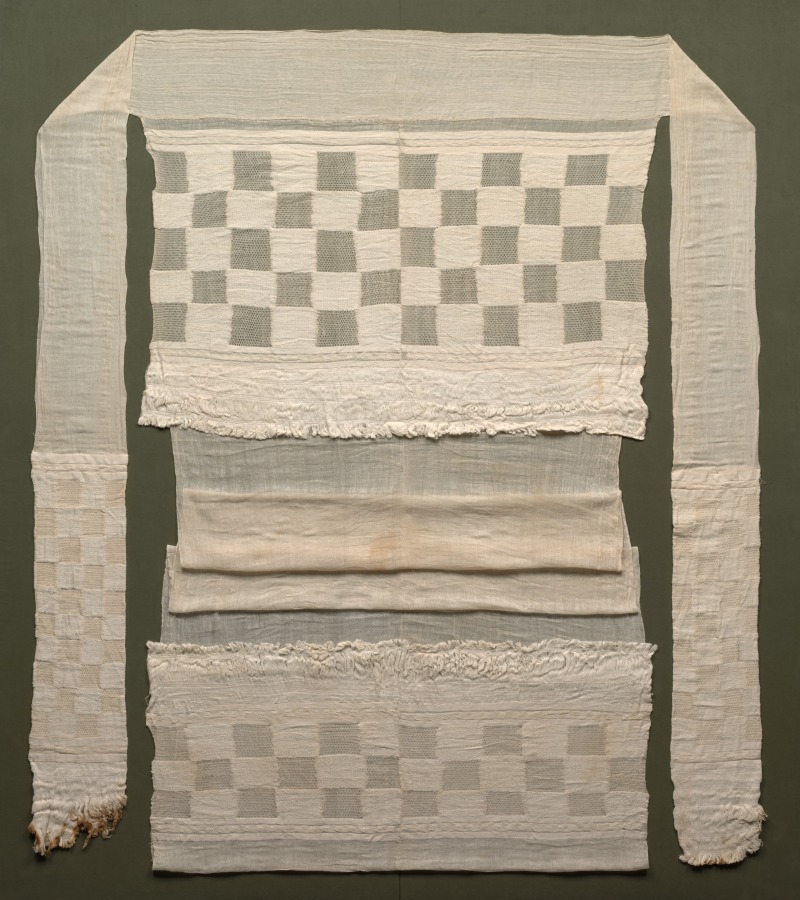
Loincloth (1425–1500 (radiocarbon date, 92.3% probability)) is in the Cleveland Museum of Art collection.
The work and its context
The museum's open-access catalogue describes the work:
Loincloths were basic men’s wear in ancient Peru. But the extraordinary size of some examples—this one is about eight feet long, unfolded—makes it difficult to know how they were worn, except that they were tied around the waist with the decorated panels hanging at the front and back of the body. The appearance may have been that of a billowing skirt.
Object facts
- Title: Loincloth
- Date: 1425–1500 (radiocarbon date, 92.3% probability)
- Culture: Peru, North Coast, Chimú style, 1200–1460s
- Type: Garment
- Technique: cotton; plain weave, brocaded and complex alternating gauze with 5 shots of plain weave between gauze shots
- Dimensions: Overall: 151.1 x 57.2 cm (59 1/2 x 22 1/2 in.); Mounted: 167.6 x 71.1 cm (66 x 28 in.)
- Collection: T - Pre-Columbian
- Department: Textiles
- Accession number: 2005.5.2
A detail from the museum
This loincloth is huge!
Collection credit
Norman O. Stone and Ella A. Stone Memorial Fund
Further reading listed by the museum
- Rowe, Ann Pollard, and John P. O'Neill. Costumes & featherwork of the Lords of Chimor: textiles from Peru's north coast. 1984.
- Sims, Lowery Stokes. The persistence of geometry: form, content, and culture in the collection of the Cleveland Museum of Art. Cleveland: Cleveland Museum of Art, 2006.
View the collection record
See the museum's photographs and full catalogue entry. Catalogue text is reproduced from the Cleveland Museum of Art's open-access data, with HTML formatting removed. This object and its supplied image are designated CC0.
Sources
More in Fashion & Style
Keep reading