Sumibōshi (1800–1850): Art, History and Details
Sumibōshi at the Cleveland Museum of Art: 1800–1850, silksatin weave; metal thread weft. Explore the work's context, creator attribution and collection history.
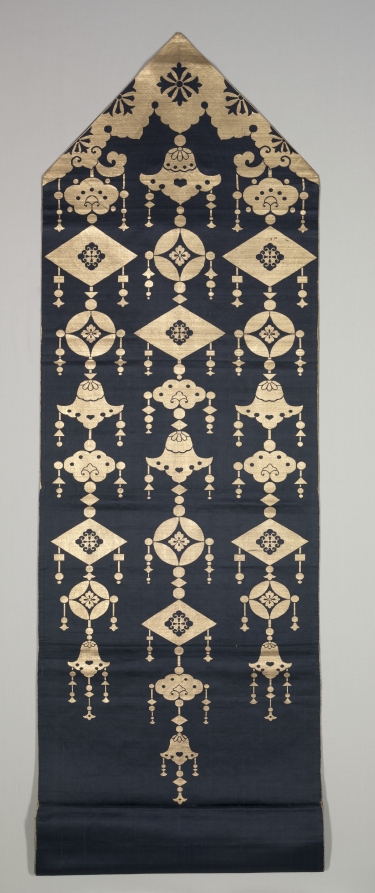
Sumibōshi (1800–1850) is in the Cleveland Museum of Art collection.
The work and its context
The museum's open-access catalogue describes the work:
Sumibōshi literally means "hat with corners" in Japanese, and refers to the square shape made when this textile hat is tied on the head. Actors playing the roles of religious figures in Nō theater often wear this kind of cap. It derives from Buddhist vestments.
Object facts
- Title: Sumibōshi
- Date: 1800–1850
- Culture: Japan, Edo period (1615–1868)
- Type: Garment
- Technique: silksatin weave; metal thread weft
- Dimensions: Average: 257.2 x 67.3 cm (101 1/4 x 26 1/2 in.)
- Collection: Textiles
- Department: Textiles
- Accession number: 1916.11
A detail from the museum
The design on this hat is meant to resemble metal hanging ornaments adorning the interiors of Japanese Buddhist temples.
Collection credit
Worcester R. Warner Collection
View the collection record
See the museum's photographs and full catalogue entry. Catalogue text is reproduced from the Cleveland Museum of Art's open-access data, with HTML formatting removed. This object and its supplied image are designated CC0.
Sources
More in Fashion & Style
Keep reading