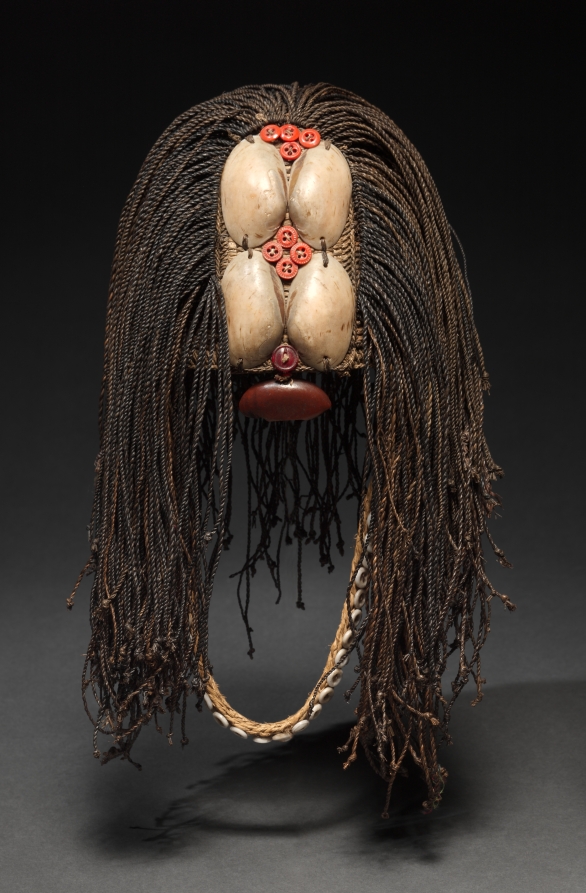
Wig (uyembe matota, wiyembe, or pulumba) (early to mid 1900s): Art, History and Details
Wig (uyembe matota, wiyembe, or pulumba) at the Cleveland Museum of Art: early to mid 1900s, Plant fiber, pelt, and clay. Explore the work's context, creator attribution and collection history.
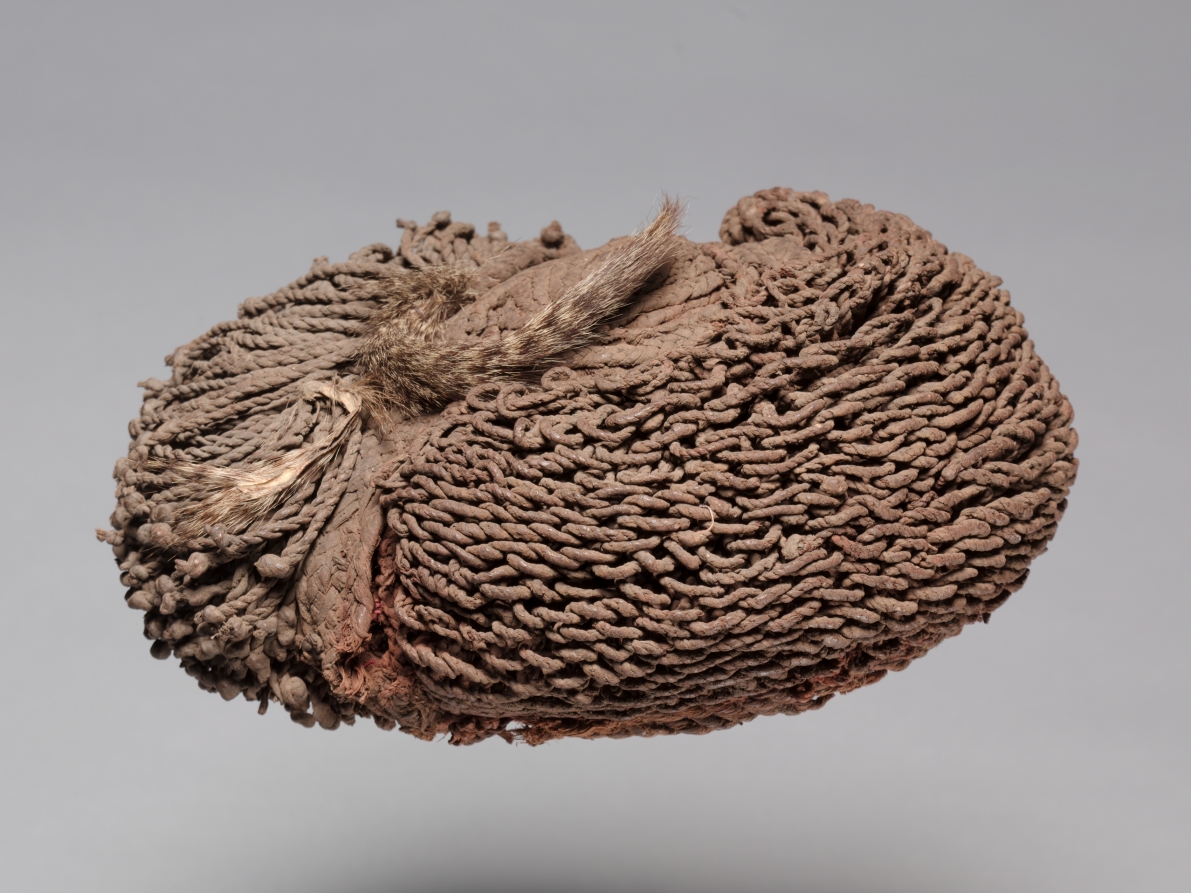
Wig (uyembe matota, wiyembe, or pulumba) (early to mid 1900s) is in the Cleveland Museum of Art collection.
The work and its context
The museum's open-access catalogue describes the work:
Among the Chokwe, hats, diadems, and wigs of all sorts made in a variety of materials were once commonly worn by both men and women. Some were exclusive to religious and political titles. This wig imitates a female hairstyle in vogue until the 1960s. Made by a male craftsman, it was most typically worn by a woman at dances and other public festivals.
Object facts
- Title: Wig (uyembe matota, wiyembe, or pulumba)
- Date: early to mid 1900s
- Culture: Central Africa, Democratic Republic of the Congo or Angola, Chokwe, early to mid 20th century
- Type: Garment
- Technique: Plant fiber, pelt, and clay
- Dimensions: Overall: 12.7 x 24.8 x 27.3 cm (5 x 9 3/4 x 10 3/4 in.)
- Collection: African Art
- Department: African Art
- Accession number: 2007.1
Collection credit
The Jane B. Tripp Charitable Lead Annuity Trust
Further reading listed by the museum
- Petridis, Constantine. "New Acquisitions of African Art at the Cleveland Museum of Art". African Arts (44) No. 1, Spring 2011. Pg. 63, Fig. 10
View the collection record
See the museum's photographs and full catalogue entry. Catalogue text is reproduced from the Cleveland Museum of Art's open-access data, with HTML formatting removed. This object and its supplied image are designated CC0.
Sources
More in Fashion & Style
Keep reading