Art pipeline: History and Key Facts
The art pipeline is the process of creating and implementing art for a particular project, most commonly associated with the creative process for developing video games.
25 articles
The art pipeline is the process of creating and implementing art for a particular project, most commonly associated with the creative process for developing video games.
Adobe Flash animation (formerly Macromedia Flash animation and FutureSplash animation) is an animation that is created with the Adobe Animate (formerly Flash Professional) platform or similar ani
A thaumatrope is an optical toy that was introduced in 1825.
"The Story of the Animated Drawing" is an episode of the Walt Disney's Disneyland television program originally broadcast on November 30, 1955.
"Saturday-morning cartoon" is a colloquial term for original animated series and live-action programming typically scheduled on Saturday and Sunday mornings in the United States on the "Big Three
"The Plausible Impossible" is an episode of the Disneyland television program, originally broadcast on October 31, 1956.
The National Cartoon Museum was an American museum dedicated to the collection, preservation and exhibition of cartoons, comic strips and animation.

Zenas Winsor McCay (c.
In Western animation, LGBTQ themes means plotlines and characters which are lesbian, gay, bisexual, transgender, or otherwise queer in series, produced in Western countries, and not in Japan (i.e
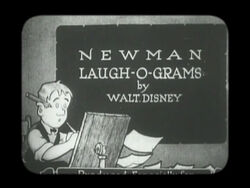
The Laugh-O-Gram Studio (also Laugh-O-Gram Films) was an American independent animation studio founded by Walt Disney on June 28, 1921 and closed on October 16, 1923.

Gertie the Dinosaur is an animated short film released in 1914 by American cartoonist and animator Winsor McCay.
David Gerstein (born February 6, 1974) is an American comics author and editor as well as an animation historian.
Felix the Cat is a cartoon character created in 1919 by Otto Messmer and Pat Sullivan during the silent film era.
Experimental animation is a form of animation in which motion pictures have their own rhythm and movement where it has no narration or a specific structure in animated films.
The Disney Renaissance was a period from 1989 to 1999 during which Walt Disney Feature Animation returned to producing commercially and/or critically successful animated films.

Walter Elias Disney ( DIZ-nee; December 5, 1901 – December 15, 1966) was an American animator, film producer, voice actor, and entrepreneur.
The character that would evolve into Bugs Bunny appeared in four cartoon shorts before his first official appearance in Tex Avery's A Wild Hare.
A cel, short for celluloid, is a transparent sheet on which objects are drawn or painted for traditional, classical, hand-drawn animation.
The Annie Awards are accolades which the Los Angeles branch of the International Animated Film Association, ASIFA-Hollywood, has presented each year since 1972 to recognize excellence in animatio
The Academy Award for Best Animated Short Film is an award given by the Academy of Motion Picture Arts and Sciences (AMPAS) as part of the annual Academy Awards, or Oscars, since the 5th Academy
The Academy Award for Best Animated Feature is an Academy Award presented annually by the Academy of Motion Picture Arts and Sciences (AMPAS) for the best animated feature film.
The history of computer animation began as early as the 1940s and 1950s, when people began to experiment with computer graphics – most notably by John Whitney.
The golden age of American animation was a period that began with the popularization of sound synchronized cartoons in 1928 starting with Steamboat Willie, and gradually ended throughout the 1960
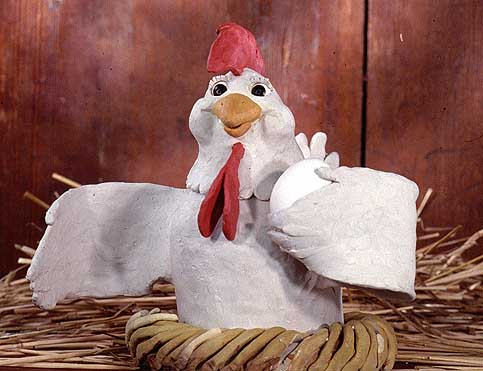
Stop motion (also known as stop frame animation or object animation) is an animated filmmaking and special effects technique in which objects are physically manipulated in small increments betwee
Animation, the method for creating moving pictures from still images, has an early history and a modern history that began with the advent of celluloid film in 1888.