Multitrack recording: History and Key Facts
Multitrack recording (MTR), also known as multitracking, is a method of sound recording developed in 1955 that allows for the separate recording of multiple sound sources or of sound sources reco
48 articles

Multitrack recording (MTR), also known as multitracking, is a method of sound recording developed in 1955 that allows for the separate recording of multiple sound sources or of sound sources reco

A variable speed pitch control (or vari-speed) is a control on an audio device such as a turntable, tape recorder, or CD player that allows the operator to deviate from a standard speed (such as

Sound recording and reproduction is the electrical, mechanical, electronic, or digital inscription and re-creation of sound waves, such as spoken voice, singing, instrumental music, or sound effe
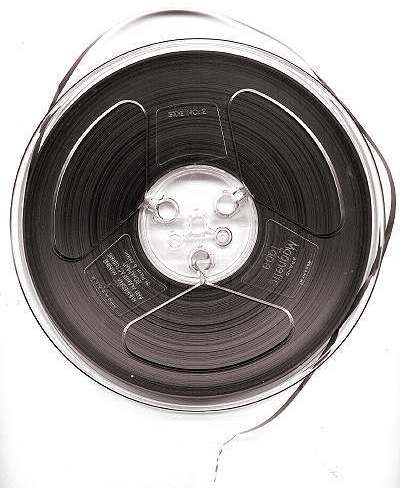
Magnetic tape is a medium for magnetic storage made of a thin, magnetizable coating on a long, narrow strip of plastic film.

An audio engineer (also known as a sound engineer or recording engineer) helps to produce a recording or a live performance, balancing and adjusting sound sources using equalization, dynamics pro

A multiple-language version film (often abbreviated to MLV) or foreign language version is a film, especially from the early talkie era, produced in several different languages for international
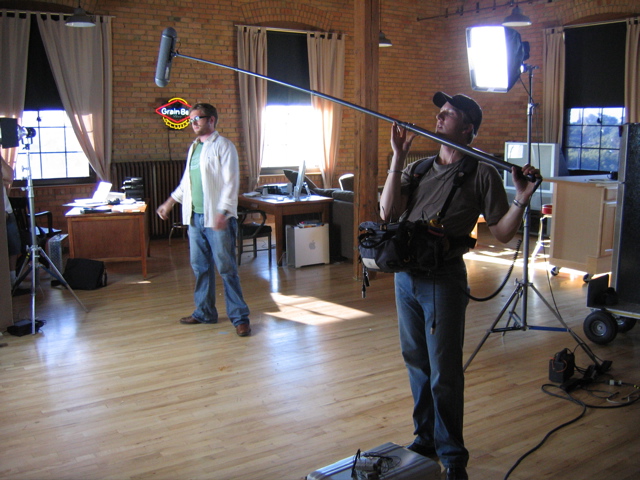
A production sound mixer, location sound recordist, location sound engineer, or simply sound mixer is the member of a film crew or television crew responsible for recording all sound recording on

A record producer or music producer is a music-creating project's overall supervisor whose responsibilities can involve a range of creative and technical leadership roles.
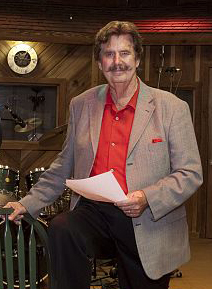
Roe Erister "Rick" Hall (January 31, 1932 – January 2, 2018) was an American record producer, songwriter, and musician who became known as the owner of FAME Studios in Muscle Shoals, Alabama.

Equalization, or simply EQ, in sound recording and reproduction is the process of adjusting the volume of different frequency bands within an audio signal.

An audio tour or audio guide provides a recorded spoken commentary, normally through a handheld device, to a visitor attraction such as a museum or an exhibition.

Audio forensics is the field of forensic science relating to the acquisition, analysis, and evaluation of sound recordings that may ultimately be presented as admissible evidence in a court of la

Trident A Range consoles were originally built by and for Trident Studios.
A soundboard recording is a sound recording of a concert taken from a direct connection to the soundboard at the venue.

Punch in/out is an audio and video term that originated as a recording technique used on early multitrack recordings whereby a portion of the performance was recorded onto a previously recorded t
Measurement of wow and flutter is carried out on audio tape machines, cassette recorders and players, and other analog recording and reproduction devices with rotary components (e.g.
Noise reduction is the process of removing noise from a signal.
In digital recording, an audio or video signal is converted into a stream of discrete numbers representing the changes over time in air pressure for audio, or chroma and luminance values for vide
A re-recording mixer in North America, also known as a dubbing mixer in Europe, is a post-production audio engineer who mixes recorded dialogue, sound effects and music to create the final versio
Mastering is a form of audio post-production which is the process of preparing and transferring recorded audio from a source containing the final mix to a data storage device called a master reco
Re-amping is a process often used in multitrack recording in which a recorded signal is routed back out of the editing environment and run through external processing using effects units and then
A bedroom producer is an amateur musician who creates, performs, and records their music independently using a home studio, often considered a hobbyist opposed to a professional record producer i
A musician is someone who composes, conducts, or performs music, especially instrumental music.
Delay is an audio signal processing technique that records an input signal to a storage medium and then plays it back after a period of time.
In sound recording and reproduction, audio mixing is the process of optimizing and combining multitrack recordings into a final mono, stereo or surround sound product.
An audio tape recorder, also known as a tape deck, tape player, tape machine, or simply a tape recorder, is a sound recording and reproduction device that records and plays back sounds usually us
Tape trading is an unofficial method of distribution of musical or video content through the postal system, which was prominent in the 1980s and 1990s.
In filmmaking, ambience (also known as atmosphere, atmos, or background) consists of the sounds of a given location or space.
Home recording is the practice of recording sound in a private home instead of a professional recording studio.
An audio letter is an audio recording sent by postal mail to a recipient.
In sound and music, sampling is the reuse of a portion (or sample) of a sound recording in another recording.
Physical Modelling synthesis is not confined to a particular technique, but rather represents a family of approaches to synthesis. Physical modelling systems attempt to model the propagation
A music executive or record executive is a person within a music company, in particular, a record label who works in senior management and makes executive decisions over the label's artists.
A guitar speaker is a loudspeaker – specifically the driver (transducer) part – designed for use in a combination guitar amplifier (in which a loudspeaker and an amplifier are installed in a wood
Sound can be recorded and stored and played using either digital or analog techniques.
In music, "noise" has been variously described as unpitched, indeterminate, uncontrolled, convoluted, unmelodic, loud, otherwise unmusical, or unwanted sound, or simply as sound in general.
An effects unit, effects processor, or effects pedal is an electronic device that alters the sound of a musical instrument or other audio source through audio signal processing.
In sound recording and reproduction, and music, pumping or gain pumping is a creative misuse of compression, the "audible unnatural level changes associated primarily with the release of a compre
Flanging is an audio effect produced by mixing two identical signals together, one signal delayed by a small and (usually) gradually changing period, usually smaller than 20 milliseconds.
Turntablism is the art of manipulating sounds and creating new music, sound effects, mixes, and other creative sounds and beats, typically by using two or more turntables and a cross fader-equipp
In audio and recording, what is known colloquially as an anchor point is a center position in a stereo mix reserved for only three or four important tracks.
Field recording is the production of audio recordings outside recording studios, and the term applies to recordings of both natural and human-produced sounds.
A pickup group is a group of professional musicians, which may be session musicians, who are hired to play for a limited time period—ranging from a single concert or sound recording session to se
Direct metal mastering (DMM) is an analog audio disc mastering technique jointly developed by two German companies, Telefunken-Decca (Teldec) and Georg Neumann GmbH, toward the end of the 20th ce
A mixing engineer (or simply mix engineer) is responsible for combining ("mixing") different sonic elements of an auditory piece into a complete rendition (also known as "final mix" or "mixdown")
Digital audio cassette formats introduced to the professional audio and consumer markets: Digital Audio Tape (or DAT) is the most well-known, and had some success as an audio storage format amon
A producer tag (sometimes simply called a tag) is an element of a song, typically at the beginning of it, inserted there by the song's producer – a short sound meant to familiarize the listener w
In audio engineering, a gain stage is a point during an audio signal flow that the engineer can make adjustments to the level, such as a fader on a mixing console or in a DAW.