Cap (early 1900s): Art, History and Details
Cap at the Cleveland Museum of Art: early 1900s, Plant fibers, cloth, glass beads, cowrie shells, and copper alloy. Explore the work's context, creator attribution and collection history.
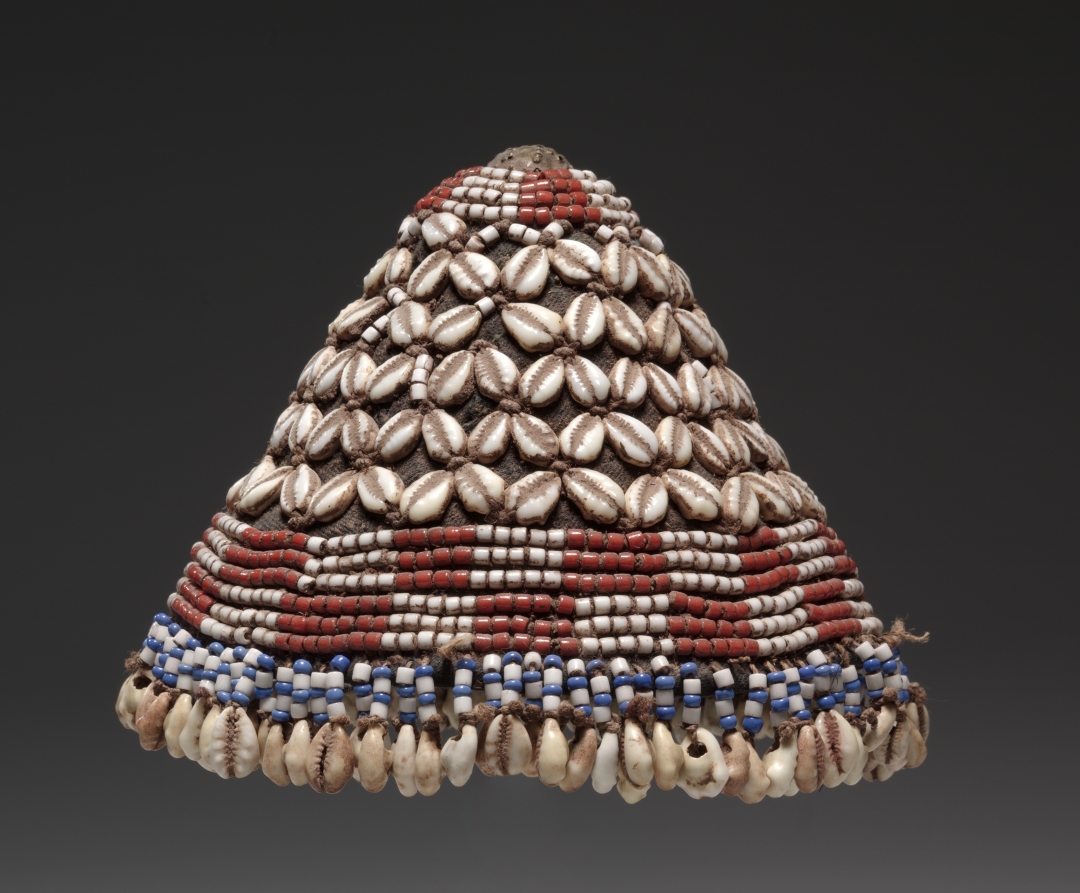
Cap (early 1900s) is in the Cleveland Museum of Art collection.
The work and its context
The museum's open-access catalogue describes the work:
Costumes worn by the Kuba king, members of his family, and the nobility are spectacular. Raffia cloth, leopard skin, feathers, beads, and cowrie shells are combined in magnificent ensembles used for specific ceremonial roles. Beaded caps of this sort are worn only by members of the royal family. When not in use, they are preserved in royal storehouses.
Object facts
- Title: Cap
- Date: early 1900s
- Culture: Africa, Central Africa, Democratic Republic of the Congo, Kuba-style maker
- Type: Garment
- Technique: Plant fibers, cloth, glass beads, cowrie shells, and copper alloy
- Dimensions: Diameter: 17.8 cm (7 in.); Overall: 13 cm (5 1/8 in.)
- Collection: African Art
- Department: African Art
- Accession number: 1994.88
A detail from the museum
The beads and shells on this cap were imported from outside of central Africa.
Collection credit
John L. Severance Fund
Further reading listed by the museum
- Cleveland Museum of Art, “Recent Acquisitions to the Cleveland Museum of Art Collection,” August 26, 1994, Cleveland Museum of Art Archives.
View the collection record
See the museum's photographs and full catalogue entry. Catalogue text is reproduced from the Cleveland Museum of Art's open-access data, with HTML formatting removed. This object and its supplied image are designated CC0.
Sources
More in Fashion & Style
Keep reading