Coronet (oríkògbófo) (1900s): Art, History and Details
Coronet (oríkògbófo) at the Cleveland Museum of Art: 1900s, Cloth, glass beads, and thread. Explore the work's context, creator attribution and collection history.
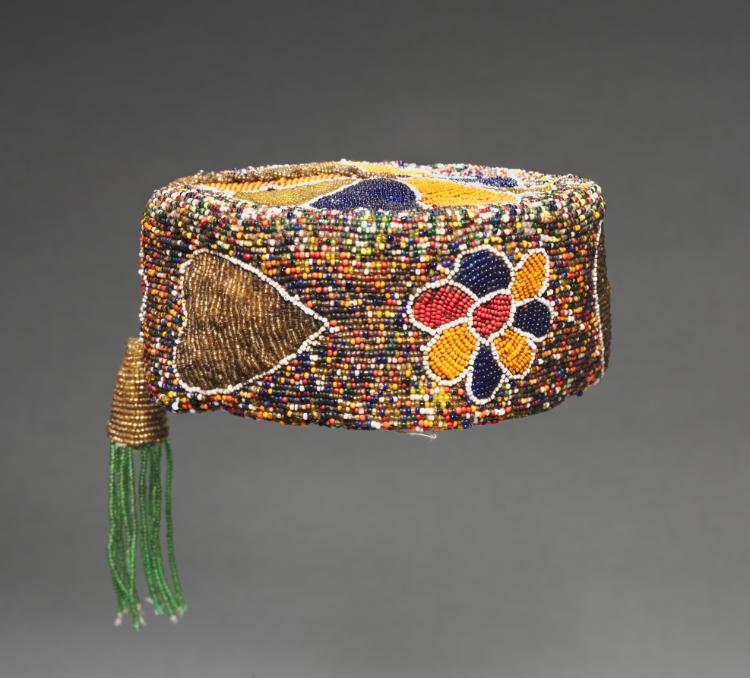
Coronet (oríkògbófo) (1900s) is in the Cleveland Museum of Art collection.
The work and its context
The museum's open-access catalogue describes the work:
Like the rare conical crown (ade), the coronet (oríkògbófo) may only be worn by a king descended from Oduduwa, the first king of the Yorùbá. While the crown is reserved for special occasions, the coronet may be used by the king for less formal public events and when entertaining non-Yorùbá visitors. It signifies wealth rather than royal status.
Object facts
- Title: Coronet (oríkògbófo)
- Date: 1900s
- Culture: Africa, West Africa, Nigeria, Yorùbá-style maker
- Type: Garment
- Technique: Cloth, glass beads, and thread
- Dimensions: Overall: 19 x 19 x 18 cm (7 1/2 x 7 1/2 x 7 1/16 in.)
- Collection: African Art
- Department: African Art
- Accession number: 1998.278
A detail from the museum
The beads on this sculpture were imported, likely from Venice or Bohemia (now called the Czech Republic).
Collection credit
Gift of Drs. James, Gladys, Jay, Jeffrey, and Jamie Strain
View the collection record
See the museum's photographs and full catalogue entry. Catalogue text is reproduced from the Cleveland Museum of Art's open-access data, with HTML formatting removed. This object and its supplied image are designated CC0.
Sources
More in Fashion & Style
Keep reading