Gold-Thread Embroidered Garment for a Woman (late 1800s): Art, History and Details
Gold-Thread Embroidered Garment for a Woman at the Cleveland Museum of Art: late 1800s, silk, velvet; gold- and silver-thread: bands, cords, couched embroidery. Explore the work's context, creator attribution and collection history.
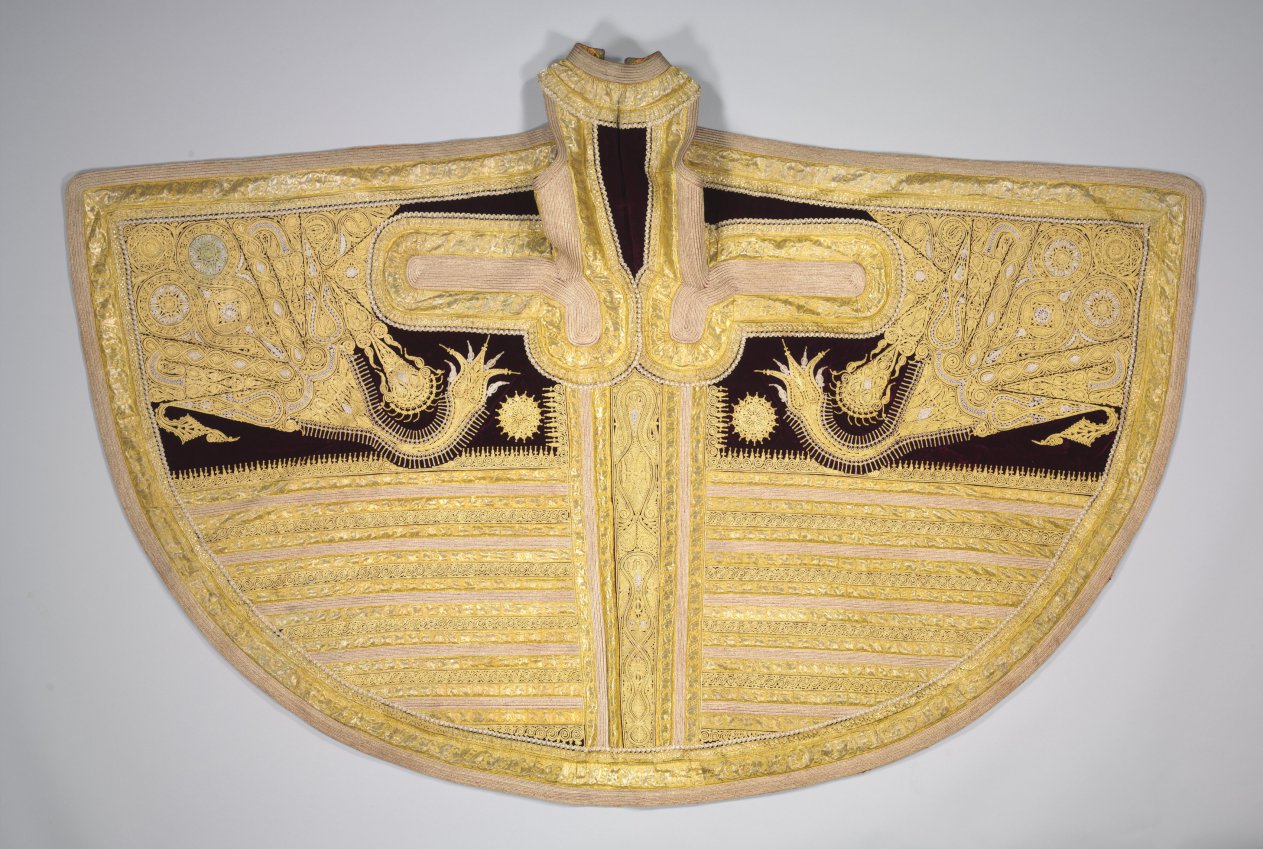
Gold-Thread Embroidered Garment for a Woman (late 1800s) is in the Cleveland Museum of Art collection.
The work and its context
The museum's open-access catalogue describes the work:
This richly embellished garment was worn by Muslim women in Albania over a fine silk blouse with wide trousers decorated with matching embroidery. The Europeanized Ottoman style signaled social prestige in the late 19th century and differed from regional dress. The gold thread embroidery fashion was influenced by the attire of Ottoman officials and Eastern Orthodox church clergy. This spectacular garment was created with woven bands and twisted cords of gold thread plus stunning gold and silver thread embroidered motifs. Metal threads were secured on the velvet with a stitch from underneath, known as couching. Specialized workshops in urban centers embroidered similar but not identical models for Muslim and Christian women. Threads loosely attached to the velvet provided design guidelines for the embroiderers.
Object facts
- Title: Gold-Thread Embroidered Garment for a Woman
- Date: late 1800s
- Culture: Prizrend, Serbia, or Scutari, Albani, late 19th century
- Type: Garment
- Technique: silk, velvet; gold- and silver-thread: bands, cords, couched embroidery
- Dimensions: Overall: 117 x 170.2 cm (46 1/16 x 67 in.)
- Collection: T - Islamic
- Department: Textiles
- Accession number: 1943.381
Collection credit
Gift of Jeannette Cox Morrill
View the collection record
See the museum's photographs and full catalogue entry. Catalogue text is reproduced from the Cleveland Museum of Art's open-access data, with HTML formatting removed. This object and its supplied image are designated CC0.
Sources
More in Fashion & Style
Keep reading


