Man's Morning Coat (1700–1750): Art, History and Details
Man's Morning Coat at the Cleveland Museum of Art: 1700–1750, cotton: tabby weave, resist-dyed (mordant resist and batik); applied gold leaf. Explore the work's context, creator attribution and collection history.
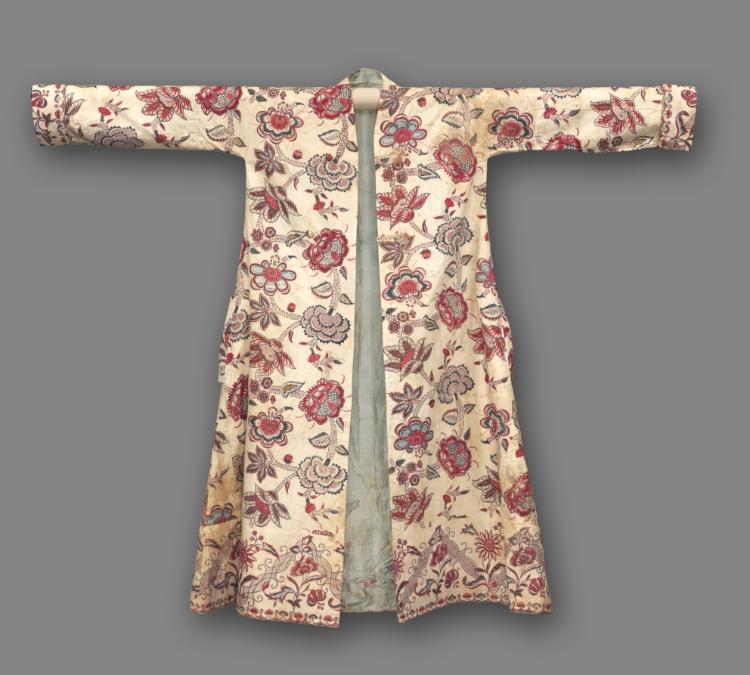
Man's Morning Coat (1700–1750) is in the Cleveland Museum of Art collection.
The work and its context
The museum's open-access catalogue describes the work:
Much of the Mughals’ wealth derived from the international export of textiles, which became increasingly fashionable throughout Europe and America during the 18th century. This garment was made in India for the aristocratic French market. The floral designs inspired by the southern Indian dyed fabrics known as palampore have been enlivened by labor-intensive gilding and burnishing.
Object facts
- Title: Man's Morning Coat
- Date: 1700–1750
- Culture: India, Mughal
- Type: Garment
- Technique: cotton: tabby weave, resist-dyed (mordant resist and batik); applied gold leaf
- Dimensions: Overall: 142 x 172 cm (55 7/8 x 67 11/16 in.)
- Collection: Textiles
- Department: Textiles
- Accession number: 1936.443
A detail from the museum
India has a history of exporting textiles that predates the beginning of the Mughal dynasty.
Collection credit
Gift of The Textile Arts Club
Further reading listed by the museum
- Wardwell, Anne E. Material Matters: Fifty Years of Gifts from the Textile Arts Club, 1934-1984 : [Exhibition] 21 November-30 December 1984, the Cleveland Museum of Art. Cleveland: The Museum, 1984.
- Peck, Amelia, and Amy Elizabeth Bogansky. Interwoven Globe: The Worldwide Textile Trade, 1500-1800. New York: Metropolitan Museum of Art, 2013.
View the collection record
See the museum's photographs and full catalogue entry. Catalogue text is reproduced from the Cleveland Museum of Art's open-access data, with HTML formatting removed. This object and its supplied image are designated CC0.
Sources
More in Fashion & Style
Keep reading