Woman’s Robe (munisak) (1850–75): Art, History and Details
Woman’s Robe (munisak) at the Cleveland Museum of Art: 1850–75, Silk: velvet ikat. Explore the work's context, creator attribution and collection history.
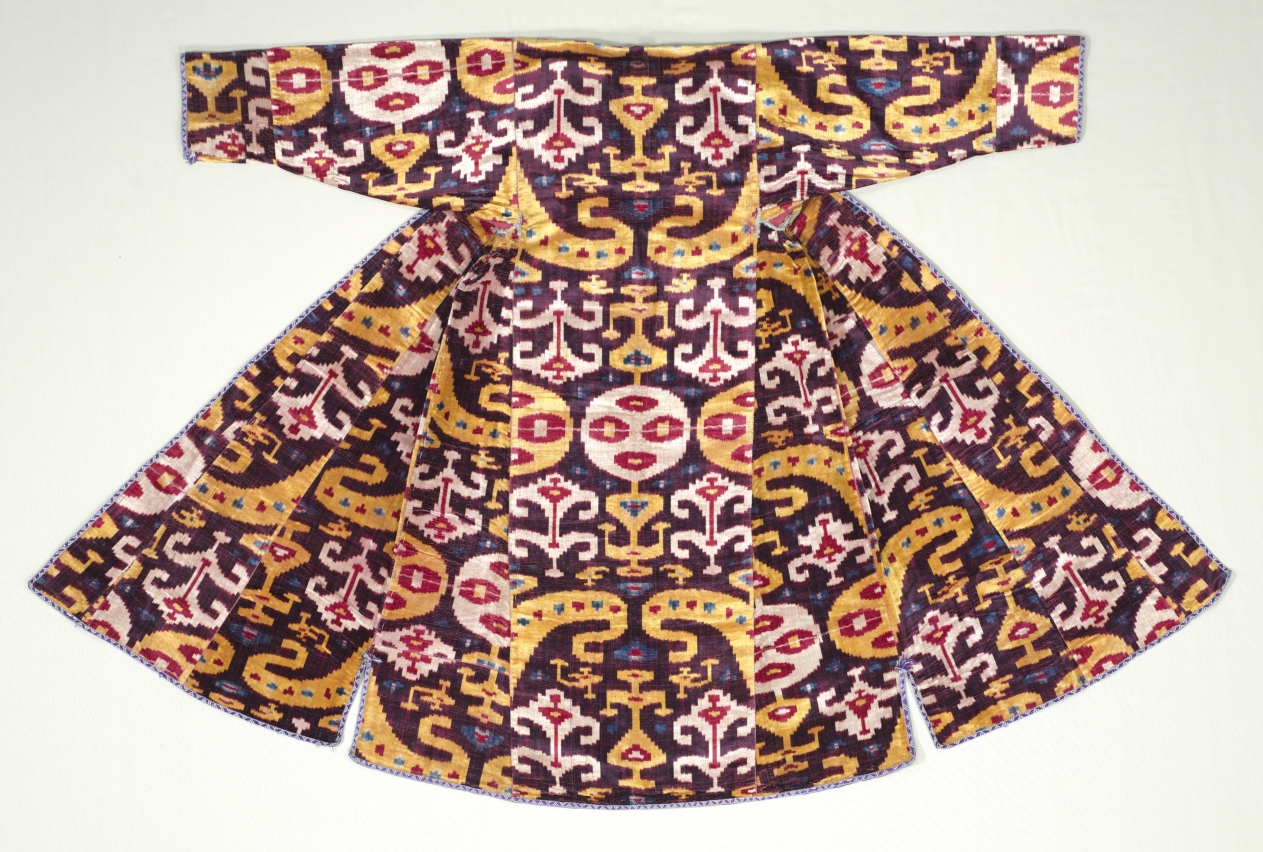
Woman’s Robe (munisak) (1850–75) is in the Cleveland Museum of Art collection.
The work and its context
The museum's open-access catalogue describes the work:
Dazzling ikat velvet robes, the most sumptuous, expensive, and prestigious type of ikat, were worn throughout Central Asia by men and women. This resplendent robe with a V-shaped neckline, fitted torso, and slightly flaring skirt features stylized blossoming plants, pomegranates, and auspicious curved ram’s horns, all with irregular contours of the resist-dye ikat technique. Such female robes were culturally significant in Central Asia. Made for wedding dowries with fabric from the groom’s family, women wore munisaks for rites of passage throughout their lives, as a bride, at family festivals, and funerals.
Object facts
- Title: Woman’s Robe (munisak)
- Date: 1850–75
- Culture: Uzbekistan, Bukhara
- Type: Garment
- Technique: Silk: velvet ikat
- Dimensions: Overall: 132.1 x 150 cm (52 x 59 1/16 in.)
- Collection: T - Islamic
- Department: Textiles
- Accession number: 2009.267
Collection credit
Gift of Arlene C. Cooper
Further reading listed by the museum
- Gervers, V. “Construction of Türkmen Coats.” Textile History 14, no. 1 (1983):
- Thompson, Jon, and Thomas J. Farnham. Timbuktu to Tibet: Exotic Rugs & Textiles from New York Collectors. New York, NY: Hajji Baba Club, 2008.
- Mackie, Louise. "Embroidered Surcoat." Cleveland Museum of Art Members Magazine, 54 no. 1 (January/February 2014): 27.
View the collection record
See the museum's photographs and full catalogue entry. Catalogue text is reproduced from the Cleveland Museum of Art's open-access data, with HTML formatting removed. This object and its supplied image are designated CC0.
Sources
More in Fashion & Style
Keep reading