Captivity narrative: History and Key Facts
Captivity narratives are typically personal accounts of people who have been captured by an enemy, generally an enemy with a foreign culture.
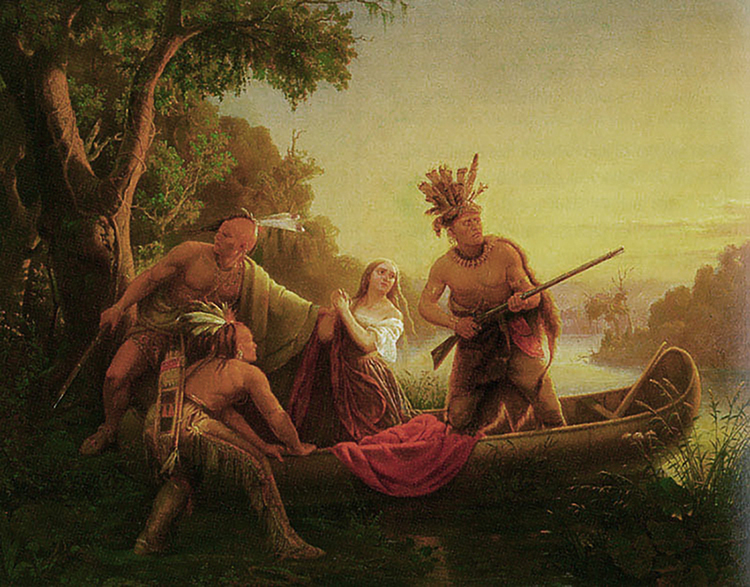
Captivity narratives are typically personal accounts of people who have been captured by an enemy, generally an enemy with a foreign culture. The best-known captivity narratives in North America are those concerning Europeans and Americans taken as captives and held by the Indigenous peoples of North America. These narratives have had an enduring place in literature, history, ethnography, and the study of Native peoples.
They were preceded, among English-speaking peoples, by publication of captivity narratives related to English people taken captive and held by Barbary pirates, or sold for ransom or slavery. Others were taken captive in the Middle East. These accounts established some of the major elements of the form, often putting it within a religious framework, and crediting God or Providence for gaining freedom or salvation. Following the North American experience, additional accounts were written after British people were captured during exploration and settlement in India and East Asia.
Since the late 20th century, captivity narratives have also been studied as accounts of persons leaving, or held in contemporary religious cults or movements, thanks to scholars of religion like David G. Bromley and James R. Lewis.
A famous example of a captivity narrative, that historians regard as one of the first of its kind, is the personal account of Mary Rowlandson. Mary Rowlandson was a colonial American woman who was captured by Native Americans in 1676 during King Philip's War and held for 11 weeks before being ransomed. In 1682, six years after her ordeal, The Sovereignty and Goodness of God: Being a Narrative of the Captivity and Restoration of Mrs. Mary Rowlandson was published.
Source and attribution
Text excerpted from Captivity narrative by Wikipedia contributors, available under Creative Commons Attribution-ShareAlike 4.0. The extract is abridged and formatting has been adjusted; the adapted text on this page is shared under the same licence. Revision history.
Sources
More in Books & Authors
Keep reading
