A pair of Brahminy ducks (c. 1595; borders added probably 1800s): Art, History and Details
A pair of Brahminy ducks at the Cleveland Museum of Art: c. 1595; borders added probably 1800s, Gum tempera on paper, mounted with later pink and blue borders. Explore the work's context, creator attribution and collection history.
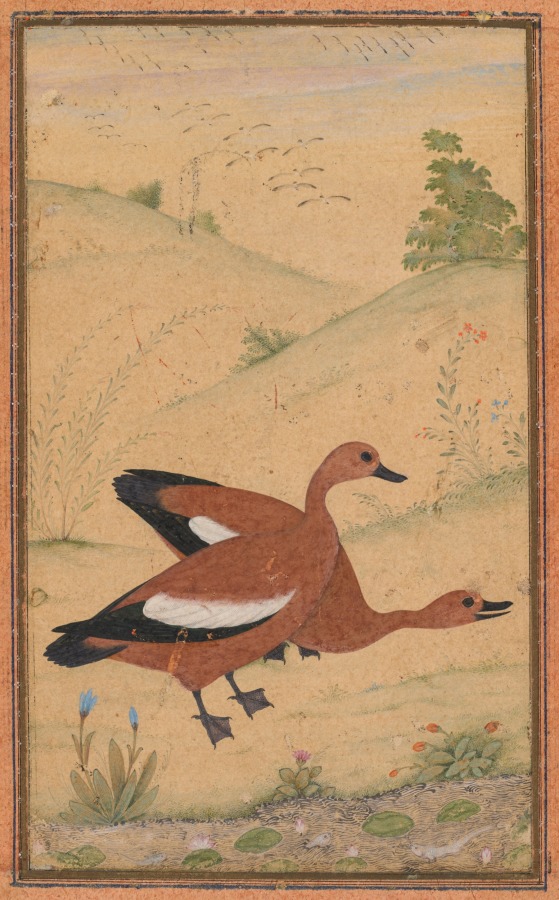
A pair of Brahminy ducks (c. 1595; borders added probably 1800s) is in the Cleveland Museum of Art collection.
The work and its context
The museum's open-access catalogue describes the work:
The Brahminy duck, also known as the ruddy shelduck, can be found throughout Southern Europe, North Africa, and Southeast Asia. This painting accurately depicts the orange coloring of Brahminy ducks and the patches of white on their wings. They are also recognizable by their long legs and short bills. The level of detail in realistic paintings of animals like this one suggests that Mughal artists studied live subjects, such as the waterfowl that lived in Mughal palace gardens.
Object facts
- Title: A pair of Brahminy ducks
- Date: c. 1595; borders added probably 1800s
- Culture: India, Mughal, 16th century
- Type: Painting
- Technique: Gum tempera on paper, mounted with later pink and blue borders
- Dimensions: Page: 28.3 x 19.8 cm (11 1/8 x 7 13/16 in.); Painting: 8.6 x 4.5 cm (3 3/8 x 1 3/4 in.)
- Collection: Indian Art - Mughal
- Department: Indian and Southeast Asian Art
- Accession number: 2013.299
A detail from the museum
Delicate dots articulate the texture of webbed feet and toothy row in the beak.
Collection credit
Gift in honor of Madeline Neves Clapp; Gift of Mrs. Henry White Cannon by exchange; Bequest of Louise T. Cooper; Leonard C. Hanna Jr. Fund; From the Catherine and Ralph Benkaim Collection
View the collection record
See the museum's photographs and full catalogue entry. Catalogue text is reproduced from the Cleveland Museum of Art's open-access data, with HTML formatting removed. This object and its supplied image are designated CC0.
Sources
More in Lifestyle
Keep reading