Aglaida and Boniface (c. 1857): Art, History and Details
Aglaida and Boniface at the Cleveland Museum of Art: c. 1857, oil on canvas. Explore the work's context, creator attribution and collection history.
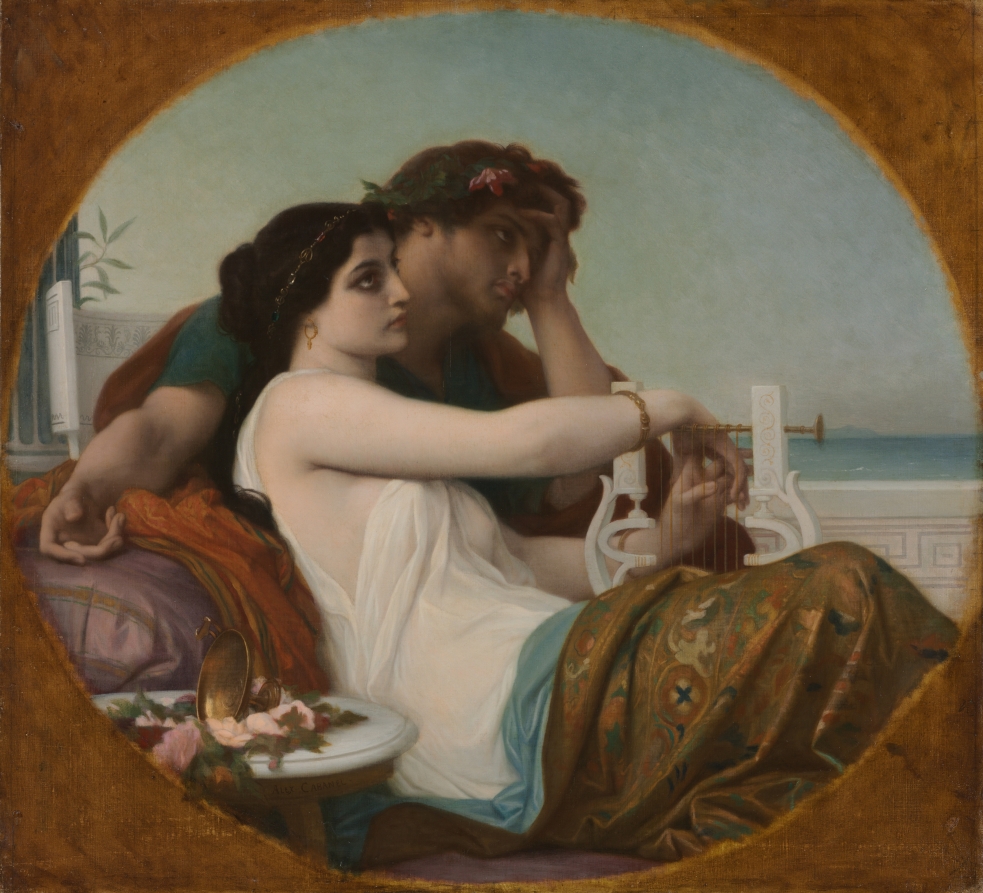
Aglaida and Boniface (c. 1857) is in the Cleveland Museum of Art collection. The museum's creator attribution is Alexandre Cabanel (French, 1823–1889).
The work and its context
The museum's open-access catalogue describes the work:
The French painter Alexandre Cabanel was a favorite of Emperor Napoleon III and a leader of the academic style that emphasized precise drawing and smoothly modeled forms. This painting depicts the wealthy Roman woman Aglaida and her concubine slave Boniface, here living as pagan sinners in Rome around 290 CE. On a trip to Tarsus on the Anatolian coast, Boniface converted to Christianity and was tortured and beheaded. Aglaida also converted to Christianity, gave all her possessions to the poor, and built a church for Boniface's relics.
Object facts
- Title: Aglaida and Boniface
- Date: c. 1857
- Creator attribution: Alexandre Cabanel (French, 1823–1889)
- Culture: France, 19th century
- Type: Painting
- Technique: oil on canvas
- Dimensions: Unframed: 62.2 x 68 cm (24 1/2 x 26 3/4 in.)
- Collection: Mod Euro - Painting 1800-1960
- Department: Modern European Painting and Sculpture
- Accession number: 2007.275
A detail from the museum
Alexandre Cabanel was a leader of the academic artists who rejected the paintings of Édouard Manet and other "realists" from the Salon of 1863, producing a vast outcry that forced the government to organize the alternative Salon des Refusés.
Collection credit
Bequest of Elizabeth Ludwig Fennell
View the collection record
See the museum's photographs and full catalogue entry. Catalogue text is reproduced from the Cleveland Museum of Art's open-access data, with HTML formatting removed. This object and its supplied image are designated CC0.
Sources
More in Lifestyle
Keep reading