Alms Bowl (c. 900s): Art, History and Details
Alms Bowl at the Cleveland Museum of Art: c. 900s, gilt bronze. Explore the work's context, creator attribution and collection history.
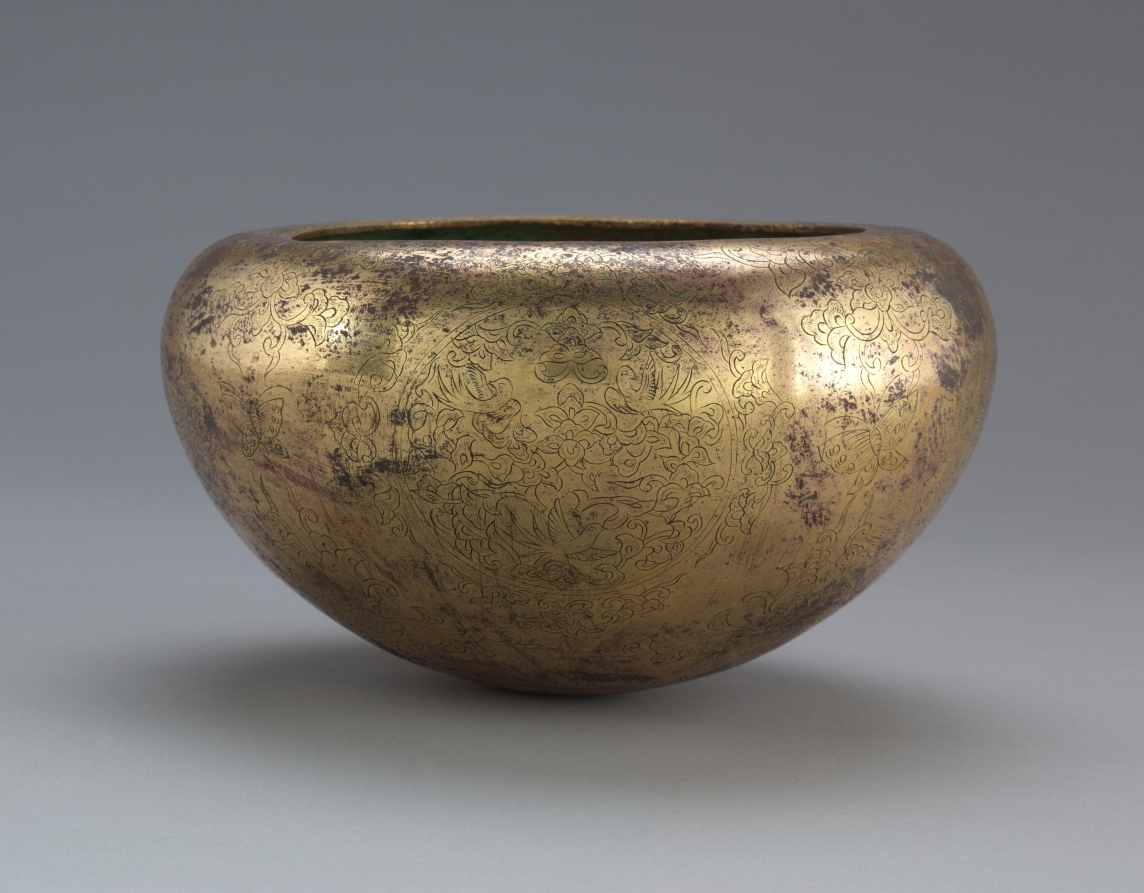
Alms Bowl (c. 900s) is in the Cleveland Museum of Art collection.
The work and its context
The museum's open-access catalogue describes the work:
Alms bowls used by Buddhist monks to receive donations have traditionally been made of iron or wood. This bowl, made of gilt bronze and decorated with incised designs of birds and flowers in roundels as well as butterflies, is instead a luxury item likely meant for a Buddhist altar, where it would have contained offerings for a Buddhist deity.
Object facts
- Title: Alms Bowl
- Date: c. 900s
- Culture: Japan, Heian period (794–1185)
- Type: Metalwork
- Technique: gilt bronze
- Dimensions: Overall: 12.8 x 23.8 cm (5 1/16 x 9 3/8 in.)
- Collection: Japanese Art
- Department: Japanese Art
- Accession number: 1949.156
Collection credit
Purchase from the J. H. Wade Fund
Further reading listed by the museum
- Milliken, William M. “Important Acquisitions of Japanese Art.” The Bulletin of the Cleveland Museum of Art, vol. 38, no. 9, 1951, pp. 211–217.
- The Cleveland Museum of Art. The Cleveland Museum of Art Handbook. Cleveland, OH: The Cleveland Museum of Art, 1958.
- Lee, Sherman E. Japanese Decorative Style. [Cleveland]: Cleveland Museum of Art, 1961.
View the collection record
See the museum's photographs and full catalogue entry. Catalogue text is reproduced from the Cleveland Museum of Art's open-access data, with HTML formatting removed. This object and its supplied image are designated CC0.
Sources
More in Lifestyle
Keep reading