Altar Cloth (c. 1350): Art, History and Details
Altar Cloth at the Cleveland Museum of Art: c. 1350, embroidery: linen. Explore the work's context, creator attribution and collection history.
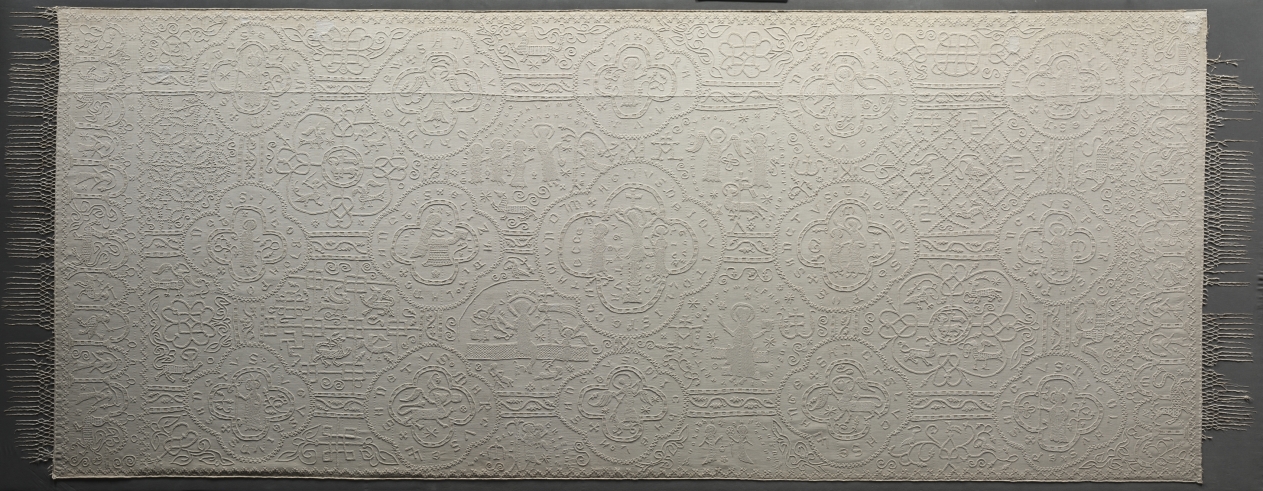
Altar Cloth (c. 1350) is in the Cleveland Museum of Art collection.
The work and its context
The museum's open-access catalogue describes the work:
This large, embroidered altar cloth is one of the rarest, most important medieval church furnishings in existence. It was stitched by nuns in the Premonstratensian Convent in Altenberg on the Lahn River, north of Frankfurt, Germany, and was used to cover the church’s high altar in the weeks leading up to Easter. The cloth is an example of linen embroidery, a specialty of German nuns in the later Middle Ages. The Altenberg monastery church once had valuable furnishings; the high altar retable (a decorated frame with sculptures and paintings on the top of an altar) has survived, the main parts of which are now in the Städel Museum in Frankfurt, Germany.
Object facts
- Title: Altar Cloth
- Date: c. 1350
- Culture: Germany, Altenberg on the Lahn, Premonstratensian Convent, 14th century
- Type: Embroidery
- Technique: embroidery: linen
- Dimensions: Overall: 154.3 x 374.5 cm (60 3/4 x 147 7/16 in.)
- Collection: T - Ecclesiastical
- Department: Textiles
- Accession number: 1948.352
A detail from the museum
When lit from behind, the previously hidden details emerge and the complex design becomes evident.
Collection credit
Purchase from the J. H. Wade Fund
Further reading listed by the museum
- Farcy, Louis de. La Broderie, du XI siècle jusqu'à nos jours, d'après des specimens authentiques et les anciens inventaires. 1er (et 2) supplément. 1er (et 2) supplément. Angers: Belhomme, 1900.
- Lehnert, Georg, W. Behncke, E. W. Braun, Moriz Dreger, Otto von Falke, J. Folnesics, Otto Kümmel, Erich Pernice, and Georg Swarzenski. Illustrierte geschichte des Kunstgewerbes. Berlin: M. Oldenbourg, 1907.
- Der Grosse Brockhaus. Grosse Brockhaus. Leipzig: Brockhaus, 1930.
View the collection record
See the museum's photographs and full catalogue entry. Catalogue text is reproduced from the Cleveland Museum of Art's open-access data, with HTML formatting removed. This object and its supplied image are designated CC0.
Sources
More in Lifestyle
Keep reading