Amulet of Bastet (c. 1069–715 BCE): Art, History and Details
Amulet of Bastet at the Cleveland Museum of Art: c. 1069–715 BCE, hematite. Explore the work's context, creator attribution and collection history.
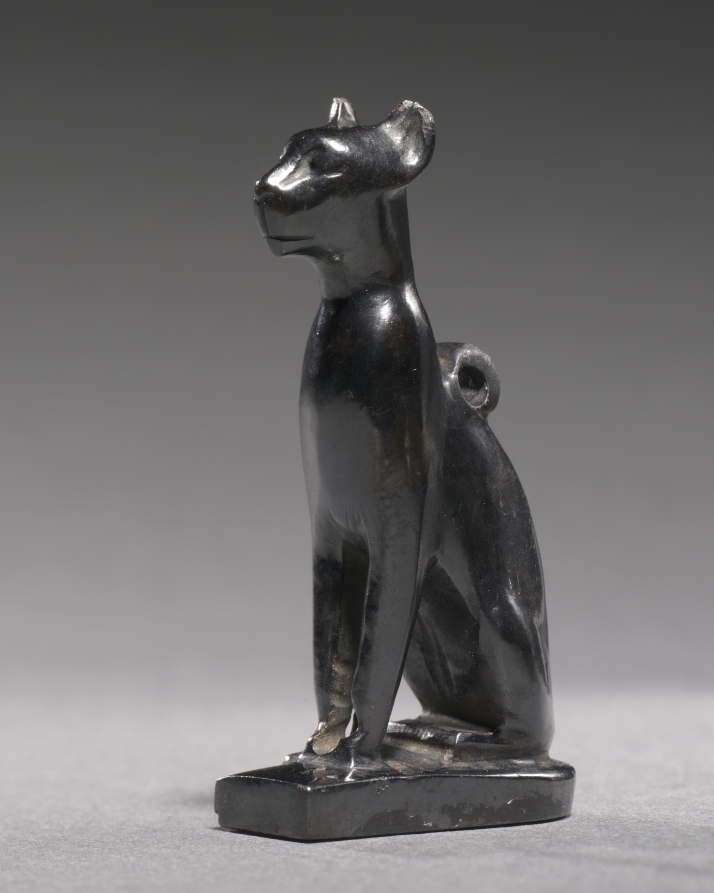
Amulet of Bastet (c. 1069–715 BCE) is in the Cleveland Museum of Art collection.
The work and its context
The museum's open-access catalogue describes the work:
Elegantly seated on a low base, its tail curled around its left side, this tiny cat, sacred animal of the goddess Bastet, is a sculptural tour de force. The front legs are carved entirely in openwork. The base, an amalgam of the hieroglyphs for "ointment jar" (also used in the writing the name of the goddess Bastet), and "protection" is admirably contoured to the animal's body. On the back is a loop for suspension.
Object facts
- Title: Amulet of Bastet
- Date: c. 1069–715 BCE
- Culture: Egypt, Third Intermediate (1069–715 BCE)
- Type: Amulets
- Technique: hematite
- Dimensions: Overall: 4.4 x 1.1 x 2.8 cm (1 3/4 x 7/16 x 1 1/8 in.)
- Collection: Egypt - Third Intermediate
- Department: Egyptian and Ancient Near Eastern Art
- Accession number: 1973.29
A detail from the museum
This object was in the collection of Howard Carter—the man who discovered the intact tomb of Tutankhamun—until his death.
Collection credit
Norman O. Stone and Ella A. Stone Memorial Fund
Further reading listed by the museum
- “The Year in Review for 1973.” The Bulletin of the Cleveland Museum of Art 61, no. 2 (1974).
- Cooney, John D. “Three Minor Masterpieces of Egyptian Art.” The Bulletin of the Cleveland Museum of Art 62, no. 1 (1975).
- The Cleveland Museum of Art. Handbook of the Cleveland Museum of Art/1978. Cleveland, OH: The Cleveland Museum of Art, 1978.
View the collection record
See the museum's photographs and full catalogue entry. Catalogue text is reproduced from the Cleveland Museum of Art's open-access data, with HTML formatting removed. This object and its supplied image are designated CC0.
Sources
More in Lifestyle
Keep reading