An African Lyre Player (recto) (c. 1640–60): Art, History and Details
An African Lyre Player (recto) at the Cleveland Museum of Art: c. 1640–60, Gum tempera, ink, and gold on paper. Explore the work's context, creator attribution and collection history.
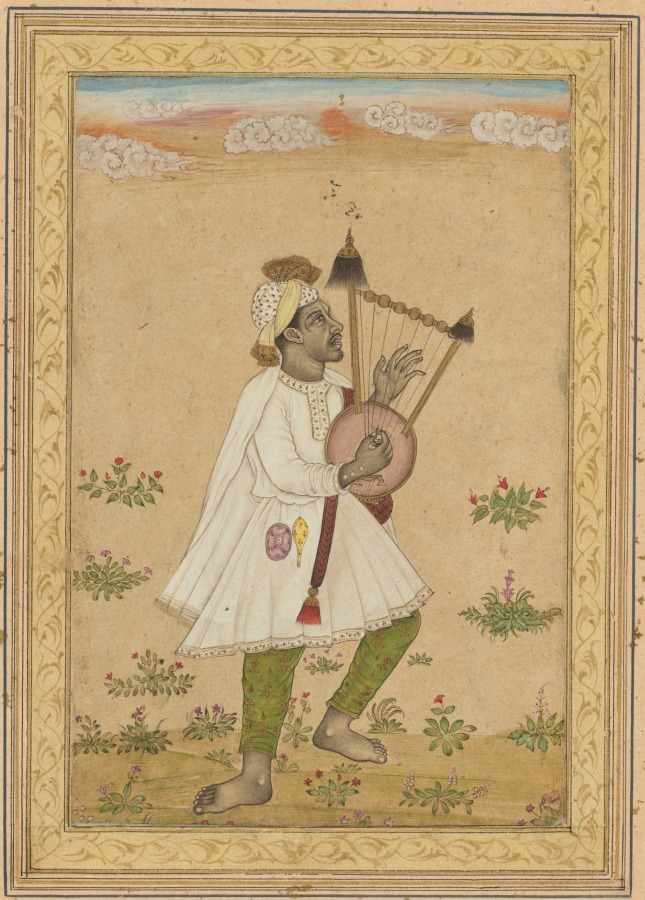
An African Lyre Player (recto) (c. 1640–60) is in the Cleveland Museum of Art collection.
The work and its context
The museum's open-access catalogue describes the work:
The anonymity of the subject of this painting obscures whether this is a portrait of a historical person, or a generic depiction of a musician. The instrument in his hands is a bowl lyre, called a nanga, of the type from Nubia in northeastern Africa. Many Africans, mainly from Ethiopia, settled in the Deccan, on the western coast of southern India, where they found employment as soldiers, mercenaries, and administrators. While stereotypical associations of Africans with music and dance persist in this Deccani album page, the figure is well dressed and less caricatured than the painting from 100 years earlier of the dancing Zangi in the Tuti-nama (Tales of a Parrot).
Object facts
- Title: An African Lyre Player (recto)
- Date: c. 1640–60
- Culture: India, Deccan, 17th century
- Type: Painting
- Technique: Gum tempera, ink, and gold on paper
- Dimensions: Page: 40.5 x 28.9 cm (15 15/16 x 11 3/8 in.)
- Collection: Indian Art
- Department: Indian and Southeast Asian Art
- Accession number: 2013.289.a
Collection credit
Gift in honor of Madeline Neves Clapp; Gift of Mrs. Henry White Cannon by exchange; Bequest of Louise T. Cooper; Leonard C. Hanna Jr. Fund; From the Catherine and Ralph Benkaim Collection
View the collection record
See the museum's photographs and full catalogue entry. Catalogue text is reproduced from the Cleveland Museum of Art's open-access data, with HTML formatting removed. This object and its supplied image are designated CC0.
Sources
More in Lifestyle
Keep reading