Andromeda (c. 1720–30): Art, History and Details
Andromeda at the Cleveland Museum of Art: c. 1720–30, terracotta. Explore the work's context, creator attribution and collection history.
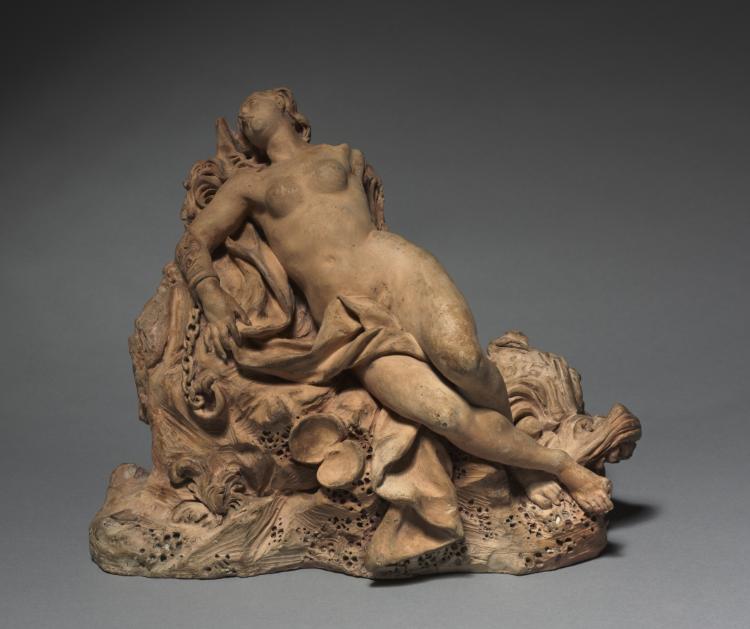
Andromeda (c. 1720–30) is in the Cleveland Museum of Art collection. The museum's creator attribution is Antonio Tarsia (Italian, 1663–1739).
The work and its context
The museum's open-access catalogue describes the work:
To stop attacks by a sea monster sent to punish Queen Cassiopeia for bragging that she was more beautiful than the nymphs of the sea, an oracle decreed that her virgin daughter, Andromeda, be tied to a rock and sacrificed to the creature. The hero Perseus would eventually save her, but artists often chose this moment as an opportunity to display a young, nude woman, justified by a veneer of mythology.
Object facts
- Title: Andromeda
- Date: c. 1720–30
- Creator attribution: Antonio Tarsia (Italian, 1663–1739)
- Culture: Italy, Venice
- Type: Sculpture
- Technique: terracotta
- Dimensions: Overall: 25.5 x 32 x 19.5 cm (10 1/16 x 12 5/8 x 7 11/16 in.)
- Collection: Sculpture
- Department: European Painting and Sculpture
- Accession number: 1981.227
A detail from the museum
Tarsia sculptred the clay to depict different textures: coral-like rock, smooth skin, and rigid scales.
Collection credit
Gift of Dr. and Mrs. Sherman E. Lee in memory of Professor Donald Weeks
Further reading listed by the museum
- Lee, Sherman E. "The Year in Review for 1981." The Bulletin of the Cleveland Museum of Art 69, no. 2 (1982): 39-82.
View the collection record
See the museum's photographs and full catalogue entry. Catalogue text is reproduced from the Cleveland Museum of Art's open-access data, with HTML formatting removed. This object and its supplied image are designated CC0.
Sources
More in Lifestyle
Keep reading
Related stories