Angel: St. George Slaying the Dragon (obverse); Ship with Shield of Arms and Cross (reverse) (1470–71): Art, History and Details
Angel: St. George Slaying the Dragon (obverse); Ship with Shield of Arms and Cross (reverse) at the Cleveland Museum of Art: 1470–71, gold. Explore the work's context, creator attribution and collection history.
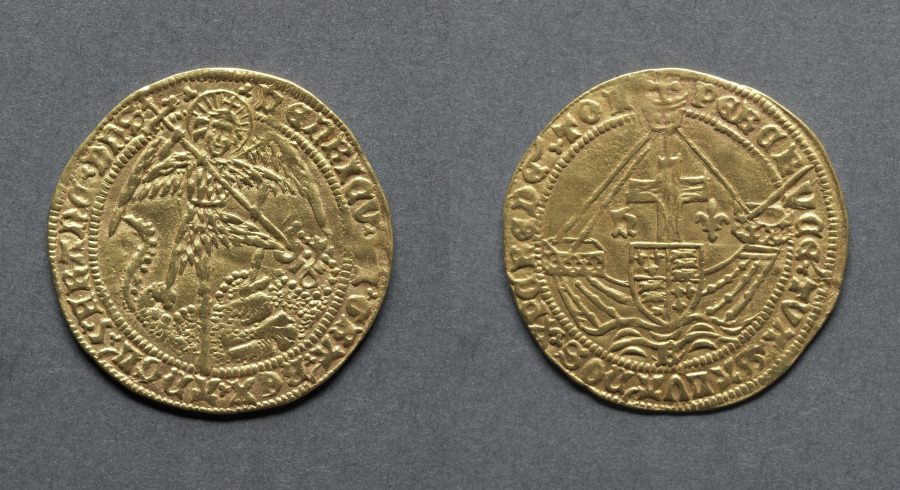
Angel: St. George Slaying the Dragon (obverse); Ship with Shield of Arms and Cross (reverse) (1470–71) is in the Cleveland Museum of Art collection.
The work and its context
The museum's open-access catalogue describes the work:
Henry VI regained power briefly in the usurpation period. The only gold coins struck during this short period were the angel and half angel, and only London and Bristol operated as mints.
Object facts
- Title: Angel: St. George Slaying the Dragon (obverse); Ship with Shield of Arms and Cross (reverse)
- Date: 1470–71
- Culture: England, Henry VI 1422-1461 (restored 1470-1471)
- Type: Coins
- Technique: gold
- Dimensions: Diameter: 2.9 cm (1 1/8 in.)
- Collection: MED - Numismatics
- Department: Medieval Art
- Accession number: 1969.167
A detail from the museum
The angel was an English gold coin introduced by Edward IV in 1465 and named for the depiction of St. George on the obverse.
Collection credit
The Norweb Collection
Further reading listed by the museum
- Cleveland Museum of Art, and Emery May Norweb. English Gold Coins, Ancient to Modern Times, On Loan to the Cleveland Museum of Art from the Norweb Collection. [Catalog. 1968.
View the collection record
See the museum's photographs and full catalogue entry. Catalogue text is reproduced from the Cleveland Museum of Art's open-access data, with HTML formatting removed. This object and its supplied image are designated CC0.
Sources
More in Lifestyle
Keep reading
Related stories