Animal-Headed Figure Pendant (c. 1000–1550): Art, History and Details
Animal-Headed Figure Pendant at the Cleveland Museum of Art: c. 1000–1550, cast gold. Explore the work's context, creator attribution and collection history.
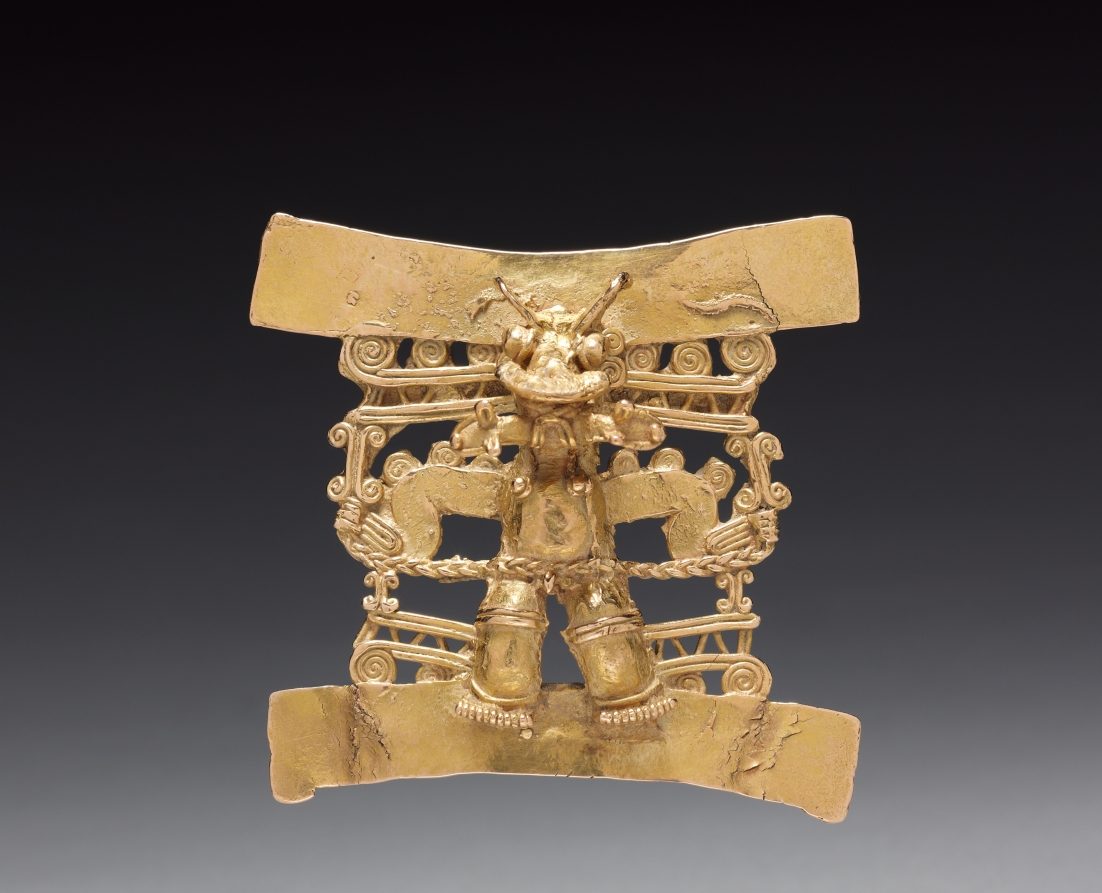
Animal-Headed Figure Pendant (c. 1000–1550) is in the Cleveland Museum of Art collection.
The work and its context
The museum's open-access catalogue describes the work:
Among the pendants shown here are a crustacean (1943.290), an animal-headed figure (1948.18), and two pendants featuring birds (1951.442 and 1946.223). The latter were dubbed aguilas (eagles) by Christopher Columbus, who saw natives wearing them as necklace ornaments. Modern researchers are not as sure of the species shown, but some believe that they are birds of prey because talons and beaks are prominent and often clutch something, in one example here a small, disembodied head that holds a clapper. In both examples, two tufts in the form of crocodiles in profile flank the birds’ heads.
Object facts
- Title: Animal-Headed Figure Pendant
- Date: c. 1000–1550
- Culture: Costa Rica, Diquís region, 11th-16th century
- Type: Metalwork
- Technique: cast gold
- Dimensions: Overall: 8.7 x 9 x 3.1 cm (3 7/16 x 3 9/16 x 1 1/4 in.)
- Collection: AA - Intermediate Region
- Department: Art of the Americas
- Accession number: 1948.18
Collection credit
James Albert Ford Memorial Fund
View the collection record
See the museum's photographs and full catalogue entry. Catalogue text is reproduced from the Cleveland Museum of Art's open-access data, with HTML formatting removed. This object and its supplied image are designated CC0.
Sources
More in Lifestyle
Keep reading