Apollo (1588): Art, History and Details
Apollo at the Cleveland Museum of Art: 1588, engraving. Explore the work's context, creator attribution and collection history.
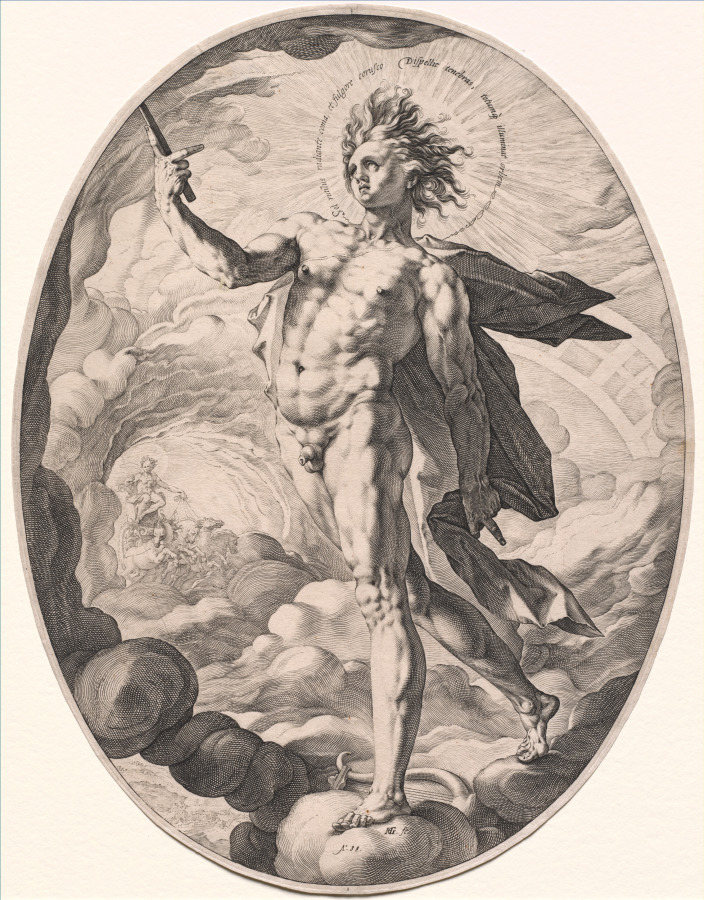
Apollo (1588) is in the Cleveland Museum of Art collection. The museum's creator attribution is Hendrick Goltzius (Dutch, 1558–1617).
The work and its context
The museum's open-access catalogue describes the work:
In the Netherlands, Hendrick Goltzius radically altered the engraver’s formulas for producing shape, volume, and tone. Building on Cornelis Cort’s and Agostino Carracci’s formulas, he used swelled, crossed lines that end at the figure’s outline. He interspersed the diamond shapes on Apollo’s body with dots to convey the transition from dark to light—effective for portraying the Sun God’s exaggerated musculature, a hallmark of Goltzius’s work. The S curve, a mark used by Albrecht Dürer, is now swelled to follow the complicated, swirling volume of clouds.
Object facts
- Title: Apollo
- Date: 1588
- Creator attribution: Hendrick Goltzius (Dutch, 1558–1617)
- Culture: Netherlands, 16th century
- Type: Print
- Technique: engraving
- Dimensions: Platemark: 34.9 x 26.7 cm (13 3/4 x 10 1/2 in.); Sheet: 35.3 x 27.1 cm (13 7/8 x 10 11/16 in.)
- Collection: PR - Engraving
- Department: Prints
- Accession number: 1969.48
Collection credit
Mr. and Mrs. Charles G. Prasse Collection
View the collection record
See the museum's photographs and full catalogue entry. Catalogue text is reproduced from the Cleveland Museum of Art's open-access data, with HTML formatting removed. This object and its supplied image are designated CC0.
Sources
More in Lifestyle
Keep reading