Apollo and Daphne (c. 1700): Art, History and Details
Apollo and Daphne at the Cleveland Museum of Art: c. 1700, terracotta. Explore the work's context, creator attribution and collection history.
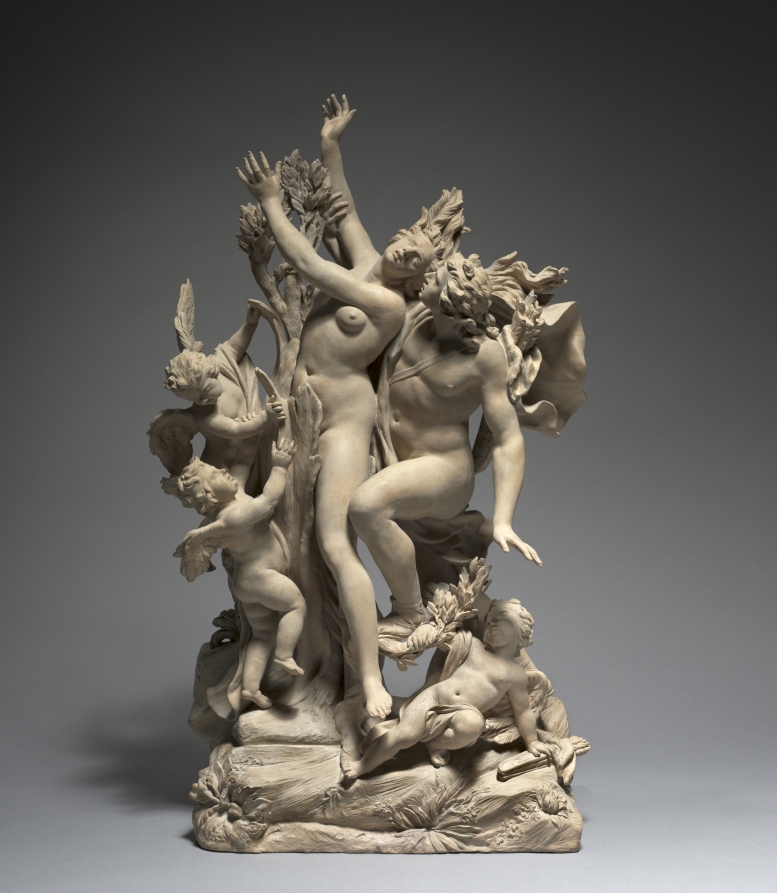
Apollo and Daphne (c. 1700) is in the Cleveland Museum of Art collection. The museum's creator attribution is Massimiliano Soldani (Italian, 1656–1740).
The work and its context
The museum's open-access catalogue describes the work:
Apollo, the Greek and Roman god of the sun and the arts, fell in love with the nymph Daphne. Chased to a riverbank, Daphne prayed to her father, the river god, Peneus, for help. At the moment Apollo reached out to touch her, she transformed into a laurel tree, branches and roots sprouting from her body. This work reveals key preoccupations of artists working in Italy in the 1600s: novel, active compositions; fleeting moments; and transformation from one physical form into another. Soldani based this work on a large-scale marble sculpture from 1622–25 by the Roman artist Gian Lorenzo Bernini.
Object facts
- Title: Apollo and Daphne
- Date: c. 1700
- Creator attribution: Massimiliano Soldani (Italian, 1656–1740)
- Culture: Italy, Florence
- Type: Sculpture
- Technique: terracotta
- Dimensions: Overall: 55.5 x 34.2 x 21.9 cm (21 7/8 x 13 7/16 x 8 5/8 in.)
- Collection: Sculpture
- Department: European Painting and Sculpture
- Accession number: 1992.230
A detail from the museum
Soldani shows Daphne in the process of turning into a tree to escape the persistent Apollo.
Collection credit
The Severance and Greta Millikin Purchase Fund
Further reading listed by the museum
- Morazzoni, Giuseppe, and Saul Levy. Le Porcellane Italiane. Milano: Görlich, 1960.
- Lankheit, Klaus. Florentinische Barockplastik; die Kunst am Hofe der letzten Medici, 1670–1743. [München]: F. Bruckmann, 1962.
- Lankheit, Klaus. Die Modellsammlung der Porzellanmanufaktur Doccia: ein Dokument italienischer Barockplastik. München, Germany: Bruckmann, 1982.
View the collection record
See the museum's photographs and full catalogue entry. Catalogue text is reproduced from the Cleveland Museum of Art's open-access data, with HTML formatting removed. This object and its supplied image are designated CC0.
Sources
More in Lifestyle
Keep reading