Apparel from a Dalmatic (1500s): Art, History and Details
Apparel from a Dalmatic at the Cleveland Museum of Art: 1500s, Silk, gold thread; embroidery: or nué (shaded gold). Explore the work's context, creator attribution and collection history.
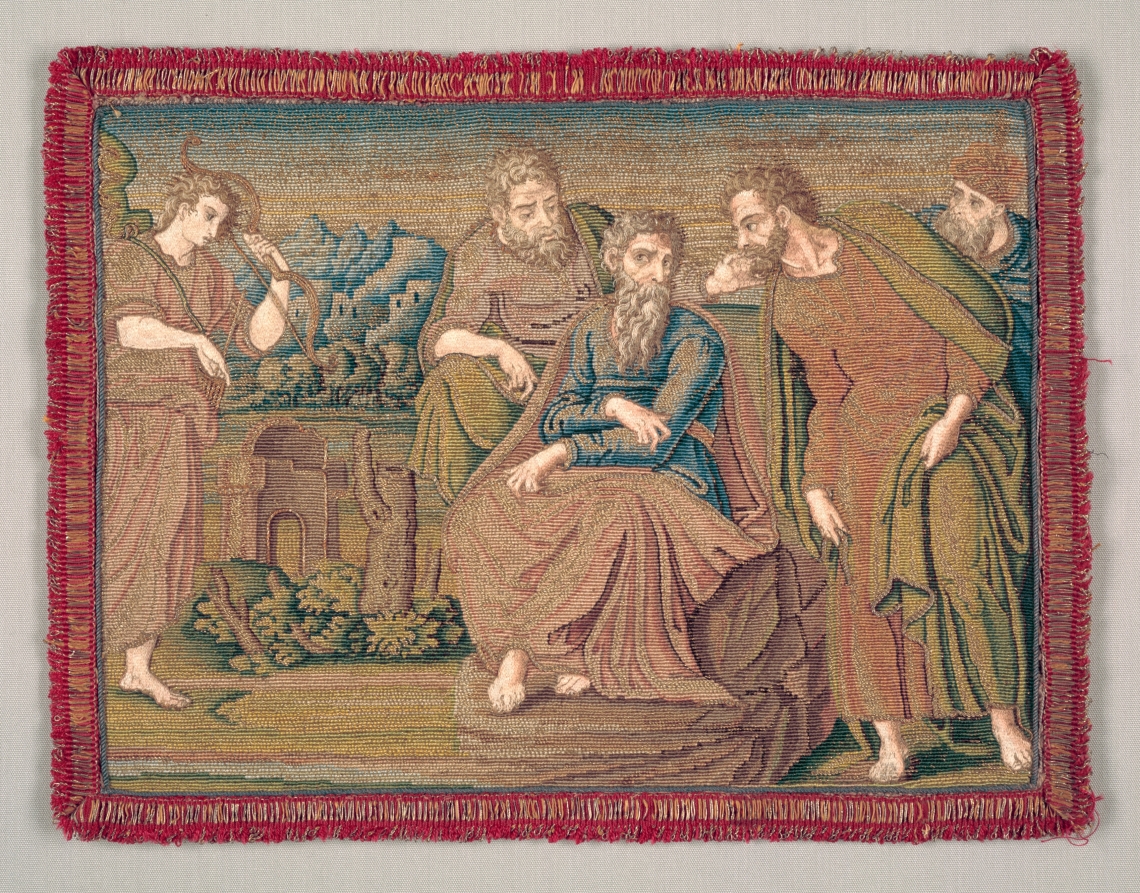
Apparel from a Dalmatic (1500s) is in the Cleveland Museum of Art collection.
The work and its context
The museum's open-access catalogue describes the work:
The artist who drew this pattern created expressive facial features that a master embroiderer conveyed with silk stitches. That high level was probably achieved by an embroiderer specializing in faces, hair, and skin. The draped clothing was created by varying the density of silk thread crossing over the gold thread. Embroidered scenes in rectangular panels, known as apparel, were made with luxurious thread to decorate tunic-shaped ecclesiastical garments, or dalmatics. An apparel was placed at the ends of sleeves, as seen in a nearby example, and on the front and back above the hem.
Object facts
- Title: Apparel from a Dalmatic
- Date: 1500s
- Culture: Italy, Florence
- Type: Embroidery
- Technique: Silk, gold thread; embroidery: or nué (shaded gold)
- Dimensions: Overall: 25.4 x 33 cm (10 x 13 in.); Mounted: 35.9 x 44.5 cm (14 1/8 x 17 1/2 in.)
- Collection: T - Ecclesiastical
- Department: Textiles
- Accession number: 1919.857
Collection credit
Gift of J. H. Wade
Further reading listed by the museum
- "Accessions." The Bulletin of the Cleveland Museum of Art 6, no. 10 (1919): 162.
View the collection record
See the museum's photographs and full catalogue entry. Catalogue text is reproduced from the Cleveland Museum of Art's open-access data, with HTML formatting removed. This object and its supplied image are designated CC0.
Sources
More in Lifestyle
Keep reading