Arc de Triomphe de l'Etoile, Paris (c. 1860s): Art, History and Details
Arc de Triomphe de l'Etoile, Paris at the Cleveland Museum of Art: c. 1860s, albumen print from collodion negative. Explore the work's context, creator attribution and collection history.
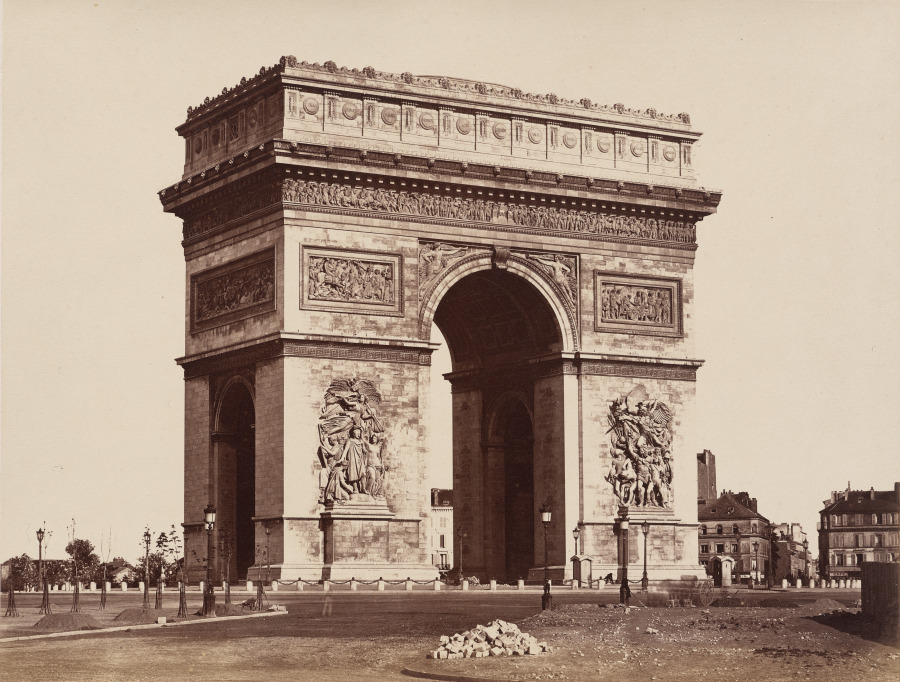
Arc de Triomphe de l'Etoile, Paris (c. 1860s) is in the Cleveland Museum of Art collection. The museum's creator attribution is Édouard Baldus (French, 1813–1889).
The work and its context
The museum's open-access catalogue describes the work:
For three decades starting in 1854, Paris was a construction site as Baron Haussmann replaced the crooked streets and crumbling buildings of medieval Paris with a modern city. The cobblestones in the foreground were for paving the newly expanded set of broad avenues that radiated from the Arc, part of Baron Haussmann’s urban renewal plans. Exposure times for film in the 1860s were usually too long to capture people in the street, but a man—perhaps the paver—paused long enough to leave his “ghost” to the left of the cobblestones.
Object facts
- Title: Arc de Triomphe de l'Etoile, Paris
- Date: c. 1860s
- Creator attribution: Édouard Baldus (French, 1813–1889)
- Culture: France, 19th century
- Type: Photograph
- Technique: albumen print from collodion negative
- Dimensions: Image: 21.5 x 28.2 cm (8 7/16 x 11 1/8 in.); Paper: 21.5 x 28.2 cm (8 7/16 x 11 1/8 in.); Mounted: 32.6 x 43.5 cm (12 13/16 x 17 1/8 in.)
- Collection: PH - French 19th Century
- Department: Photography
- Accession number: 2022.16
A detail from the museum
Completed in 1836, the Arc is dedicated to the armies of the French Revolution and the Second Empire and has gained additional symbolic force with each war fought by the French.
Collection credit
Severance and Greta Millikin Purchase Fund
View the collection record
See the museum's photographs and full catalogue entry. Catalogue text is reproduced from the Cleveland Museum of Art's open-access data, with HTML formatting removed. This object and its supplied image are designated CC0.
Sources
More in Lifestyle
Keep reading
Related stories