Arm Ring (c. 230–110 BCE): Art, History and Details
Arm Ring at the Cleveland Museum of Art: c. 230–110 BCE, glass. Explore the work's context, creator attribution and collection history.
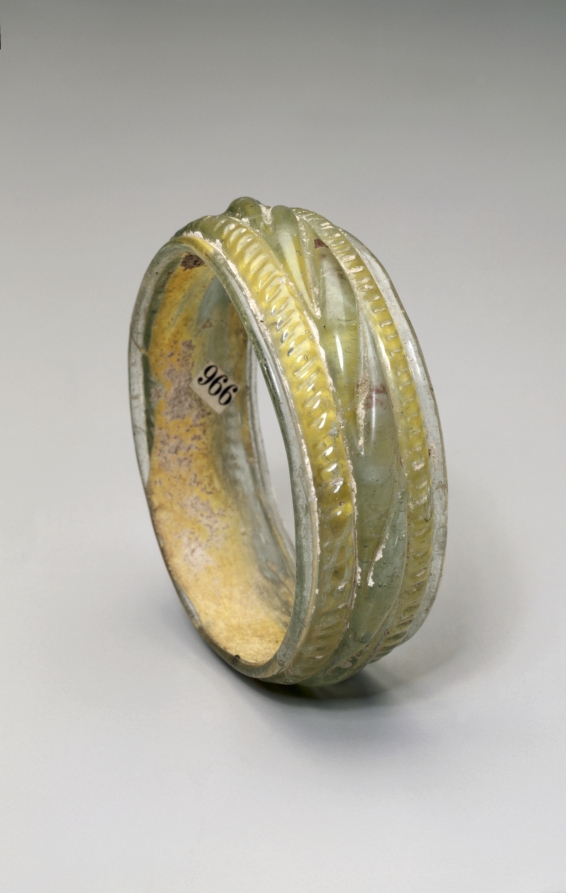
Arm Ring (c. 230–110 BCE) is in the Cleveland Museum of Art collection.
The work and its context
The museum's open-access catalogue describes the work:
During the late Iron Age, a range of loosely affiliated tribal groups in Central Europe formed what scholars call the La Tène culture, the ancestors of the Celtic cultures of Britain and France. Women of the La Tène culture commonly wore glass arm rings such as this around their biceps instead of metal jewelry. This arm ring uses a common ancient design, a central twist framed by horizontal lines, in an uncommon color. Made of clear-gray glass, the artisan added a bright yellow pigment on the interior of the arm ring to make the glass look like gold. La Tène jewelry drew inspiration from styles and objects traded among the neighboring Etruscans and Greek colonies in Western Europe.
Object facts
- Title: Arm Ring
- Date: c. 230–110 BCE
- Type: Jewelry
- Technique: glass
- Dimensions: Diameter: 7.6 cm (3 in.)
- Collection: GR - Cypriot
- Department: Greek and Roman Art
- Accession number: 1930.700
A detail from the museum
The 966 sticker is from the earliest known collector of the arm ring, Julien Gréau.
Collection credit
Gift of Mrs. Malcolm L. McBride
View the collection record
See the museum's photographs and full catalogue entry. Catalogue text is reproduced from the Cleveland Museum of Art's open-access data, with HTML formatting removed. This object and its supplied image are designated CC0.
Sources
More in Lifestyle
Keep reading