Askos (200–1 BCE): Art, History and Details
Askos at the Cleveland Museum of Art: 200–1 BCE, agate and gold. Explore the work's context, creator attribution and collection history.
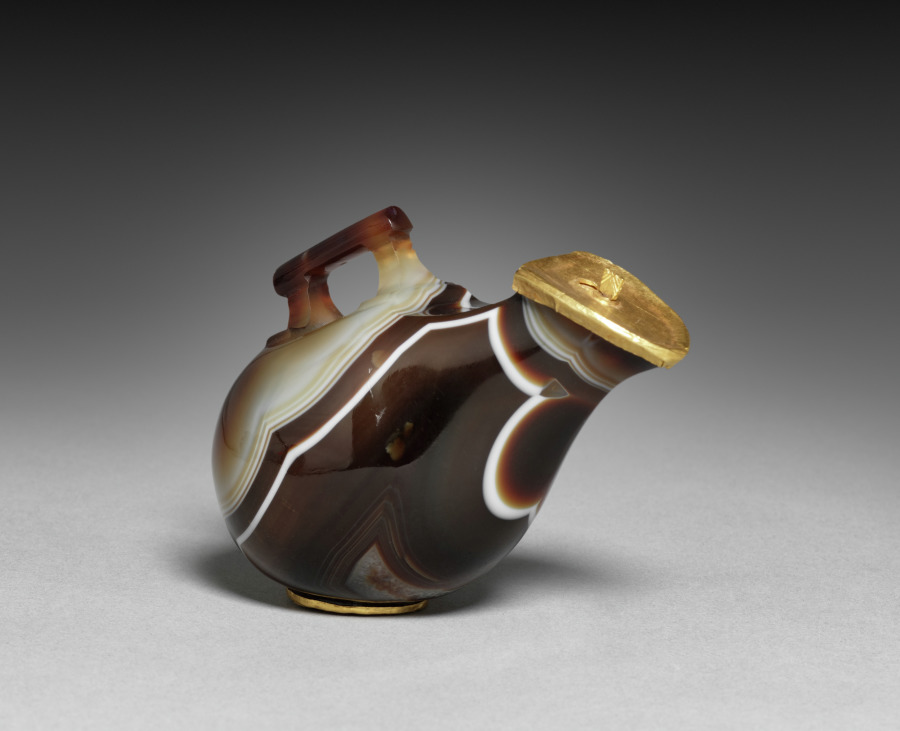
Askos (200–1 BCE) is in the Cleveland Museum of Art collection.
The work and its context
The museum's open-access catalogue describes the work:
This miniature vessel was carved from a single piece of banded agate, polished to a shine, and embellished with a gold lid and gold details on the base. Inside the ring of gold at the base is a trio of gold papyrus stalks, a likely reference to Egypt. In shape, it resembles an ancient wineskin, or askos, though its small size suggests use for luxury perfumes or oils. A tiny crab, likely once inlaid with a precious material, has been carved behind the handle.
Object facts
- Title: Askos
- Date: 200–1 BCE
- Culture: Greece, Ptolemaic Dynasty
- Type: Cosmetic Objects
- Technique: agate and gold
- Dimensions: Overall: 6.5 cm (2 9/16 in.)
- Collection: GR - Greek
- Department: Greek and Roman Art
- Accession number: 1964.92
A detail from the museum
The knob on the lid connects to a hidden disk to control the flow of liquid.
Collection credit
Andrew R. and Martha Holden Jennings Fund
Further reading listed by the museum
- “Year in Review for 1964.” The Bulletin of the Cleveland Museum of Art 51, no. 10 (1964): 236–66.
- Cooney, John D. “A Perfume Flask from Antiquity.” The Bulletin of the Cleveland Museum of Art 52, no. 2 (1965)
- Cooney, John D. “A Perfume Flask from Antiquity.” The Bulletin of the Cleveland Museum of Art 52, no. 2 (February 1965): 45–46.
View the collection record
See the museum's photographs and full catalogue entry. Catalogue text is reproduced from the Cleveland Museum of Art's open-access data, with HTML formatting removed. This object and its supplied image are designated CC0.
Sources
More in Lifestyle
Keep reading