Axe Figure (100 BCE–300 CE): Art, History and Details
Axe Figure at the Cleveland Museum of Art: 100 BCE–300 CE, serpentine. Explore the work's context, creator attribution and collection history.
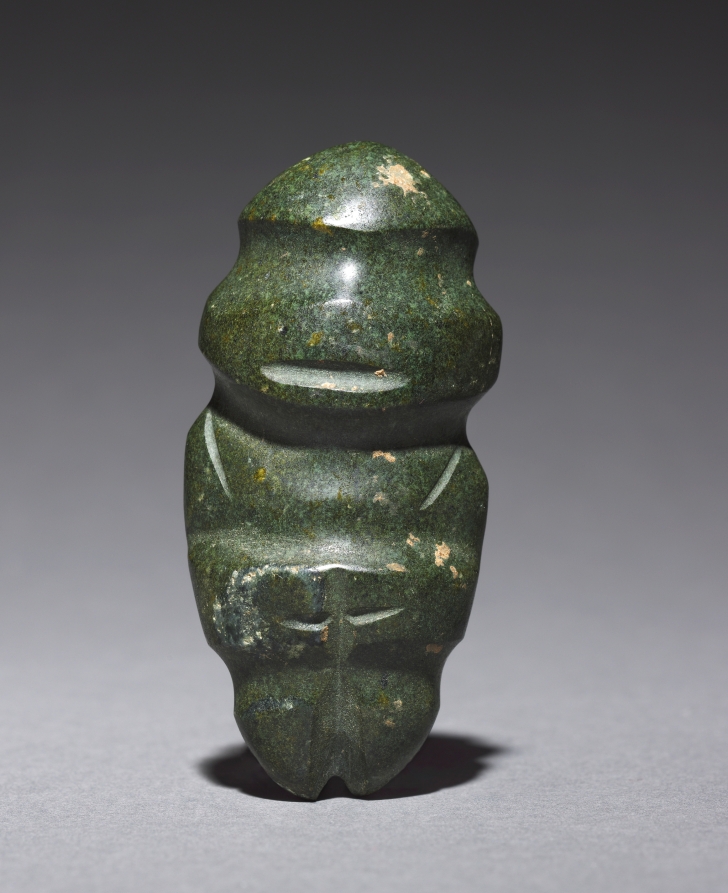
Axe Figure (100 BCE–300 CE) is in the Cleveland Museum of Art collection.
The work and its context
The museum's open-access catalogue describes the work:
The Mezcala style takes its name from a river in its homeland, the Guerrero region of western Mexico. The style is known for small-scale sculptures characterized by sleek abstraction and often made of greenstone, one of the most precious materials that Mesoamerican artists worked. Unfortunately, little is known of the sculptures’ meanings and archaeological contexts.
Object facts
- Title: Axe Figure
- Date: 100 BCE–300 CE
- Culture: Mesoamerica, Mexico, Guerrero, Mezcala
- Type: Sculpture
- Technique: serpentine
- Dimensions: Overall: 9.5 x 4.5 cm (3 3/4 x 1 3/4 in.)
- Collection: AA - Mesoamerica
- Department: Art of the Americas
- Accession number: 1990.189
Collection credit
Gift of Mr. and Mrs. James C. Gruener
Further reading listed by the museum
- Cleveland Museum of Art. The Bulletin of the Cleveland Museum of Art. Cleveland, Ohio: Cleveland Museum of Art, 79 (September 1992)
View the collection record
See the museum's photographs and full catalogue entry. Catalogue text is reproduced from the Cleveland Museum of Art's open-access data, with HTML formatting removed. This object and its supplied image are designated CC0.
Sources
More in Lifestyle
Keep reading
Related stories