Bacchanal with Silenus (1481): Art, History and Details
Bacchanal with Silenus at the Cleveland Museum of Art: 1481, engraving. Explore the work's context, creator attribution and collection history.
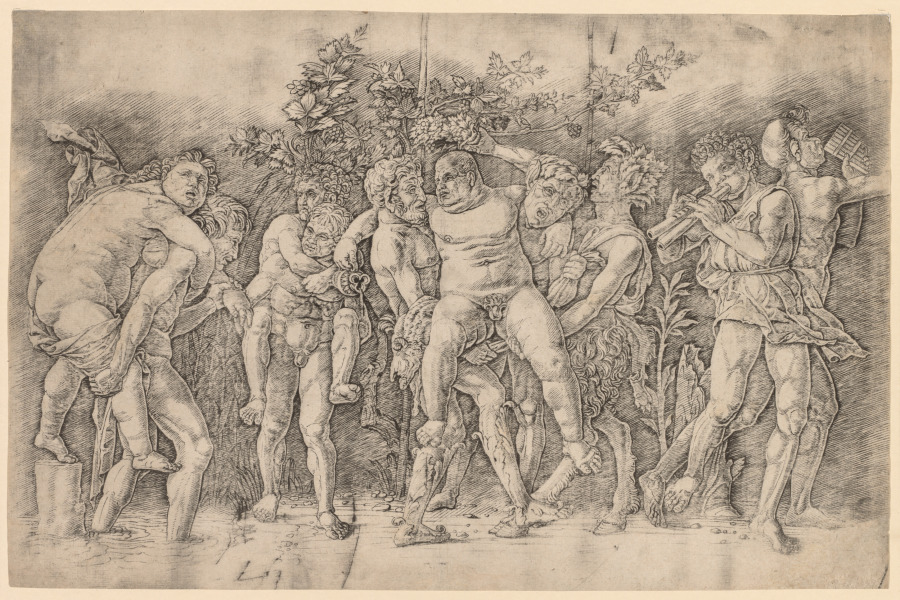
Bacchanal with Silenus (1481) is in the Cleveland Museum of Art collection. The museum's creator attribution is Andrea Mantegna (Italian, about 1431–1506).
The work and its context
The museum's open-access catalogue describes the work:
This print was probably conceived by Andrea Mantegna as the right side of Bacchanal with a Wine Vat, which shows Bacchus crowned. Here, the central figure is also crowned, but unlike the wine god, he appears saturated with drink. The scene may come from the Roman poet Virgil (70–19 BCE). He described Bacchus’s teacher, Silenus, roused from a drunken sleep by two satyrs and a maenad and incited to sing so that his companions could dance. Silenus’s great wisdom was said to be generated by wine, but Renaissance artists more typically portrayed him as the embodiment of overindulgence.
Object facts
- Title: Bacchanal with Silenus
- Date: 1481
- Creator attribution: Andrea Mantegna (Italian, about 1431–1506)
- Culture: Italy
- Type: Print
- Technique: engraving
- Dimensions: Sheet: 28.8 x 43.6 cm (11 5/16 x 17 3/16 in.)
- Collection: PR - Engraving
- Department: Prints
- Accession number: 1924.223
A detail from the museum
Like most artists in Renaissance Italy, Mantegna was often inspired by ancient Greek and Roman art. In this print, the revelers are positioned in the foreground of a shallow picture plane, reminding savvy viewers of a Roman frieze.
Collection credit
Gift of Ralph King
Further reading listed by the museum
- Prasse, Leona. "The Engraving of Andrea Mantegna." The Bulletin of the Cleveland Museum of Art 43, no. 4 (April 1956): 59-62.
View the collection record
See the museum's photographs and full catalogue entry. Catalogue text is reproduced from the Cleveland Museum of Art's open-access data, with HTML formatting removed. This object and its supplied image are designated CC0.
Sources
More in Lifestyle
Keep reading