Bacchanales: Nymph Supported by Two Satyrs (1763): Art, History and Details
Bacchanales: Nymph Supported by Two Satyrs at the Cleveland Museum of Art: 1763, etching. Explore the work's context, creator attribution and collection history.
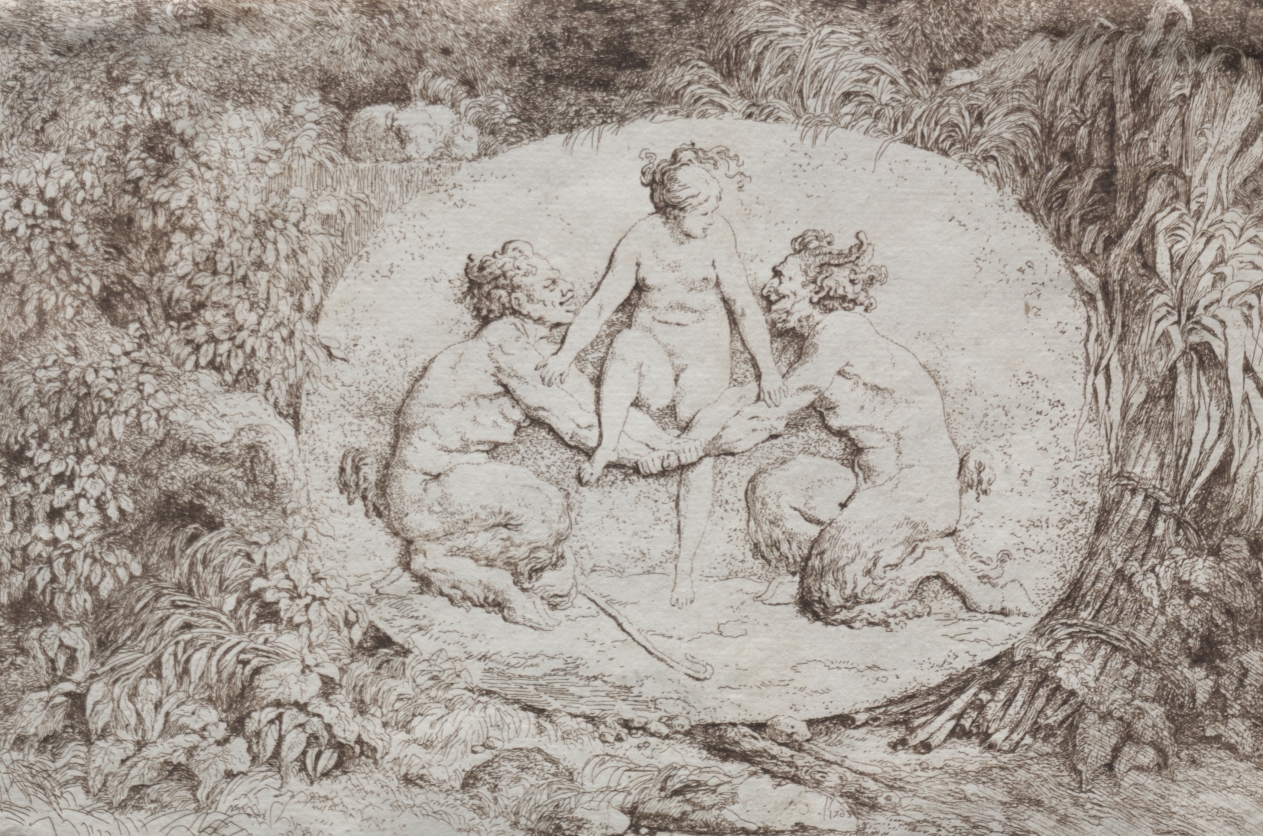
Bacchanales: Nymph Supported by Two Satyrs (1763) is in the Cleveland Museum of Art collection. The museum's creator attribution is Jean-Honoré Fragonard (French, 1732–1806).
The work and its context
The museum's open-access catalogue describes the work:
The set of Bacchanales was made two years after Fragonard returned from a trip to Italy where he studied Roman antiquities. However, these light-hearted vignettes owe more to the effervescent aspects of the 18th-century Rococo period than to a serious understanding of antiquity and Roman art. Fragonard's black chalk drawing for Nymph Supported by Two Satyrs—after a marble bas-relief then in the Villa Mattei in Rome—and two other studies for these etchings still exist. Although this is one of Fragonard's earliest prints, it shows that he had already mastered the process: the etched lines effectively suggest the weight and movement of the figures and also provide a uniform system of light and shading for the decorative backdrop of foliage.
Object facts
- Title: Bacchanales: Nymph Supported by Two Satyrs
- Date: 1763
- Creator attribution: Jean-Honoré Fragonard (French, 1732–1806)
- Culture: France
- Type: Print
- Technique: etching
- Dimensions: Sheet: 13.3 x 20 cm (5 1/4 x 7 7/8 in.)
- Collection: PR - Etching
- Department: Prints
- Accession number: 1924.251
Collection credit
Dudley P. Allen Fund
View the collection record
See the museum's photographs and full catalogue entry. Catalogue text is reproduced from the Cleveland Museum of Art's open-access data, with HTML formatting removed. This object and its supplied image are designated CC0.
Sources
More in Lifestyle
Keep reading