Bacchanalian Relief (200s CE): Art, History and Details
Bacchanalian Relief at the Cleveland Museum of Art: 200s CE, schist. Explore the work's context, creator attribution and collection history.
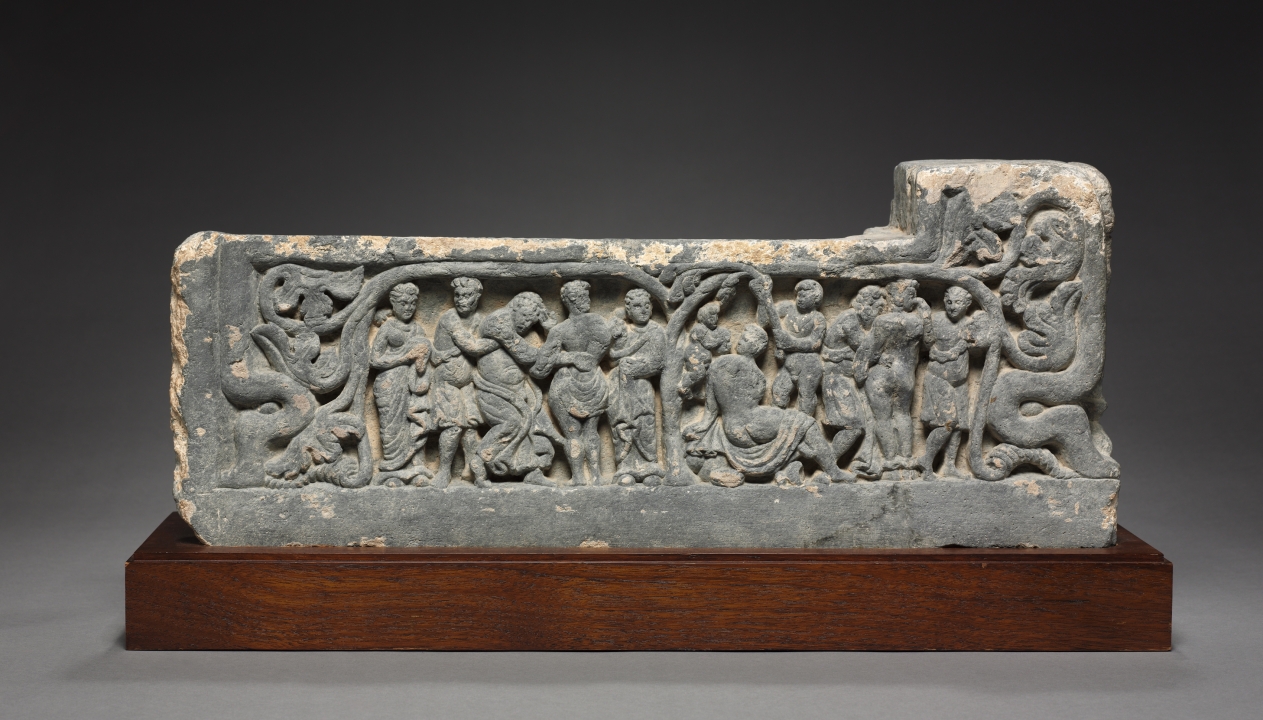
Bacchanalian Relief (200s CE) is in the Cleveland Museum of Art collection.
The work and its context
The museum's open-access catalogue describes the work:
Grape vines create vignettes with scenes of drunken revelry on this architectural carving that once fit by joinery to other carved stone blocks at the base of a Buddhist monument. Bacchus himself, the Greco-Roman god of wine, may be the third figure from the left; bearded, portly, and inebriated, his garment slips as he collapses. Cupid and Aphrodite appear in the vignette on the right next to an amorous couple. On the side is a female nature divinity, grasping the branch of a tree, but unlike her counterparts from farther south in India, she is clothed in a long tunic, pants, and scarf associated with the dress of the Central Asian nomadic groups.
Object facts
- Title: Bacchanalian Relief
- Date: 200s CE
- Culture: Pakistan, Gandhara, Kushan period
- Type: Stone
- Technique: schist
- Dimensions: Overall: 24.5 x 61 x 14 cm (9 5/8 x 24 x 5 1/2 in.)
- Collection: Indian Art - Kushan, Gandhara
- Department: Indian and Southeast Asian Art
- Accession number: 2011.140
Collection credit
Gift of Maxeen and John Flower in honor of Dr. Stanislaw Czuma
View the collection record
See the museum's photographs and full catalogue entry. Catalogue text is reproduced from the Cleveland Museum of Art's open-access data, with HTML formatting removed. This object and its supplied image are designated CC0.
Sources
More in Lifestyle
Keep reading